Gaya Tilkut: Bihar’s Famous Winter Sweet
Sesame and jaggery pounded by hand in Gaya’s winter workshops. The story of tilkut, the sweet of Makar Sankranti.
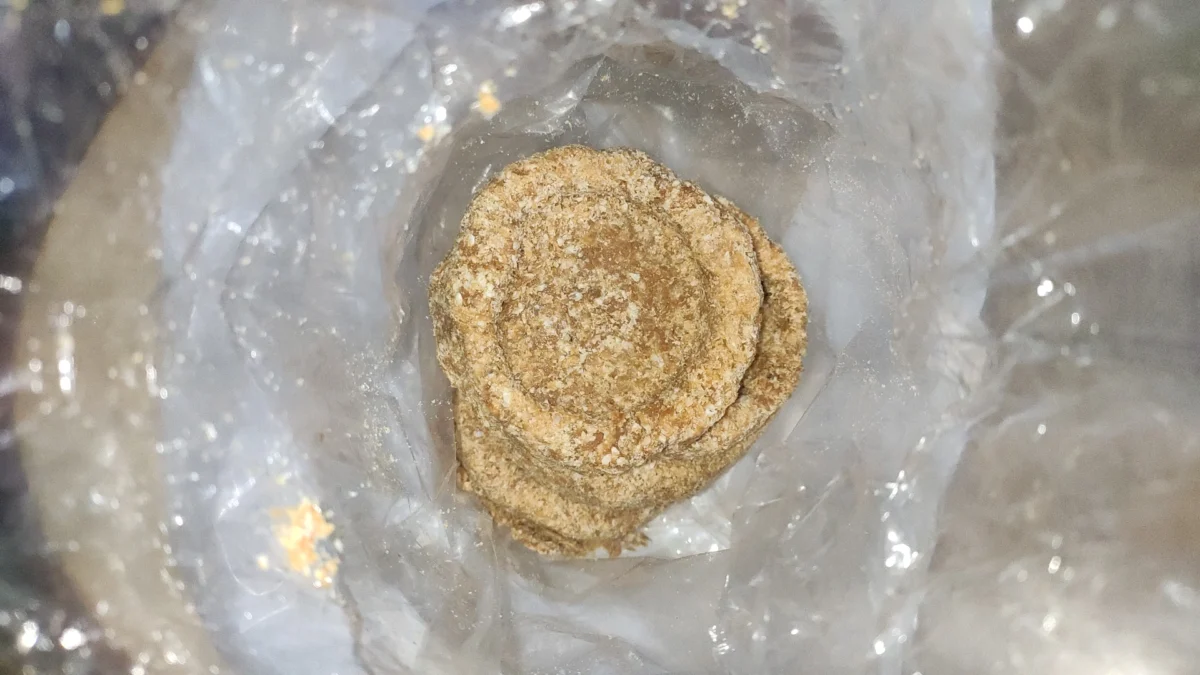
Walk through the old lanes of Gaya in December or January and you will hear a steady thud, thud, thud from small workshops on either side. Inside, men sit beside heaps of sesame seeds, pounding balls of hot jaggery or sugar with wooden mallets until they flatten into round, crumbly discs coated with til. This is tilkut, Bihar’s great winter sweet, and Gaya is its capital. In the weeks around Makar Sankranti, tilkut from Gaya is eaten across Bihar and sent to Biharis all over the world.
What tilkut is
Tilkut is a dry sweet made by pounding til (sesame seeds) with jaggery or sugar. Its name joins two words: til, sesame, and kut, to pound. Wikipedia’s survey of Bihari cuisine describes the process: a thick, hard base of sugar or jaggery, about the size of a tennis ball, is rolled in copious amounts of sesame seed and then hammered out into a round shape. The finished sweet is flaky and nutty, with sesame on the outside and a crisp, sweet core.
The Government of Bihar describes three main types: white tilkut made with refined sugar, light brown tilkut made with unrefined sugar and dark brown tilkut made with jaggery. Small nut-sized pieces are called tillouri. India’s tourism ministry notes that tilkut can be made as flat, biscuit-like pieces or as laddoos.
Why Gaya?
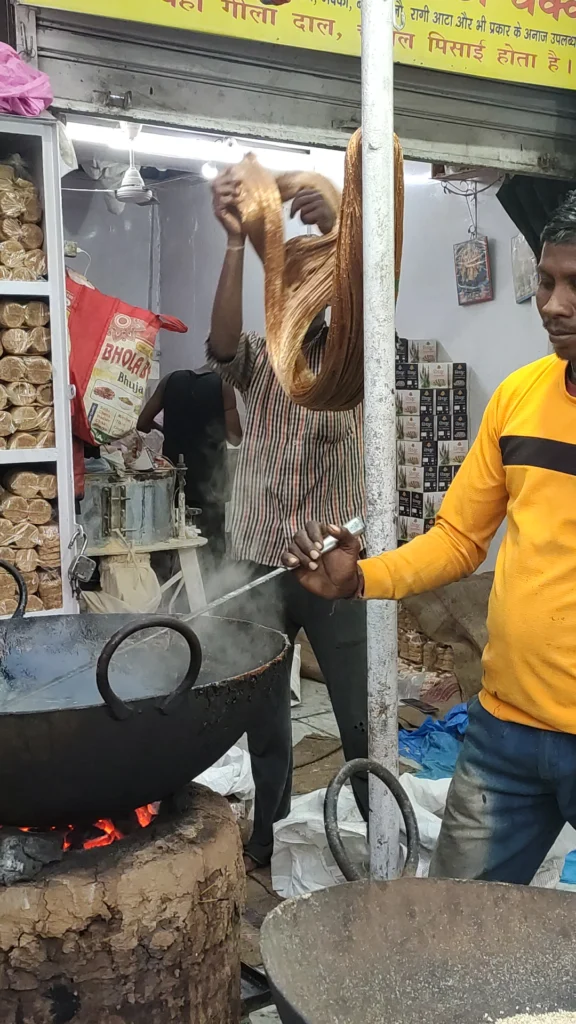
The Government of Bihar says tilkut is “said to be” best from Gaya, and India’s tourism ministry calls Gaya particularly renowned for its tilkut. Wikipedia singles out Dangra village in Gaya district for its jaggery tilkut. Tradition links the commercial making of tilkut in Gaya to the Ramna area of the city and to the patronage of the Tekari estate about 150 years ago, though this history has not been firmly documented. Today Gaya has whole streets of tilkut workshops and shops that come alive every winter.
An ancient sweet?
Sesame and jaggery have been eaten together in India for a very long time. Wikipedia and the Government of Bihar both note that Buddhist literature mentions a sweet called palala, which is thought to refer to a similar preparation of sesame. Since Gaya is close to Bodh Gaya, this link is often celebrated, but it is a scholarly identification rather than proof that tilkut as we know it is that old.
The sweet of Sakraat
Tilkut is above all the sweet of Makar Sankranti, known in Bihar as Sakraat or Tilkut Sankranti, in mid-January. Bihar Tourism notes that dahi chuda, flattened rice with curd, is eaten on Makar Sankranti and traditionally served with tilkut. In Mithila, according to Wikipedia’s account of Maithil cuisine, tilkut is prepared along with dahi-chura and exchanged among relatives. In the Bhojpuri region, people eat til ke laddu, tilwa, tilkut and lai on the morning of Sakraat, and tilkut is also prepared for the Ganesh puja on Magh Chaturthi.
Why winter?
Tilkut is a winter sweet for practical reasons. Sugarcane is harvested in winter, so fresh jaggery is plentiful, and sesame is also a winter crop. Traditional wisdom in Bihar holds that sesame and jaggery are “warming” foods, suited to cold weather. Large quantities of tilkut are made from December to January in towns and even villages, though the demand is now strong enough that smaller quantities are made through the year.
How tilkut is made
Tilkut-making is physical work. Jaggery or sugar is cooked into a thick, pliable mass and pulled and kneaded until it turns pale and glossy. It is formed into balls, rolled in roasted sesame seeds and then pounded with a wooden mallet on a flat surface, the sesame pressing into the sugar as the ball flattens into a disc. Skilled workers can pound hundreds of pieces in a shift, and the rhythmic sound of mallets is part of Gaya’s winter soundscape.
Variations
Beyond the three basic types, tilkut now comes in many forms: khoya tilkut, with milk solids; tilkut made with sugar-free sweeteners for diabetics; and new flavours such as chocolate. Similar sesame-and-jaggery sweets are made elsewhere in India under names such as gajak and til patti, and Tilkut is also popular in Jharkhand, eastern Uttar Pradesh and West Bengal.
Modern popularity
Gaya’s tilkut is now packed in boxes and sent across India and abroad, and shops in Patna and other cities sell it every winter. Online sales have grown, and for many Biharis living elsewhere, a box of Gaya tilkut arriving in January is a reminder of home. You can read a short introduction in our entry on tilkut.
Visiting Gaya in tilkut season
If you are visiting Gaya or Bodh Gaya in winter, follow the sound of the mallets. The pounding can often be seen from the street, and tilkut is best bought fresh, while it is still crisp. Pair it with dahi chura for a true Sakraat breakfast.
Conclusion
Gaya tilkut is a sweet of winter, harvest and festival, made by hand in a city better known for its pilgrimages. Crumbly, nutty and just sweet enough, it is one of the great tastes of Bihar. For more of the state’s sweets, read about anarsa, also a speciality of Gaya, and Silao khaja.