Anarsa: The Traditional Sweet of Bihar
Rice soaked for days, ground, sweetened with jaggery, rolled in seeds and fried in ghee. The slow, patient art of anarsa.
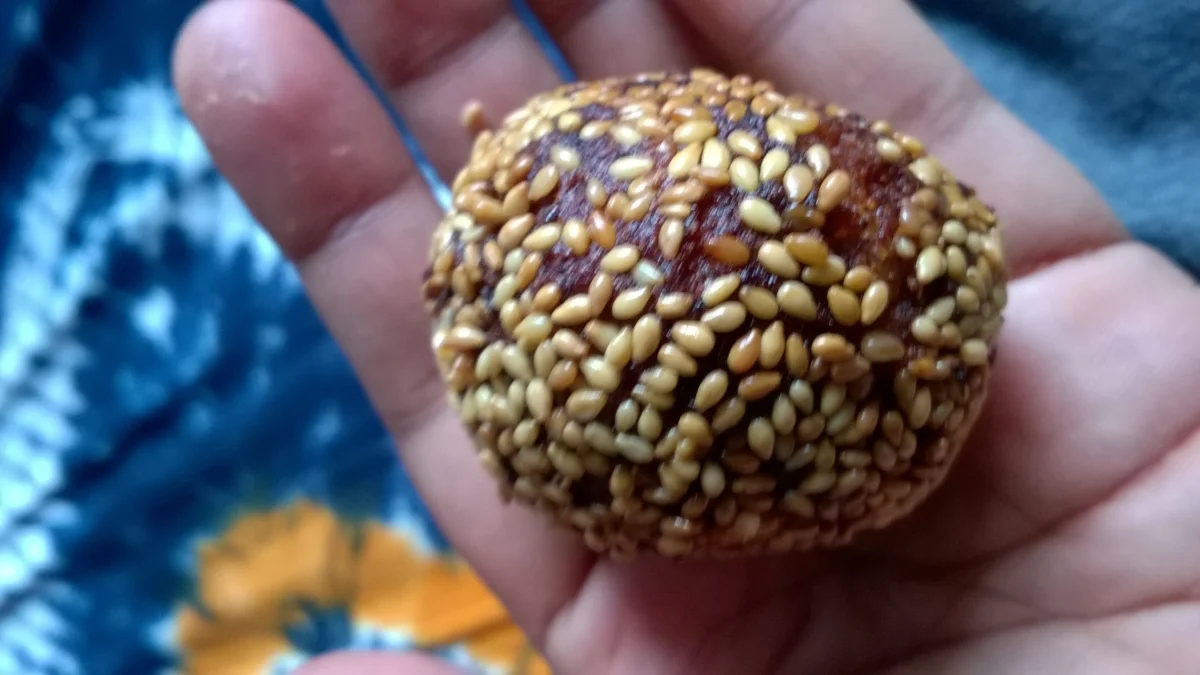
Anarsa looks modest: a small, round, golden sweet, crusted with seeds, slightly crisp outside and chewy within. But it takes days to make, and the patience it demands is part of why it is treasured. In Bihar, anarsa is especially associated with Gaya and with Mithila, and it appears in sweet shops and homes around Diwali and other special occasions.
What anarsa is
Anarsa is a sweet made from rice flour and jaggery, rolled in poppy or sesame seeds and fried in ghee. Wikipedia describes it as a rice-based sweet of Nepal and the Indian states of Bihar and Maharashtra, especially Gaya in Bihar, commonly associated with Diwali and other special occasions. Its main ingredients are rice, jaggery, poppy seeds and ghee. A photograph on Wikimedia Commons describes it as popular in Bihar, especially the anarsa made in Gaya district.
The meaning of the name
The name anarsa is often traced to the Sanskrit anarasha, which some accounts interpret as meaning “without corruption” or “eternal”, suggesting cleanness and absence of decay. Whether or not the etymology is exact, it fits a sweet that keeps well for days.
A sweet that takes days
Anarsa’s preparation is famously slow. According to Wikipedia, the main steps are these:
- Rice is soaked in water for a few days, with the water changed frequently.
- The rice is then drained, dried and ground into a fine flour.
- The rice flour is mixed with jaggery to form a dough, which is often left to rest.
- The dough is shaped, rolled in white poppy seeds, or in sesame, and pressed into small discs or balls.
- The anarsa are fried in ghee, seed-coated side first.
The soaking gives the rice a slightly fermented character and a fine, soft texture once ground. If the dough is too wet or too dry, the anarsa will break apart in the ghee, which is why experienced cooks are so respected.
The Bihari anarsa
Wikipedia notes that the Bihari variation of anarsa tends to be rounder and more ball-shaped than the flatter anarsa of Maharashtra. In Bihar the coating is often sesame, giving a nutty crust, though poppy seeds are also used. A variation adds banana to the rice flour base. Wikipedia’s survey of Bihari cuisine also lists anarasa as a traditional dish of Mithila, and it appears among the traditional dishes of Maithil cuisine.
Anarsa and the festival calendar
In Bihar, anarsa is closely associated with festivals. Wikipedia’s account of Bhojpuri cuisine lists anarsa among the sweets enjoyed at Diwali, along with gujia and laddoo. Around Gaya, anarsa is sold in large quantities in the festive season, alongside the city’s famous tilkut. In many homes, it is also made for weddings and special family occasions, and it is a popular sweet to carry as a gift because it keeps for several days.
Regional variations
Anarsa travels widely. In Maharashtra, it is a classic Diwali sweet, usually flatter and coated with poppy seeds. In Nepal, a similar sweet is made for Tihar, the festival of lights. In Bihar, the ball-shaped, sesame-coated anarsa of Gaya is the most famous, though cooks in Mithila and elsewhere make their own versions.
Why it matters
Anarsa represents a kind of sweet-making that is disappearing from many homes: slow, seasonal and dependent on skill rather than recipes. It uses the region’s staples, rice and jaggery, and turns them into something festive. For families that still make it, the days of soaking and grinding are part of the festival itself.
Modern popularity
Today most people buy anarsa from sweet shops rather than make it at home. In Gaya, Patna and other towns, halwais sell it through the year, with demand peaking in the festive season. Boxed anarsa is also sold online, and food writers have helped introduce it to people outside the region. You can read a short introduction in our story on malpua, anarsa and tilkut.
How to enjoy it
Anarsa is best eaten within a few days of making, when the outside is still crisp and the inside soft. It goes well with tea, and many people prefer it at room temperature rather than warmed. When buying, look for evenly coloured anarsa with a generous seed crust.
Conclusion
Anarsa is a sweet that rewards patience, both for the cook and for the eater who seeks out a good one. Crisp, chewy and fragrant with ghee and sesame, it is one of the quieter treasures of Bihar’s sweet shops. For more of Bihar’s sweets, read about malpua and parwal ki mithai.