Parwal Ki Mithai: The Unique Sweet of Bihar
Pointed gourd scraped, softened, stuffed with khoya and soaked in syrup. The story of one of Bihar’s most unusual sweets.
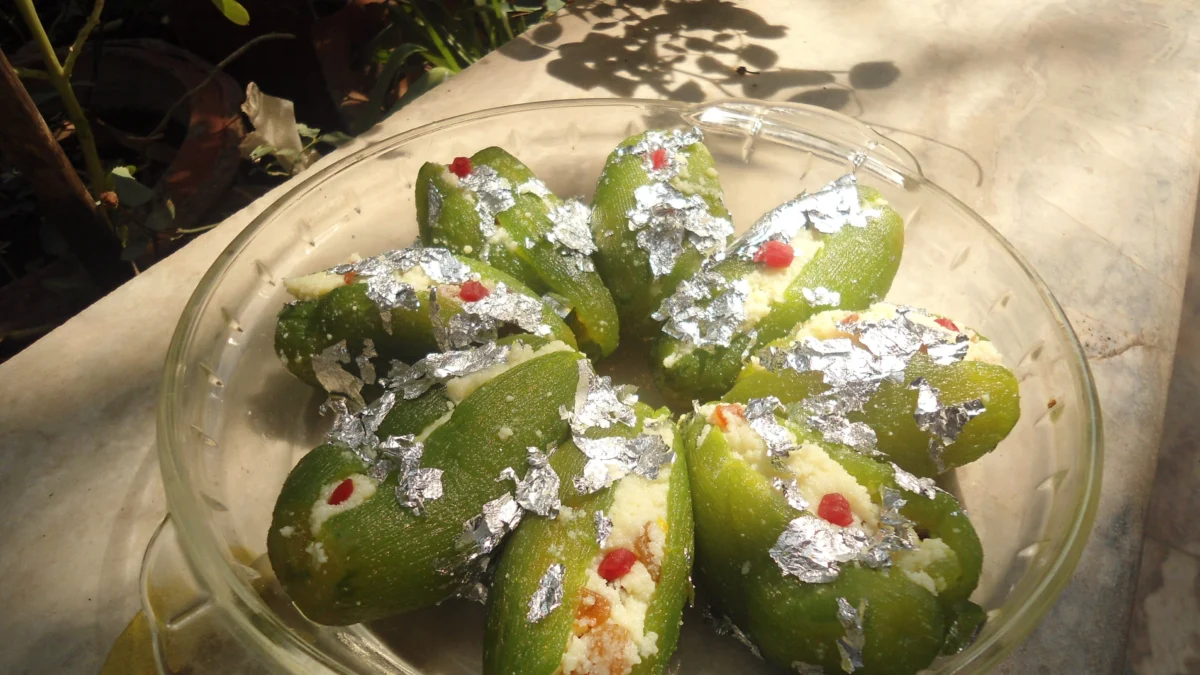
Most people know parwal, the pointed gourd, as an everyday vegetable: fried as bhujia, stuffed with spices or cooked with potatoes in a thin curry. So it surprises many visitors to find it in Bihar’s sweet shops, transformed into a pale green sweet stuffed with khoya, glistening with syrup and sometimes topped with silver leaf. Parwal ki mithai is one of Bihar’s most unusual sweets, and one that shows how inventive the state’s halwais can be.
What parwal ki mithai is
Bihar Tourism lists parwal ki mithai among the state’s sweets and describes it simply: pointed gourd (parwal) stuffed with khoya, reduced milk solids. Wikipedia’s survey of Bihari cuisine gives more detail. The pointed gourd, botanically Trichosanthes dioica, is scraped to remove the skin, sliced lengthwise, deseeded and boiled until tender. It is then filled with khoya mixed with dry fruits, soaked in warm sugar syrup, and may be decorated with silver foil once it cools.
Parwal in the Bihari kitchen
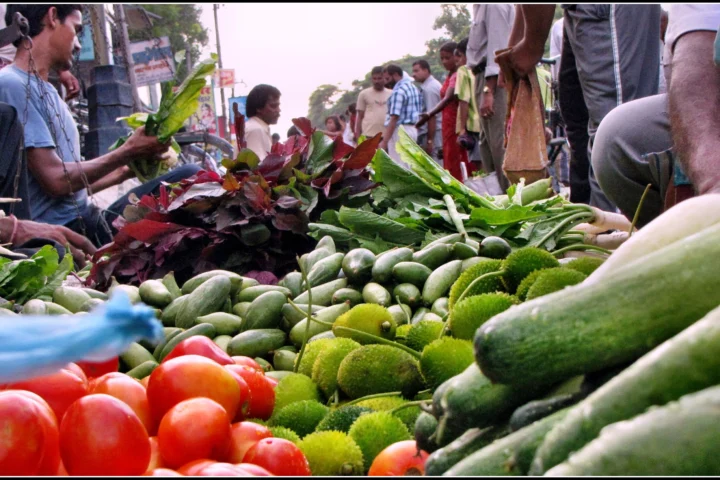
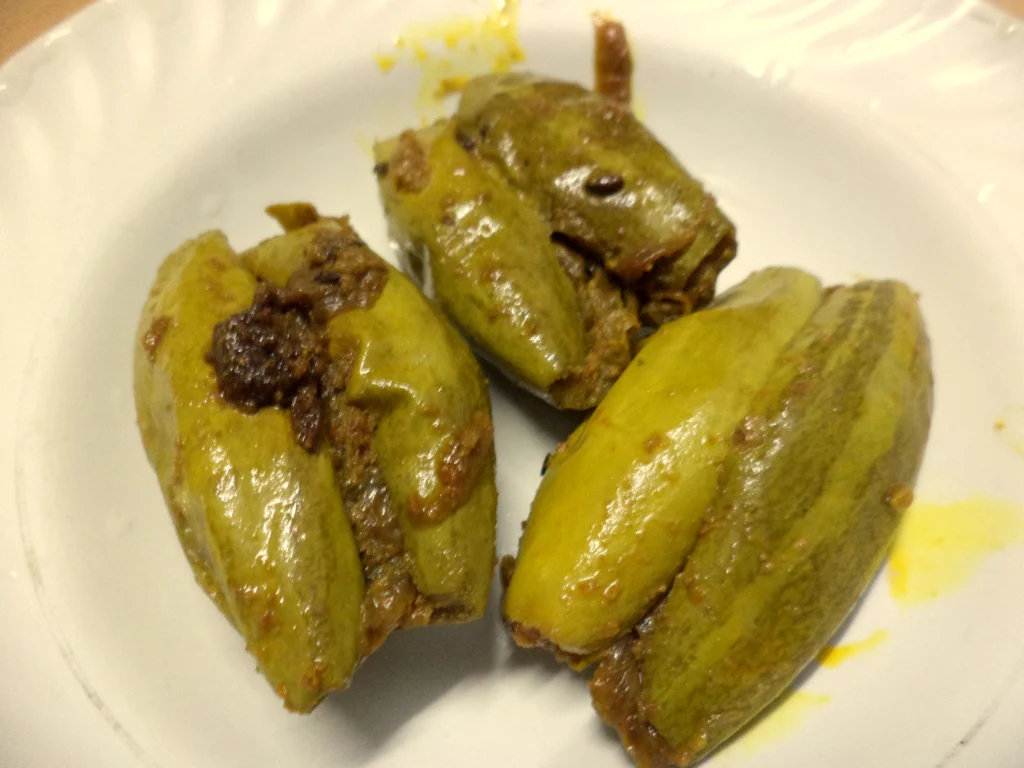
To understand the sweet, it helps to understand the vegetable. Parwal is one of the most common summer and monsoon vegetables in Bihar and the Gangetic plain. Wikipedia’s account of Bhojpuri cuisine lists it among the vegetables stuffed with a spice mix and cooked as bhariya or kalauji, and describes dishes such as parore aloo ki bhujia, stir-fried pointed gourd with potatoes, and aloo parwal ki rasili bhaaji, a curry with gravy. With so much parwal in the markets, it is perhaps not surprising that sweet-makers found another use for it.
How it is made
Making parwal ki mithai takes care and patience:
- Preparing the gourd: medium-sized, tender parwal are chosen. The skin is scraped lightly, so the green colour remains, and each gourd is slit lengthwise and the seeds and pith removed.
- Softening: the shells are boiled until tender and then cooked briefly in light sugar syrup so they absorb sweetness.
- The filling: khoya is roasted with sugar, cardamom and chopped nuts such as almonds, pistachios and cashews, sometimes with a little saffron.
- Assembly: each gourd is stuffed generously with the khoya mixture, pressed closed and finished with silver leaf, chopped pistachios or a light coating of syrup.
The finished sweet combines the soft, faintly vegetal shell with a rich, milky filling.
History and origins
The history of parwal ki mithai is not well documented. It is closely associated with Bihar, where it is listed by the state’s tourism department and sold in sweet shops in Patna and other towns, and similar sweets are also made elsewhere in eastern India. When and where it was first made, and by whom, is not recorded in reliable sources, so any precise origin story should be treated with caution. What it does reflect is a wider tradition in Indian sweet-making of combining vegetables or fruits with milk and sugar, as in carrot halwa or the sweet preserves called murabba.
When it is eaten
Parwal ki mithai is a sweet of special occasions: weddings, festivals, family celebrations and gifts for guests. Because parwal is a seasonal vegetable, it is most common in the months when the gourd is plentiful, though sweet shops now make it through much of the year.
Variations
Sweet shops make several versions. Some fill the gourd with plain khoya, others with khoya mixed with dry fruits. Some soak the finished sweet in syrup, while others serve it dry, coated only with sugar. Silver leaf (varq) is common for festive versions. The colour can vary from bright green to a pale, almost translucent shade, depending on how the gourd is treated.
Why it matters
Parwal ki mithai is a small but telling part of Bihar’s food culture. It shows the skill of the state’s halwais, who have turned a cheap, everyday vegetable into a festive sweet, and it shows how closely Bihari cooking follows the produce of the season. It is also one of the few Indian sweets made from a green vegetable, which makes it a talking point for visitors.
Modern popularity
Parwal ki mithai remains a speciality rather than a mass-market sweet, found mainly in traditional sweet shops in Bihar and in shops run by Bihari halwais elsewhere. Food writers and lists of unusual Indian sweets have brought it new attention, and some home cooks now make it for festivals, sharing their recipes online.
Conclusion
Parwal ki mithai is proof that in Bihar, even a humble vegetable can become a celebration. If you see it in a Patna sweet shop, try one: the combination of soft gourd and rich khoya is unlike anything else. For more of Bihar’s sweets, read about malpua and Silao khaja.