Ahuna Mutton: The Famous Handi Mutton of Champaran
Goat meat, mustard oil, whole garlic and spices, sealed in a clay pot with dough and cooked slowly. The story of Champaran’s ahuna mutton.
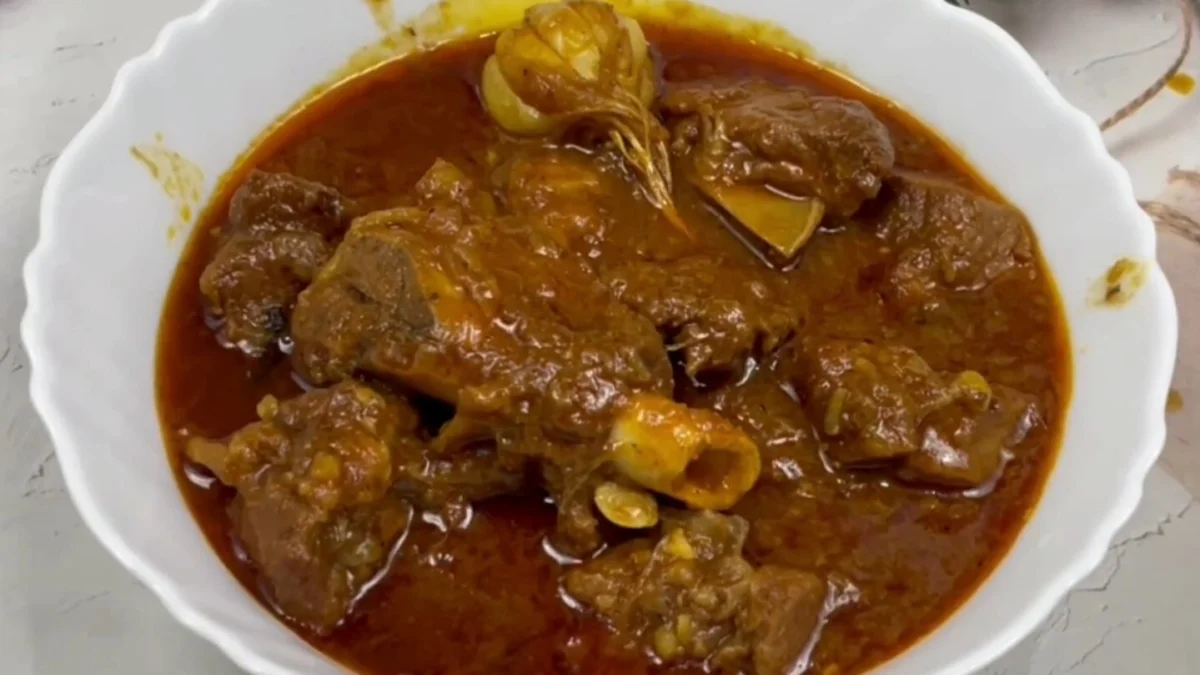
Open the lid of a clay handi of Champaran mutton and a cloud of steam rises, heavy with the smell of mustard oil, whole garlic, onions and spices. Inside, pieces of goat meat have cooked slowly in their own juices, sealed in with a ring of dough, until they are dark, tender and coated in a thick, glossy masala. This is ahuna mutton, also called handi meat or Champaran meat, the dish from north-west Bihar that has become, after litti chokha, the state’s best-known food.
What ahuna mutton is
Wikipedia describes Champaran meat, also known as ahuna, handi meat or batlohi, as a dish rooted in the Champaran region of Bihar. Meat is marinated in a mix of mustard oil and ghee, garlic, onions and ginger with a paste of spices. The mouth of the handi, an earthenware pot, is sealed with kneaded flour, and the meat is cooked slowly on a low wood fire, the pot being tossed or shaken continuously while it cooks. India’s tourism ministry describes the same method: mutton marinated in mustard oil, ghee and spices, sealed in a clay pot with dough and slow-cooked over charcoal.
The importance of the pot
The clay pot is central to the dish. Cooks interviewed by Scroll in 2023 insisted that there is no substitute for the matka. Gopal Kumar Kushwaha, who runs the Old Champaran Meat House on Fraser Road in Patna, told the website that cooks in the village where he learned the dish used a pot without a lid, and that he added a lid with a small hole, so the pot works like a pressure cooker and condensed steam drips back into the meat. He also said that the clay itself adds to the flavour. The dough seal must be handled carefully, as overheating can crack it.
Where does it come from?
Champaran, today the districts of East Champaran and West Champaran, lies in the north-west of Bihar along the Nepal border. The dish takes its name from the region, but who first made it in its present form is disputed.
- Gopal Kumar Kushwaha told Scroll that in 2014, while catering for the New Patna Club, a patron asked for the dish, and his search led him to Ghorasahan, a village in East Champaran about 30 km from the Nepal border, where he learned it. He says he popularised it.
- Jaiswal Hotel in Motihari, the headquarters of East Champaran, also claims to have created it, and Delhi restaurateur Pooja Sahu told Scroll she learned the recipe there.
- Food historian Pushpesh Pant told Scroll that he was served a similar dish in Champaran around 30 years earlier, without today’s branding, and described it as a recipe associated with landowning families and the Kayastha community in Bihar.
What is clear is that slow-cooking meat in a sealed pot is an old technique, used in many parts of India, and that the Champaran version became widely known only in the last decade or so.
How it is cooked
Recipes vary, but most share these steps:
- Goat meat on the bone is marinated in mustard oil, ghee, sliced onions, ginger, a generous amount of garlic, often whole heads rather than cloves, and ground spices such as cumin, coriander, red chilli, turmeric, black pepper, cardamom, cloves and cinnamon.
- The meat is packed into an earthen handi, the lid is placed on top and the joint is sealed with a rope of flour dough.
- The pot is set on a low wood or charcoal fire and cooked slowly, often for an hour or more, and shaken from time to time so that nothing sticks.
- The seal is broken at the table, releasing the aroma.
No water is usually added; the meat cooks in the oil and its own juices.
How it is eaten
Champaran mutton is eaten with steamed rice, roti, litti or paratha. Scroll also suggests serving it with bhunja, a mix of puffed rice, peanuts and spiced pulses, or with puffed or flattened rice, salt and peanuts. Raw onion, green chilli and lemon are usual accompaniments.
From village to national favourite
Champaran mutton has spread rapidly. Wikipedia notes that it has become popular in cities such as Bengaluru, Delhi, Mumbai, Kolkata and Pune, and restaurants calling themselves Champaran meat houses have opened across India. Scroll described it as the most popular Bihari dish on YouTube after litti-chokha. In September 2023, a widely shared video of Rahul Gandhi and Lalu Prasad Yadav cooking Champaran mutton brought it even more attention. Pushpesh Pant linked the dish’s rise to a growing assertion of Bihari cultural identity.
Variations
The same method is now used for chicken, sometimes called Champaran chicken, and occasionally for fish or paneer. Some restaurants use metal vessels instead of clay, which purists say changes the dish. Wikipedia’s survey of Bihari cuisine also notes that Champaran is known for a grilled mutton dish called taash.
Why it matters
Champaran mutton has given Bihar a second signature dish and shown that the state’s cuisine is far richer than many outsiders assume. It celebrates mustard oil, garlic and slow cooking, and it has brought business to small eateries and restaurants across India.
Conclusion
Ahuna mutton is Champaran’s gift to Indian food: simple ingredients, a sealed clay pot and patience. Whether you eat it in a dhaba in Motihari or a restaurant in Patna, break the seal yourself and breathe in the steam. For another of Bihar’s great meat dishes, read about the Bihari kebab.