Mithila’s Love for Fish: A Culinary Tradition
Maachh, paan, makhaan: fish, betel and fox nut. Why fish is at the heart of Mithila’s food, rituals and art.
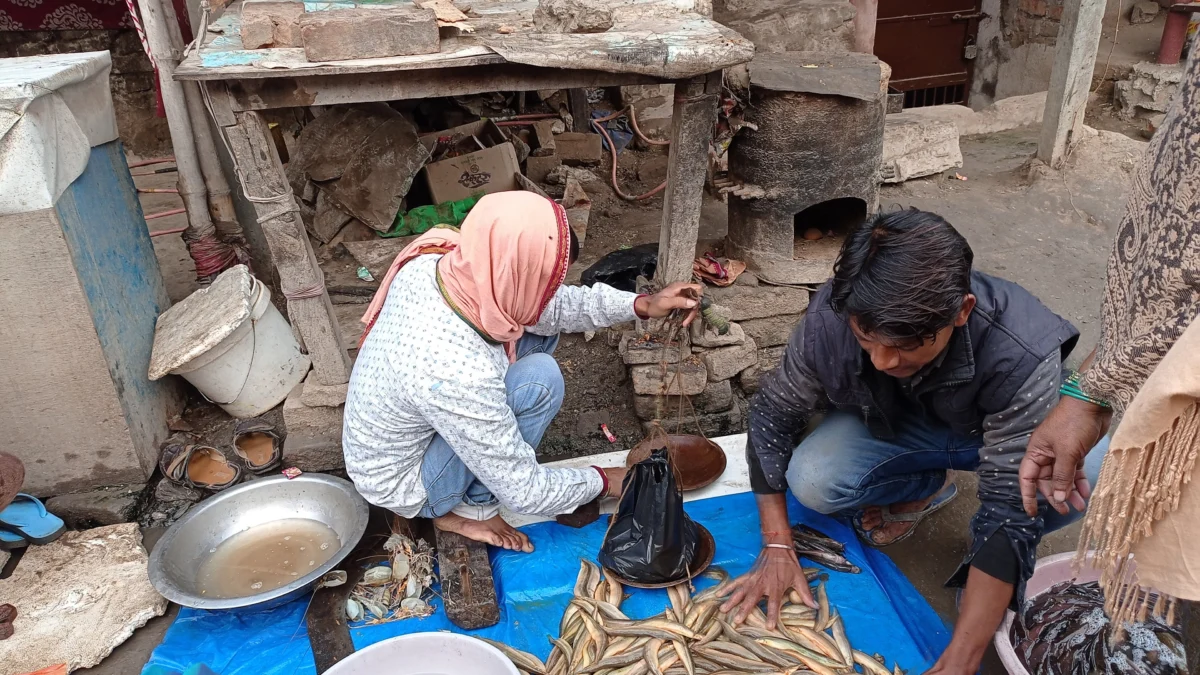
A popular saying in Mithila names the three things that define the region: maachh, paan, makhaan, fish, betel leaf and fox nut. Of the three, fish may be closest to the Maithil heart. In a land of rivers, ponds and floodplains, fish has been part of the daily meal, the festival feast and even the vocabulary of art and ritual for generations. To understand the food of north Bihar, you have to start at the water’s edge.
A land of water
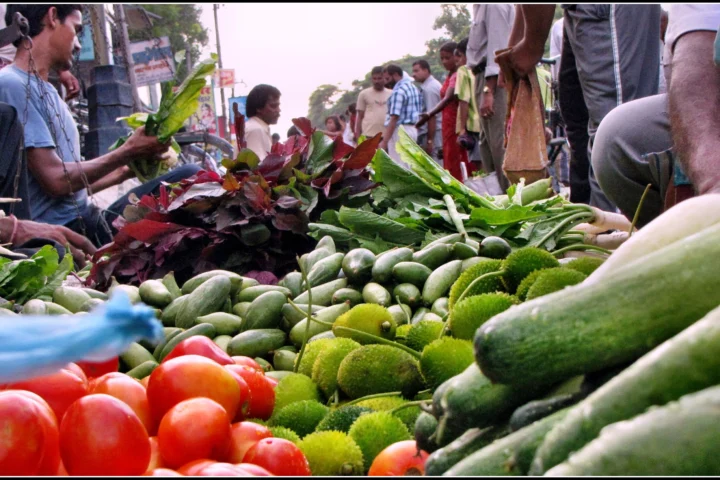
Mithila lies in the plains of north Bihar and the Nepal Terai, crossed by the Kosi, the Gandak, the Bagmati, the Kamla and many smaller rivers, and dotted with thousands of ponds. Wikipedia’s survey of Bihari cuisine notes that fish dishes are especially common in the Mithila region of north Bihar because of its many rivers. Ponds, called pokhar, are found in almost every village; they are used for bathing and Chhath, for growing makhana and, above all, for raising and catching fish.
Fish in Maithil food culture
Wikipedia’s account of Maithil cuisine describes mutton and fish as the traditional non-vegetarian foods of the region, with chicken seen as an inferior option. It notes that mutton and fish have religious and cultural significance in Mithila as sacrificial offerings to the goddesses Durga and Kali. It also notes that the Maithil Brahmin community is one of the few non-vegetarian Brahmin communities in India, which is unusual in a country where Brahmins are often expected to be vegetarian. In Mithila, fish has long been part of the food of priests and scholars as well as farmers.
The classic dishes
- Machh-bhat: fish curry with steamed rice, the everyday meal of many Maithil homes.
- Machhak jhor: a traditional fish curry with a thin gravy, which Wikipedia notes is served at many events, with the exception of some religious festivals. Jhor is a thin gravy of mustard and coriander with chilli.
- Fried fish: pieces of fish rubbed with turmeric, salt and chilli and fried in mustard oil, eaten with rice and dal.
- Dokak jhor: Wikipedia lists a stew of freshwater molluscs cooked with onion gravy among Maithil curries.
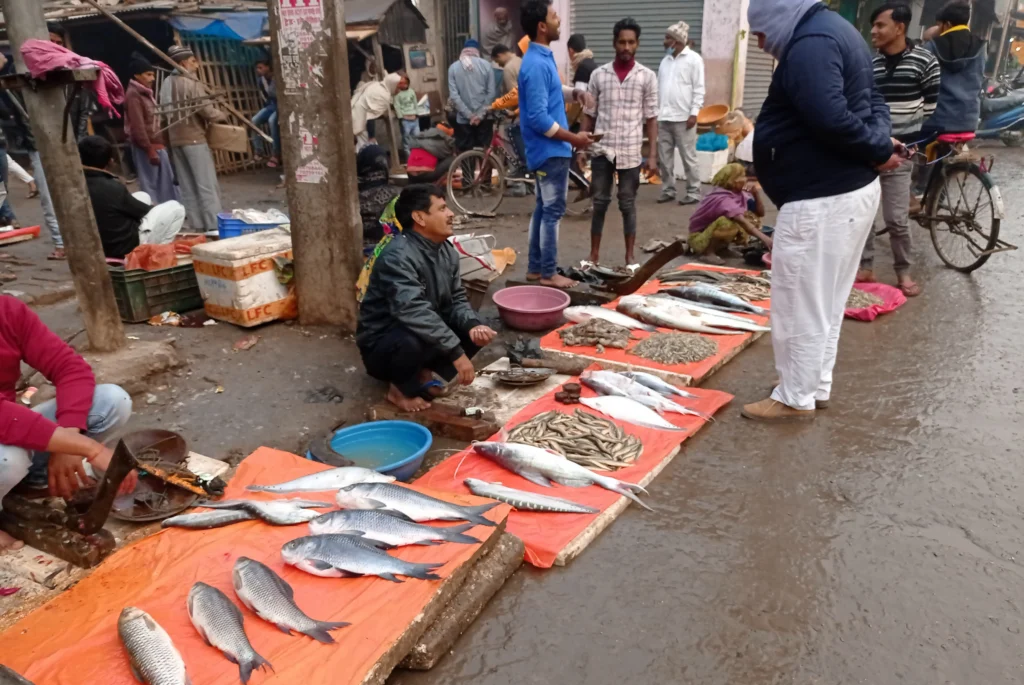
Mustard is central: mustard oil for frying and mustard paste in many gravies, often with dried mango strips to add tartness. Common freshwater fish in north Bihar include varieties of carp, catfish and small river fish, and families have strong opinions about which are best for which dish.
Fish and the ritual year
Fish appears at key moments of the Maithil calendar. Before the Jitiya fast, according to Wikipedia’s account of the festival, it is a tradition among Maithil, Tharu and Bhojpuri communities in the Nepal Terai to eat fish and roti made of millet on the day before the fast begins. Fish is also part of feasts at weddings and family celebrations in many communities. At the same time, many families avoid fish and meat during certain religious observances, such as Navratri for some, or the days of Chhath.
Fish in art
Fish is one of the most common motifs in Mithila painting. In kohbar paintings, made on the walls of the bridal chamber, fish appear alongside parrots, bamboo, lotuses and turtles as symbols of fertility and abundance, according to Sahapedia. Paired fish are a familiar image on Madhubani paintings sold across India. Read more in our stories on Madhubani painting and Mithila weddings.
Paan and makhaan
The other two parts of the saying are just as important. Makhana, the seed of the prickly water lily Euryale ferox, is grown in the ponds of north Bihar. Bihar produces 80 to 90 percent of India’s makhana, according to a 2025 Government of India factsheet, much of it in Darbhanga, Madhubani, Purnea, Katihar and Saharsa. Mithila makhana has a GI tag, and it is distributed by the Maithil community during Kojagara, the festival of the autumn full moon. Paan, betel leaf, is offered to guests and used in rituals throughout the region.
Regional variations
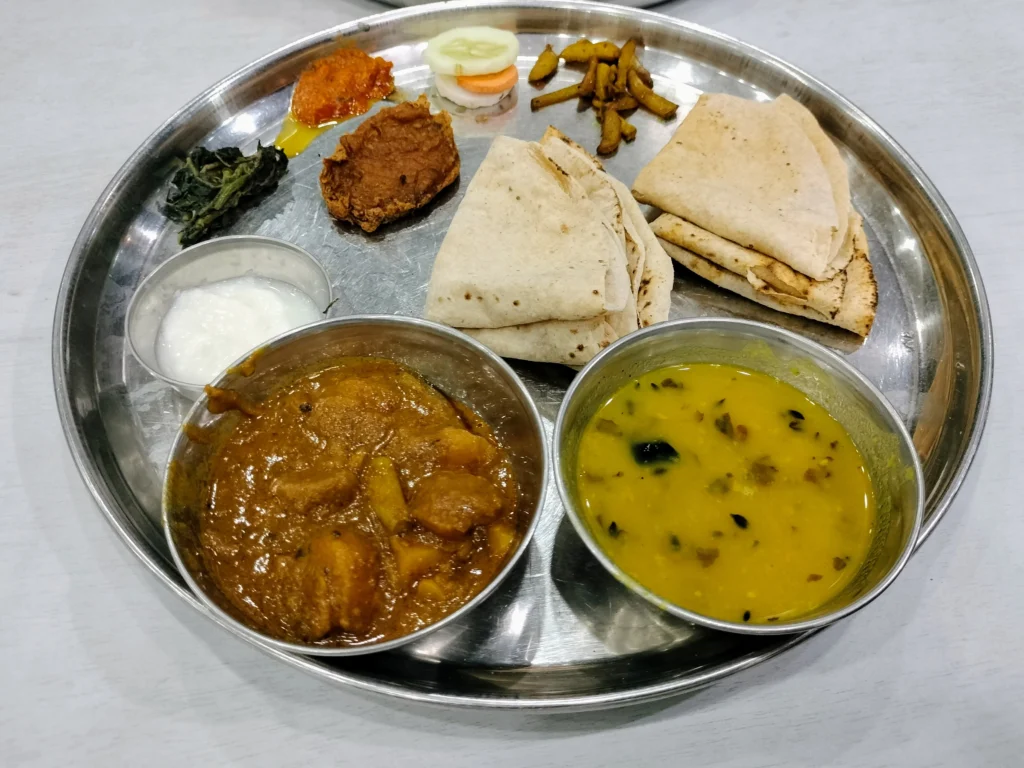
Fish is eaten across Bihar, but its importance is greatest in Mithila and the Kosi region. In the Bhojpuri region, Wikipedia notes that machhari bhaat (fish and rice) is a popular dish and that freshwater fish and small prawns form a good share of meat consumption. In the Anga region around Bhagalpur, Wikipedia describes the Bihari fish curry as a beloved delicacy. Recipes differ: some families prefer a mustard gravy, others a tomato and onion base, and the choice of fish depends on the season and the local catch.
Changes today
Fish farming in ponds has expanded in north Bihar, and farmed fish now sits alongside the local river catch in many markets. Floods, changing rivers and pollution have affected wild fish in some areas. At the same time, Maithil fish dishes have found new audiences in restaurants and among home cooks who share family recipes online.
Conclusion
Mithila’s love for fish is a love for its land and water. From a plate of machh-bhat on an ordinary afternoon to the fish painted on a bridal chamber wall, fish runs through the region’s food and culture. Taste it with rice, mustard and a squeeze of lemon, and you are tasting Mithila. For more of the region’s food, read about kadhi badi and chura ghugni.