Bihari Kadhi Badi: A Taste of Home
Tangy curd and gram-flour curry with soft besan fritters, eaten with rice. The story of kadhi badi, from Sunday lunches to the Maithil new year.
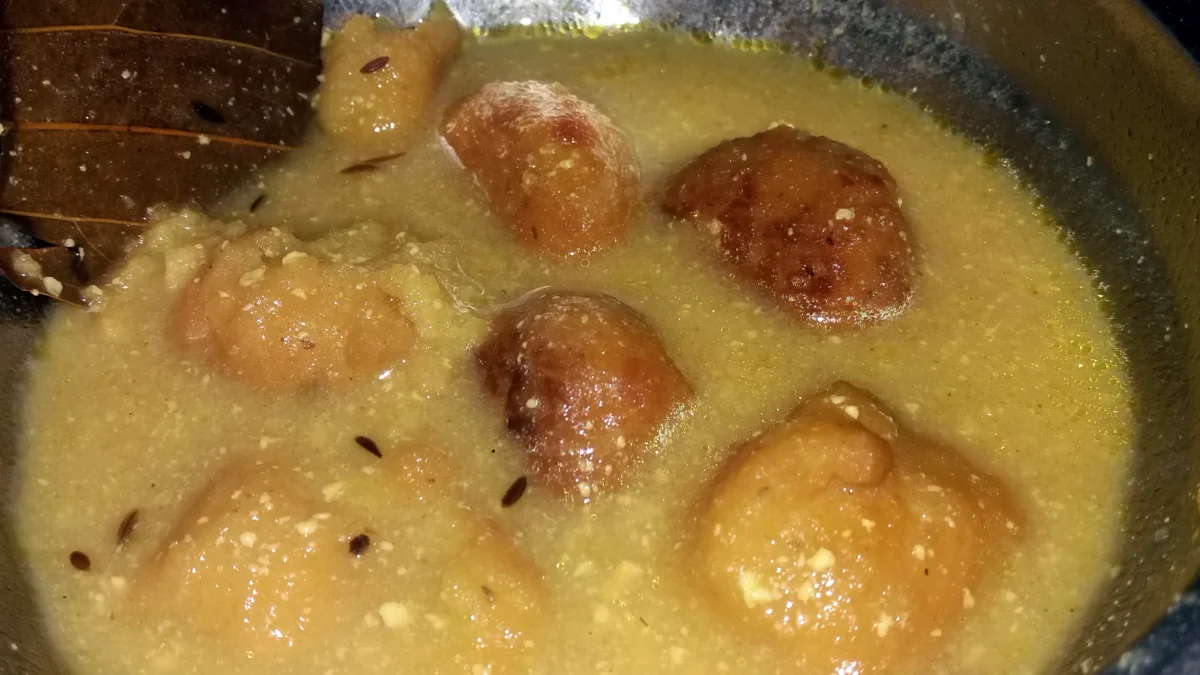
There is a particular smell that drifts out of Bihari kitchens on a lazy afternoon: sour curd and gram flour simmering slowly, fenugreek and cumin crackling in hot mustard oil, and a tray of golden besan fritters waiting to be dropped into the pot. This is kadhi badi, or kadhi bari, a yellow, tangy curry of yoghurt and gram flour with soft fritters soaking in it, eaten with a mound of plain rice. It is not festival food or restaurant food. It is home.
What kadhi badi is
Wikipedia’s survey of Bihari cuisine describes kadhi bari as fried soft dumplings made of besan (gram flour) cooked in a spicy gravy of yoghurt and besan, adding that they go well with plain rice. The badi (or bari) are the fritters: a batter of besan, often whipped until light, sometimes with onion, ajwain or green chilli, fried in small spoonfuls until puffed and golden. The kadhi is the gravy: sour curd or buttermilk whisked with besan and water, flavoured with turmeric and simmered until it thickens, then finished with a tempering, or chhaunk, of spices in hot oil or ghee.
Origins: an Indian dish with Bihari character
Kadhi in its many forms is eaten across north and west India, and it has a long history. Wikipedia notes that the word is thought to derive from the Sanskrit kvathita, a decoction, and that Sanskrit literature refers to a dish called kvathika. Some writers trace kadhi’s origins to Rajasthan, where dairy compensated for scarce vegetables, though such claims are difficult to prove. What is certain is that each region has made the dish its own.
The Bihari version is usually tangy rather than sweet, thicker than the Gujarati kind, and always served with fritters. It is typically tempered with mustard oil, and many families use panch phoron or a mix of fenugreek seeds, cumin and dried red chillies, sometimes with a pinch of asafoetida.
Kadhi badi and the Maithil new year
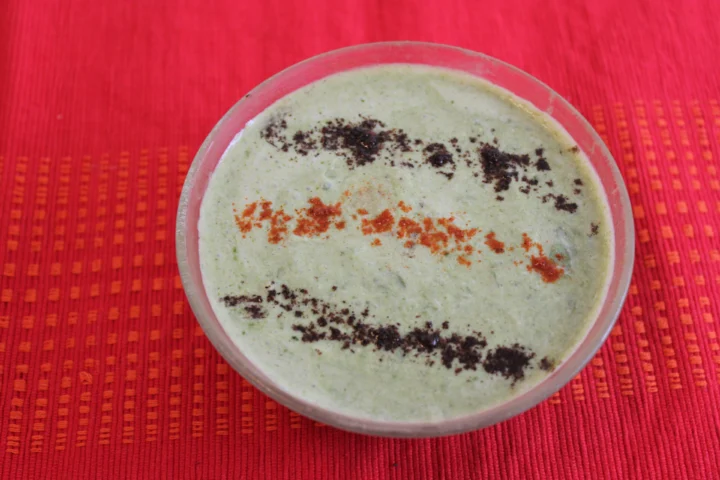
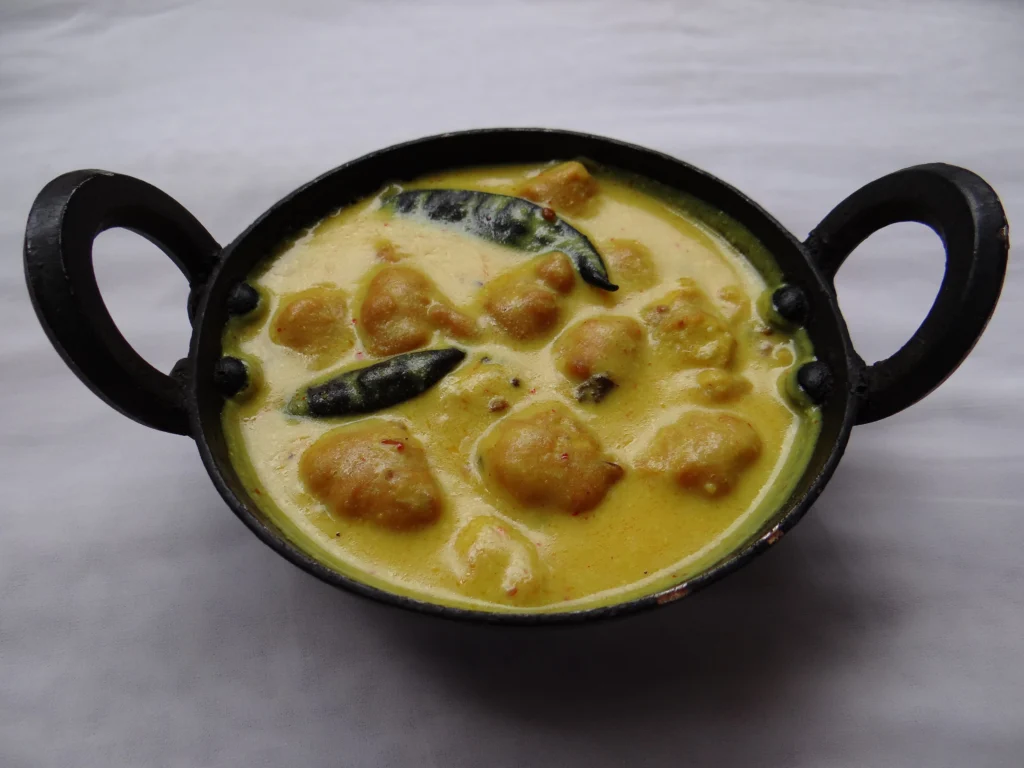
In Mithila, kadhi badi has a special ritual role. According to Wikipedia’s account of Maithil cuisine, on Satuani, the eve of Jur Sital, the Maithil new year in mid-April, women prepare a feast that includes kadhi-badi-bhaat (kadhi badi with rice) and tarua, fried vegetables. Once the cooking is complete, the stove is cleaned, worshipped and left unused for the following day. The bari-bhaat cooked the day before is eaten cold on Jur Sital itself, with curd or raw mango chutney, a custom linked to cooling the body before the summer heat. The photograph at the top of this page shows kadhi bari prepared for Jur Sital.
A dish for festivals and Sundays
In the Bhojpuri region, too, kadhi badi is part of the festival calendar. Wikipedia’s account of Bhojpuri cuisine notes that on the evening of Holi, families enjoy kadhi-bari with boiled rice along with pakoras and other dishes, and that bari-kadhi is among the special dishes cooked on Dussehra. Outside festivals, it is a favourite weekend lunch, the kind of meal families look forward to on a Sunday.
How kadhi badi is made
Recipes vary from home to home, but the steps are broadly the same:
- The badi: besan is mixed with water and whisked vigorously until light and airy, then seasoned with salt, ajwain and sometimes chopped onion or green chilli. Spoonfuls are fried in hot mustard oil until puffed and golden.
- The kadhi: sour curd is whisked with besan, turmeric, salt and water until smooth, then brought slowly to the boil, stirring constantly so it does not split, and simmered until it thickens.
- The tempering: mustard oil or ghee is heated with fenugreek seeds, cumin, dried red chillies and sometimes garlic or curry leaves, and poured over the kadhi.
- The finish: the badi are added to the hot kadhi to soak shortly before serving, so they turn soft but keep their shape.
Many cooks insist that the curd must be properly sour, sometimes kept out for a day, to give the kadhi its tang.
Regional variations
Across Bihar, kadhi badi changes subtly. Some families make the badi with onion and spinach, others keep them plain. Some prefer a thin, pourable kadhi; others like it thick enough to coat a spoon. In Mithila it is eaten with rice and often with tarua on the side; in the Bhojpuri region it may be paired with rice, roti or both. Elsewhere in India, kadhi appears with different partners: with khichdi in Gujarat, with pakoras in Uttar Pradesh and Punjab, or with okra.
Why it matters
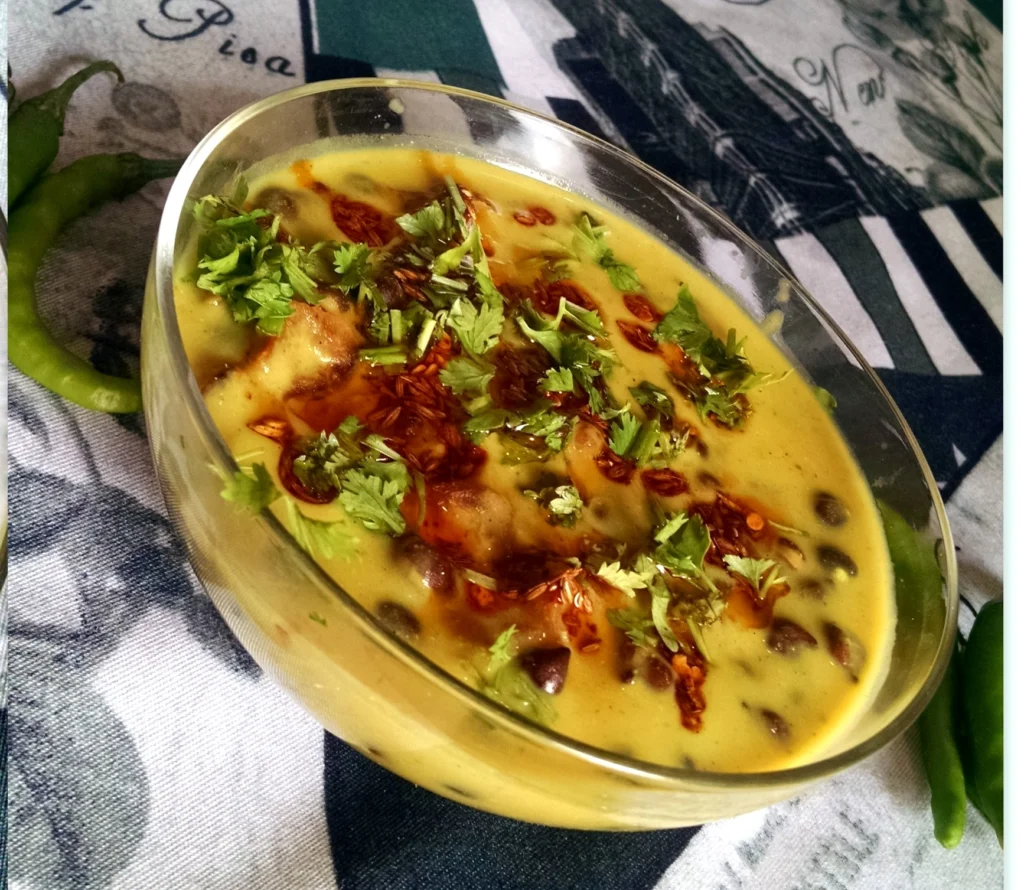
Kadhi badi is a dish of thrift and comfort. It turns two cheap staples, curd and gram flour, into a satisfying meal, and it uses up curd that has turned sour. It is also tied to the rhythms of the year in Mithila and the Bhojpuri region, from the new year in April to Holi in spring. For many Biharis, it is one of the dishes that most strongly recalls home.
Modern popularity
Kadhi badi has remained largely a home dish, but it is now common on the menus of restaurants and thali eateries serving Bihari food, and in canteens across Bihar. It is often part of a Bihari thali alongside rice, dal, bhujia and chokha. Online, Bihari cooks have shared countless versions, and debate over the right consistency and the right kind of badi is lively.
Conclusion
Kadhi badi is proof that the most loved food is often the simplest. A pot of tangy curd, a handful of fritters and a plate of rice: that is all it takes. For more of Bihar’s everyday cooking, read about bhaat, dal and chokha and the Maithil new year, Jur Sital.