Kachori, Sabzi and Jalebi: The Classic Bihari Breakfast
Stuffed fried kachori, fiery potato curry and syrupy jalebi at the halwai’s counter at dawn. The classic street breakfast of Bihar.
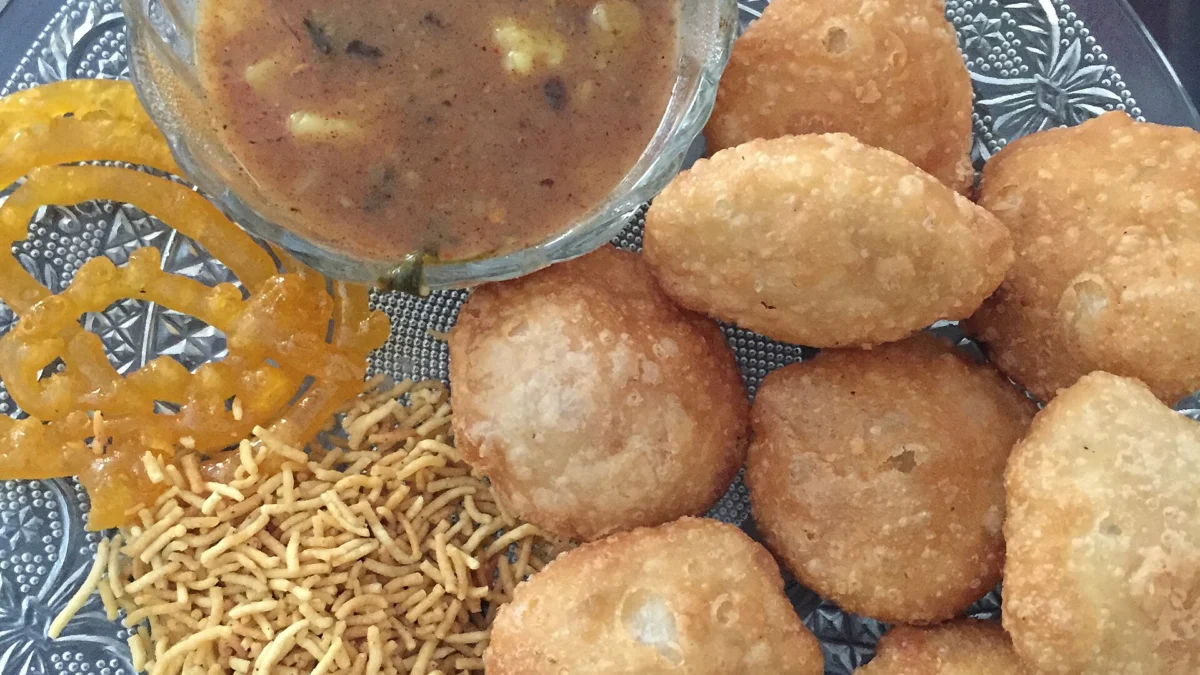
At dawn in a Bihari town, before most shops have opened, the halwai is already at work. A huge kadhai of oil is bubbling, a pot of spicy potato sabzi is simmering, and coils of batter are being piped into hot ghee to make jalebis that will soon be dripping with syrup. By seven, a queue has formed. Kachori, sabzi and jalebi, crisp stuffed bread, fiery potato curry and a sticky sweet to finish, is the classic street breakfast of Bihar, and one of the most satisfying ways to start a day.
The breakfast of the street
Wikipedia’s account of Bhojpuri cuisine notes that a common breakfast served as street food in the region includes puri bhaaji, chana, kachori and jalebi. In Mithila, according to Wikipedia’s account of Maithil cuisine, poori with aloo dum, a potato dish, is a common breakfast eaten along with a sweet dish, jilebi. The combination is found across north India, but in Bihar it has its own flavour, with mustard oil, panch phoron and plenty of green chilli.
The kachori
Kachori is a deep-fried bread, stuffed and puffed. According to Wikipedia, the dish is believed to have originated in the Marwar region of Rajasthan, and recipes for similar fried, stuffed pastries appear in early Indian texts; over time, kachoris spread across South Asia and each region developed its own version. In Bihar, kachori is usually smaller and softer than the flaky khasta kachori of Rajasthan or Uttar Pradesh. Common fillings include spiced urad or chana dal and, in some places, sattu. Wikipedia also lists kachauri among the deep-fried breads of Bhojpuri cooking, along with puri, dalpuri, lichui and suhari.
The sabzi
Kachori is almost always served with a potato curry, whether a thin, spicy aloo jhol or a thicker aloo dum. Wikipedia notes that Bhojpuri cooking has both rasiya or rassewali bhaaji, vegetables in gravy such as aloo rassewale or aloo jhol, and dry bhujia. For breakfast, the curry is usually loose and fiery, often with chickpeas or peas, tempered with cumin or panch phoron, and finished with coriander. Some stalls also offer chana or ghugni on the side.
The jalebi
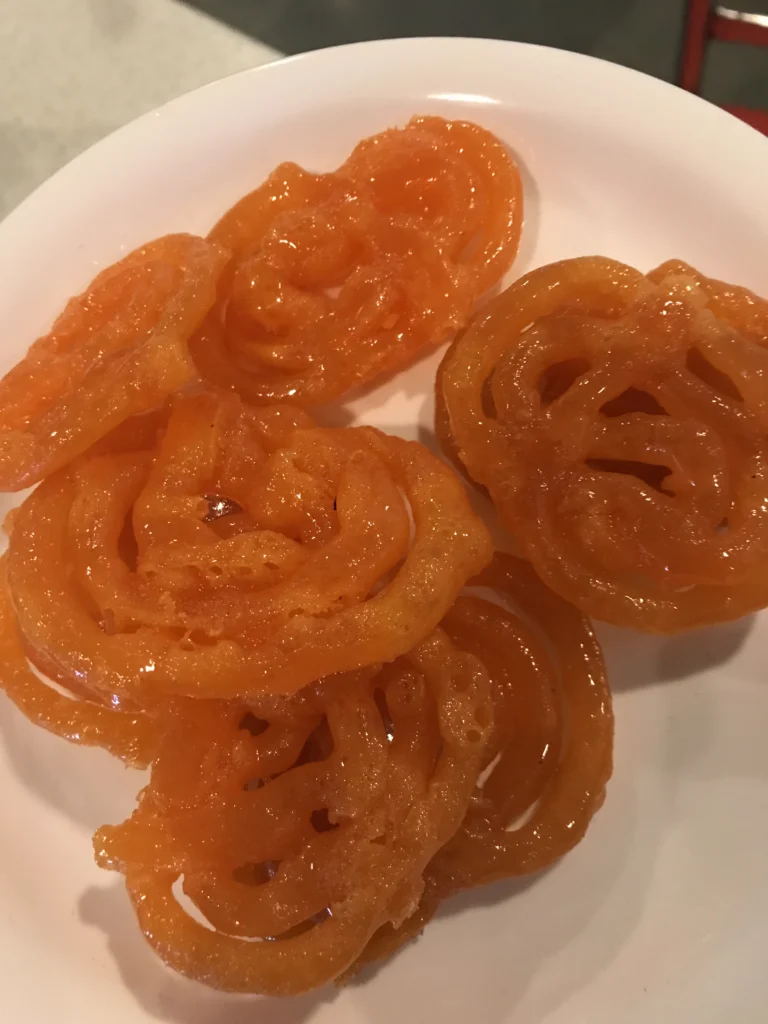
Jalebi is the sweet that completes the plate. Batter of flour, often fermented, is piped in spirals into hot oil or ghee, fried until crisp and dropped into warm sugar syrup. According to Wikipedia, the earliest known recipe for a similar sweet, zalabiya, comes from a 10th-century Arabic cookbook, and the word jalebi is thought to derive from the Arabic zulabiya or Persian zolbiya. In India, a work by the Jain author Jinasura from around 1450 mentions jalebi at a merchant’s dinner, and a Sanskrit text from before 1600 gives a recipe identical to the modern one. In Bihar, jalebi is eaten hot with kachori, with milk or curd, or on its own.
A festival breakfast too
Kachori, sabzi and jalebi are not only everyday food. Wikipedia’s account of Bhojpuri cuisine describes Dussehra as a day when special dishes such as puri, kachori, dum aloo, chhole and jalebi are cooked. On festival mornings and at family celebrations, the same combination often appears, sometimes with dahi bada or other sweets.
How it is eaten
The traditional way is simple: a few kachoris in a leaf plate or bowl, a ladle of potato curry poured over or served on the side, and a couple of hot jalebis on the edge. Some people break the kachori into the curry; others dip. Raw onion, green chilli and a squeeze of lemon are common additions. Tea or a glass of lassi often follows.
Regional variations
The combination changes from town to town. In some places, puri replaces kachori. In others, the curry is made with chickpeas or yellow peas. In Mithila, aloo dum with poori is the classic. Dalpuri, a wheat bread filled with cooked, crushed and fried gram pulses, is another popular fried bread in Bihar, according to Wikipedia’s survey of Bihari cuisine. Jalebi itself varies, from thin and crisp to thicker and softer, and in Mithila a salted, jalebi-like snack made from gram flour, called jhilli, is also eaten.
Cultural significance
Kachori-sabzi-jalebi is a social breakfast. It is eaten standing at a stall, shared among friends, bought for guests and packed for journeys. In small towns, the morning halwai is a meeting point where news is exchanged over hot food. It is also a breakfast of celebration: buying jalebis for the family on a Sunday morning, or after good news, is a tradition in many homes.
Modern popularity
The kachori-jalebi breakfast remains hugely popular in Bihar, even as cafes and packaged foods spread. Many sweet shops in Patna and other cities are famous for their morning kachoris, and the combination is now served in Bihari restaurants elsewhere in India. Food bloggers and video creators often feature it as a must-try street breakfast.
Conclusion
Kachori, sabzi and jalebi is a breakfast built for pleasure: crisp, spicy, sweet and shared. It is one of the best ways to experience a Bihari morning. For more of the state’s street food, see our guide to the street food of Patna and our story on samosa and chaat.