Chura Ghugni: The Breakfast That Biharis Love
Crisp flattened rice with spicy black chickpeas and a cup of tea. Why chura ghugni is Bihar’s favourite winter breakfast.
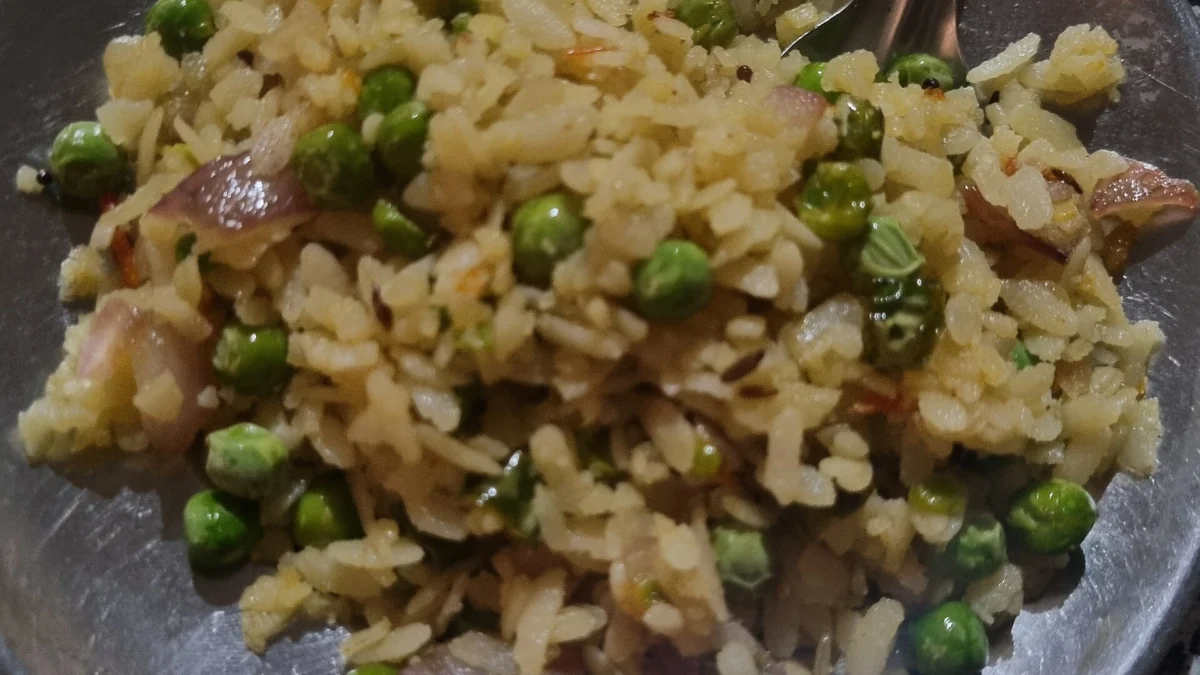
In much of north Bihar, a winter morning begins the same way: a cup of sweet, milky tea, a handful of crisp fried chura (flattened rice) and a bowl of hot chana ghugni. The combination is crunchy, soft, spicy and filling, and it takes only minutes to put together. Wikipedia’s account of Maithil cuisine describes how people in Mithila often start their day with a cup of steaming tea served with chura and ghugni. It is one of Bihar’s most loved breakfasts, and one of its simplest.
What is chura?
Chura, also spelt chiura or chuda, is flattened or beaten rice, known elsewhere in India as poha. It is made by soaking or parboiling rice, then drying, roasting and flattening the grains into flakes, which come in thin, medium and thick varieties. Thinner flakes are better for soaking and sweet dishes; thicker ones are used for frying. Flattened rice is an ancient food across South and Southeast Asia, prized because it is light, keeps well and needs little or no cooking.
In Bihar, chura is a staple, eaten in many ways: soaked with curd and jaggery as dahi chura, fried with onion and peas, or simply roasted and eaten with ghugni.
What is ghugni?
Ghugni is a dish of cooked black chickpeas (kala chana), or in winter green peas or fresh green chickpeas, sautéed in mustard oil with onion, garlic, chilli and spices. It can be dry or with a little gravy. The Government of Bihar describes chana ghugni as a spicy-tangy evening snack of boiled chickpeas fried with onion and spices, served with chuda ka bhuja (fried flattened rice), and says it is prepared in almost every household in the state. Read more in our story on chana ghugni.
The many forms of chura in the morning
- Chura and ghugni: roasted or lightly fried chura with ghugni on the side, a Mithila favourite.
- Chure ka bhujia: beaten rice fried with sliced onion, chopped green chillies and green peas, listed by Wikipedia among Maithil snacks.
- Chiura matar: a popular winter breakfast of the Bhojpur region, according to Wikipedia, made by frying chura and green peas separately and then mixing them.
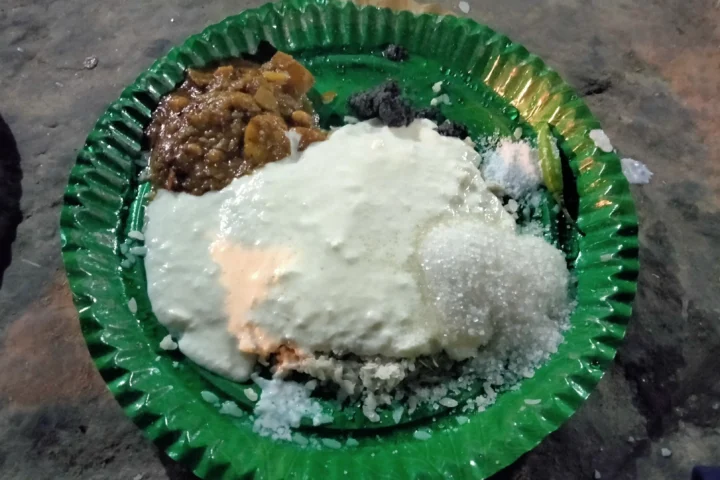
- Dahi chura: chura soaked in or mixed with thick curd and eaten with jaggery or sugar and fruit, the essential dish of Makar Sankranti. Bihar Tourism describes it as a healthy breakfast that needs no cooking, traditionally served with tilkut on Makar Sankranti.
How chura ghugni is made at home
For the ghugni, kala chana is soaked overnight and boiled until tender, then cooked in mustard oil with cumin, onion, garlic, ginger, green chilli, turmeric and other spices, and finished with fresh onion, coriander and lemon. For the chura, thick flakes are washed lightly if they are to be soft, or used dry if they are to be crisp, then tossed in a little hot oil or ghee with salt, sometimes with peanuts, until crunchy. Some cooks add green peas, onions and chilli to make a bhuja. The two are served side by side, or the ghugni is spooned over the chura just before eating.
Why it is a winter favourite
Chura ghugni is eaten all year, but it is especially loved in winter. New rice is harvested and pounded into fresh chura, green peas and fresh chickpeas come into the markets, and a hot, spicy breakfast is welcome on cold mornings. Wikipedia notes that in winter, chura is often mildly baked and accompanied by a thick, spicy preparation of peas and onions.
Cultural significance
Chura is woven into the rituals of Bihar. Dahi chura is the meal of Makar Sankranti, eaten across the state and exchanged among relatives in Mithila with tilkut. Chura is also offered in religious ceremonies and given to guests. Chura ghugni, by contrast, is everyday food, the breakfast of homes, tea stalls and railway platforms. Its ease is its charm: chura keeps for months, ghugni is quick to cook, and together they make a filling meal for very little money.
Regional variations
In Mithila, chura ghugni with tea is the classic breakfast. In the Bhojpuri region, chiura matar is more common in winter. Around Bhagalpur, puffed rice (mudi) often replaces chura, as in ghugni-mudi. In Nepal’s Terai, which shares much of Mithila’s food culture, chiura is eaten with curries, meat or vegetables, and in eastern India poha takes on yet other forms.
Modern popularity
Chura ghugni is now served in Bihari cafes and restaurants in cities such as Delhi and Bengaluru, often as a nostalgic breakfast for people from the state. Flattened rice has also become popular with health-conscious eaters as a light, easily digested grain, and Bihari food creators have introduced chura ghugni to new audiences online.
How to eat it
Eat chura ghugni hot, with plenty of raw onion, green chilli and a squeeze of lemon, and a cup of tea on the side. Mix a spoonful of ghugni with a handful of chura so that every bite has both crunch and softness.
Conclusion
Chura ghugni is the breakfast that Biharis love because it tastes of home, mornings and winter. It is quick, cheap and satisfying, and it shows how much flavour Bihari cooking can draw from simple ingredients. For more breakfasts, read about sattu paratha and kachori, sabzi and jalebi.