Dal Pitha: Bihar’s Traditional Comfort Food
Soft rice-flour dumplings with a peppery lentil filling, steamed and eaten with chutney. How Bihari families make dal pitha and why they love it.
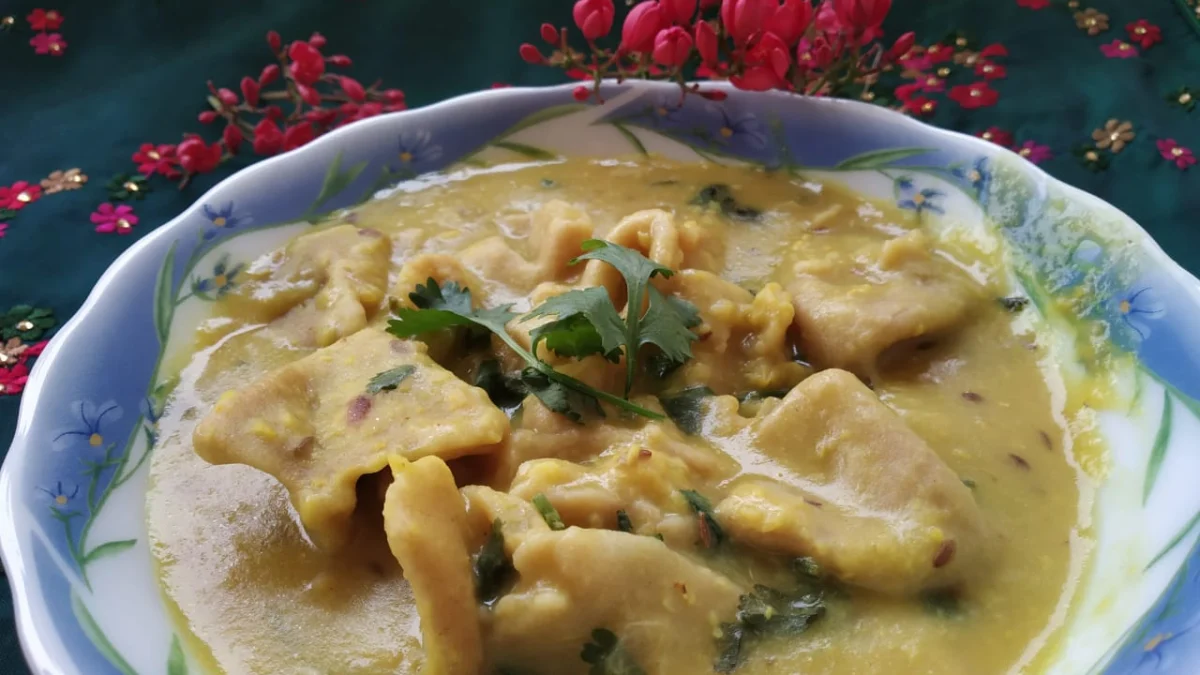
Ask people who grew up in Bihar what they miss most about their mother’s kitchen and many will not name a festival sweet or a famous street snack. They will name something quieter: a plate of warm dal pitha on a winter evening, soft rice-flour dumplings with a peppery lentil filling, eaten with a sharp green chutney and perhaps a drizzle of ghee. It is food that asks for no occasion, and that is exactly why it is loved.
What dal pitha is
India’s tourism ministry describes dal pitha as a breakfast favourite with a spiced lentil filling, served with green or tomato chutney, in a shape that resembles gujiya. The Government of Bihar describes pittha more broadly as a dish prepared “in a local style”, salty or sweet, with fillings of chana dal paste or poppy seeds, steamed in water or milk. In everyday Bihari kitchens, the savoury version is the most common: a rice-flour shell around a coarse paste of soaked chana dal, garlic, ginger, green chilli and spices, folded into a half-moon and steamed or simmered until tender.
Part of a large family
The word pitha covers an enormous family of rice cakes and dumplings across eastern India and Bangladesh, from Bengal’s winter pithe to Odisha’s pitha and the rice cakes of Assam. Bihar’s versions share their logic, rice flour, a filling and a gentle cooking method, but tend towards savoury, lentil-based fillings. Wikipedia’s account of Bhojpuri cuisine also lists a close relative, gojha (also called pangojha or bhakosa), a dal-stuffed bread that can be steamed or fried and made with wheat flour, rice flour or semolina. In many homes, the names overlap, and what one family calls pitha another calls gojha.
How families make it
Dal pitha is mostly made at home, by feel rather than by measurement, and every family has its own way. A typical method runs like this:
- Chana dal is soaked for several hours, drained and ground coarsely, often on a sil-batta (grinding stone) in older homes, with garlic, ginger, green chillies, cumin, ajwain and salt.
- Rice flour is mixed with hot water, sometimes with a little salt and oil, and kneaded while warm into a smooth dough.
- Small balls of dough are pressed into thin discs, filled and sealed, and the edges are pinched into a ridge.
- The dumplings are steamed, or slipped into boiling water until they float and the dough turns glossy.
Leftover pitha rarely goes to waste. The next morning they are sliced and tempered in mustard oil with mustard seeds, onions and chillies, a second dish in their own right.
The sweet side of pitha
Not every pitha in Bihar is savoury. The Government of Bihar notes pitha made with poppy seeds and jaggery, and sweet rice pitha filled with jaggery and coconut, sesame or khoya appear in many homes in winter, when new rice, jaggery and sesame are at their best. Wikipedia’s account of Chhath offerings also mentions rice dumplings filled with jaggery and coconut among the foods prepared in Bihar and eastern Uttar Pradesh.
A food of seasons and rituals
Dal pitha is above all a winter food, made when evenings are cold and something warm and filling is wanted. It also has ritual uses. In the Bhojpuri region, pitha made from soaked and ground rice and pulses is traditionally prepared on the occasion of Godhan, and pitha are offered as part of the worship of the Ganga. In Mithila, rice is the centre of the kitchen and rice-flour preparations appear throughout the year.
Regional variations
Across Bihar, the variations are many. Some cooks use moong or urad dal instead of chana dal. Some add grated vegetables or fresh herbs to the filling. Some shape the pitha as rounds or rolls instead of half-moons. In Jharkhand and parts of north Bengal, sweet fillings of coconut and jaggery are more common. And in many homes, a related dish, dal pitthi, in which pieces of wheat dough are cooked directly in a pot of dal, shares the name and the spirit. You can read about the differences in our earlier story, Dal Pitha: The Traditional Comfort Food of Bihar.
Why it is comfort food
Dal pitha is comfort food in the truest sense. It is warm, soft and mildly spiced, easy on the stomach and filling. It is made from staples every Bihari household keeps, rice and lentils, and it is steamed rather than fried. It is also food made with the hands, often by mothers and grandmothers, and many people associate it with being cared for.
Modern popularity
For a long time dal pitha rarely appeared outside homes. That is changing. Bihari restaurants in Patna and in cities such as Delhi and Bengaluru now serve it, home cooks share their recipes online, and the Government of Bihar itself compares pittha to momos. Some cooks now pan-fry the steamed pitha for a crisp finish, or serve them with tomato or peanut chutneys.
How to eat it
Eat dal pitha hot, straight from the steamer, with green chutney of coriander, garlic, chilli and mustard oil, or with a tangy tomato chutney. A few drops of ghee are welcome. If you have leftovers, temper them the next day with mustard oil and onions.
Conclusion
Dal pitha will never be as famous as litti chokha, and it does not need to be. It is the quiet, everyday food of Bihari homes, made with rice, lentils and patience. If you want to understand how Bihar eats when nobody is watching, start here. For more home cooking, read about kadhi badi and bhaat, dal and chokha.