Dal Pitha: The Traditional Comfort Food of Bihar
Rice flour dumplings filled with spiced lentils and steamed. How dal pitha is made, where it comes from and why Biharis call it the taste of home.
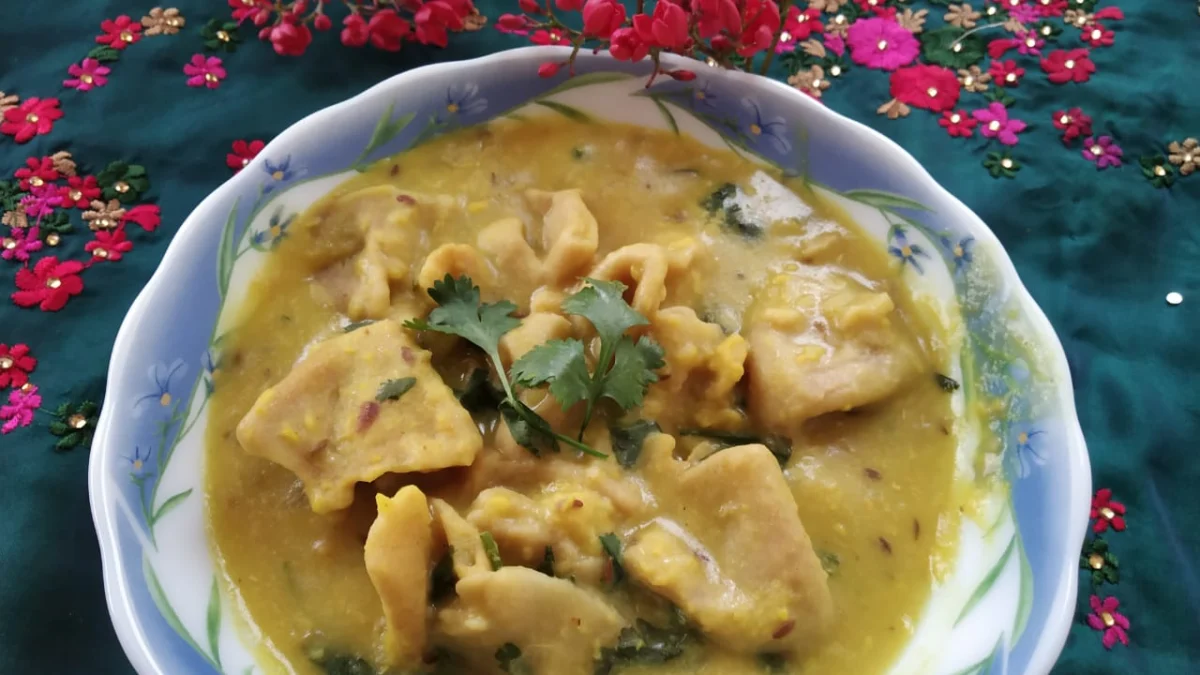
Not every famous Bihari dish is made for festivals or sold at sweet shops. Some are made at home, on an ordinary winter evening, by a mother who wants to feed the family something warm, filling and good. Dal pitha is one of those dishes. Soft dumplings of rice flour, filled with a spiced lentil paste and steamed or boiled, it is simple, inexpensive and deeply loved, a taste of home for many people who grew up in Bihar.
What dal pitha is
The name explains the dish. Dal means lentils, and pitha refers to a dumpling or cake made from rice flour or, in some homes, wheat flour. In its best-known form in Bihar, dal pitha is made by filling small rounds of rice flour dough with a paste of soaked and ground chana dal (split Bengal gram) or other lentils, seasoned with garlic, ginger, green chilli and spices. The dumplings are folded into half-moons, often compared in shape to gujiya, and cooked by steaming or by boiling in water. The Government of Bihar describes pittha as being prepared in a local style, salty or sweet, steamed in water or milk, with fillings of channa dal paste or poppy seeds. India’s tourism ministry describes dal pitha as a breakfast favourite with a spiced lentil filling, served with green or tomato chutney.
History and origins
Pitha of many kinds are eaten across eastern India and Bangladesh, from Bengal and Odisha to Assam, Tripura, Jharkhand and Bihar. In Bihar, dal pitha is especially associated with the Bhojpuri region of western Bihar and eastern Uttar Pradesh, and with Mithila. Its history is not recorded in texts. Like many home dishes, it has been passed down in kitchens rather than written down.
It is, however, easy to understand why it became popular in a farming region. It is made from rice and lentils, staples that every rural household had, it requires no oil for frying, and it is filling. Accounts of the dish describe it as a food suited to agricultural families who worked long hours in the fields and needed a meal that would give energy and keep them full.
How dal pitha is made
Recipes vary from family to family, but the basic method is the same:
- The filling. Chana dal, or a mix of lentils, is soaked for several hours and ground coarsely with garlic, ginger, green chillies and spices such as cumin and ajwain (carom seeds). Some cooks lightly fry the paste in mustard oil.
- The dough. Rice flour is mixed with hot water and kneaded into a soft dough. Some families use wheat flour or a mixture.
- Shaping. Small balls of dough are flattened into discs, filled with the lentil paste and folded into half-moons, or shaped into rolls or rounds.
- Cooking. The dumplings are steamed, or gently boiled in water until cooked. Leftover pitha are sometimes sliced and tempered with mustard oil, chillies and onions the next day.
Dal pitha is usually served hot, with green chutney, tomato chutney or a mustard-and-chilli relish, and sometimes with a little ghee.
Sweet and savoury versions
In Bihar, dal pitha is normally savoury. In parts of Jharkhand and north Bengal, a sweet variety is popular, in which the lentil filling is mixed with coconut and jaggery. Across eastern India, sweet pitha of rice flour filled with coconut, jaggery, khoya or sweetened gram flour are winter specialities, and the Government of Bihar notes that pittha can be both salty and sweet.
Dal pitha, dal pitthi and the question of names
Food names in Bihar change from district to district, and dal pitha is a good example. In some homes, the word pitthi or dal pitthi refers to a related dish, in which pieces of dough are cooked directly in a pot of lentils, as in the photograph at the top of this page. Elsewhere, the two names are used for the same thing. Both dishes share the same idea, dough and lentils cooked together into a complete meal, and both are winter comfort food.
Significance and occasions
Dal pitha is above all an everyday dish, often made on winter evenings or for breakfast. But pitha also have a place in rituals. In the Bhojpuri region, pitha are traditionally prepared on the occasion of Godhan, and are offered as part of the worship of the river Ganga. Like thekua and sattu, dal pitha belongs to the food of ordinary families, made from local ingredients with very little waste.
Regional variations
Each region has its own pitha. In Mithila, rice pitha are often made in winter after the paddy harvest. In the Bhojpuri region, dal pitha is a regular home dish. In Jharkhand and Chhattisgarh, pitha with lentil fillings are also common, and in Bengal and Assam the word pitha covers a large family of rice cakes, many of them sweet. The fillings, shapes and cooking methods vary, but the basic combination of rice and lentils is shared.
Facts worth knowing
- Dal pitha is usually steamed or boiled, not fried, which makes it light compared with many snacks.
- Its half-moon shape is often compared to that of gujiya.
- The Government of Bihar lists pittha with channa dal or poppy-seed fillings among the state’s traditional foods.
- Lentils provide plant protein and fibre, while rice flour provides carbohydrates, making dal pitha a filling meal.
How dal pitha has changed
Dal pitha remains mainly a home dish, but it has started to appear on the menus of restaurants and food stalls serving Bihari cuisine in Patna, Delhi and other cities, and on food blogs and cooking videos made by Bihari cooks. Some versions now use different lentils, vegetables or herbs, and some cooks pan-fry or air-fry the steamed dumplings for a crisp finish.
Dal pitha in modern Bihar
In Bihar today, dal pitha is still most often eaten at home, especially in winter. For many people who have moved away, it is one of the dishes that most strongly recalls their mother’s or grandmother’s kitchen, and one that is hard to find in restaurants. If you are invited to a Bihari home on a cold evening, you may be lucky enough to be offered a plate.
Conclusion
Dal pitha shows that Bihar’s food culture is not only about grand festival dishes. It is also about humble, nourishing food made with care from rice and lentils. Simple as it is, it carries generations of home cooking. For more of Bihar’s food, read about litti chokha and Bihar’s traditional sweets.