Bamboo, Wood and Terracotta: Bihar’s Everyday Crafts
Chhath baskets, clay lamps and carved wooden Buddhas. The everyday crafts of Bihar, their ancient roots and the artisans who keep them going.
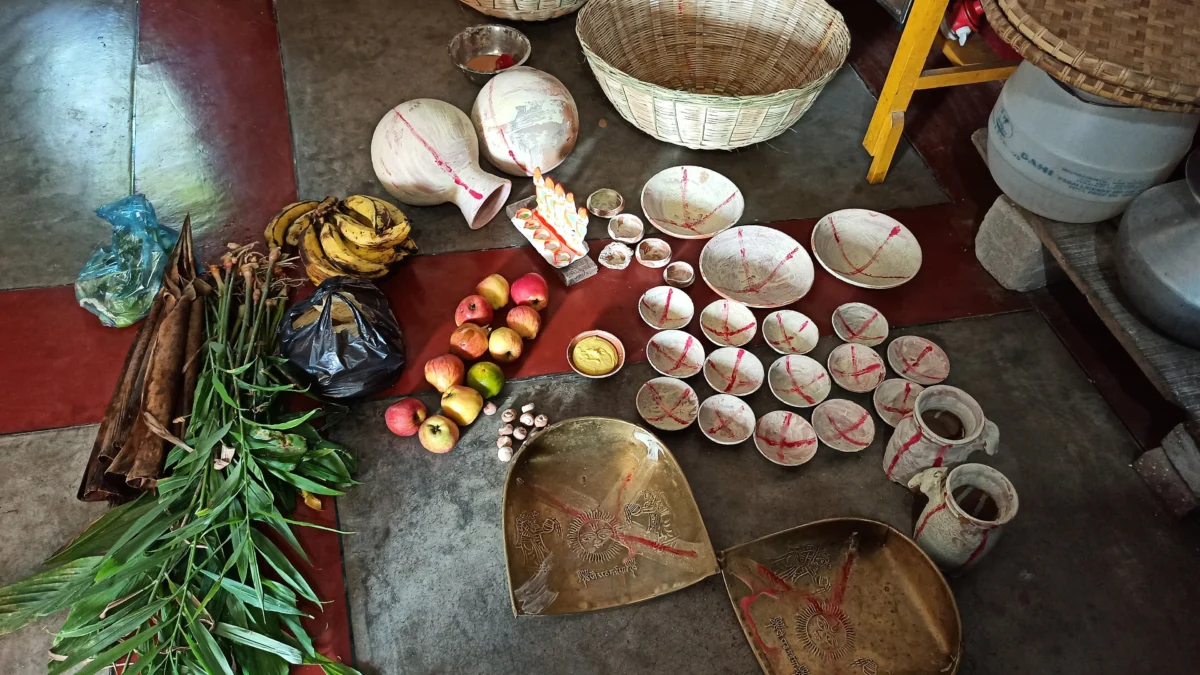
Some of Bihar’s crafts are famous: Madhubani painting, Bhagalpur silk, sikki grass. Others are so much a part of everyday life that they are hardly noticed. The bamboo winnowing basket in which Chhath offerings are carried to the river. The clay lamps lit at Diwali. The painted wooden toy bought at a village fair, or the carved Buddha sold to a pilgrim at Bodh Gaya. These everyday crafts, in bamboo, wood and clay, are among the oldest in the state, and they are still made by hand by thousands of artisan families.
An ancient inheritance
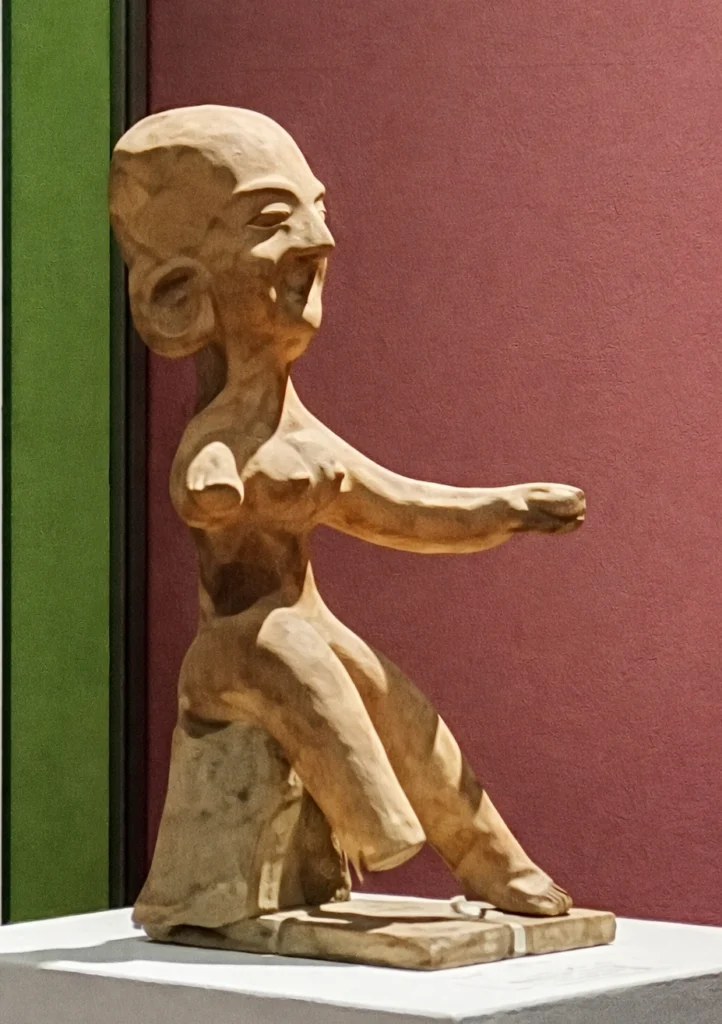
Bihar’s soil has preserved a remarkable record of its craftspeople. Terracotta figurines from the Maurya period and earlier have been found across the state, and many are now displayed in the Bihar Museum and Patna Museum. One of them, a terracotta statuette from Buxar dated to around the 4th century BCE, is pictured below.
Wood has an equally long history. The Greek envoy Megasthenes, who visited the Mauryan court around 300 BCE, described a wooden palisade surrounding Pataliputra, the capital that lies beneath modern Patna. Excavations at Bulandibagh in Patna in the early 20th century uncovered remains of this timber wall. Both the Upendra Maharathi Shilp Anusandhan Sansthan (UMSAS), the state’s handicrafts institute, and the Folkartopedia archive note a tradition that artisans in the time of Ashoka made royal thrones, gates and temple panels of wood.
Bamboo: the craft of every household
Bamboo is the most widely used craft material in rural Bihar. From it, artisans weave the soop (winnowing tray), the daura and dauri (round baskets), fish traps, grain containers, mats, fans and screens, as well as larger structures. In Mithila, the marwa, the canopy under which wedding rituals are performed, is built of bamboo.
The best-known bamboo objects in Bihar are those used in Chhath. Offerings of thekua, fruit and sugarcane are arranged on bamboo soop and in bamboo baskets and carried to the river or pond, and for many families buying new ones each year is part of the festival. Basket-making from split bamboo has traditionally been associated with the Dom community, and in the weeks before Chhath markets across the state fill with their work.
Bamboo is also an organised industry. A 2025 factsheet from the Government of India lists bamboo and cane crafts in Vaishali, Madhubani, Jamui and Gaya, involving several hundred artisans, many of them women. The Vaishali cluster alone, developed under the central SFURTI scheme for traditional industries, engages about 330 artisans making furniture, baskets and decor for homes, hotels, homestays and online buyers.
Wood: toys, carvings and the Buddha
Bihar’s woodcraft today takes several forms. Patna has long been known as a centre for wooden toys, and for carving and inlay work in which wood is set with metal, horn or chips of other woods to make wall plaques, tabletops and small objects, according to the Folkartopedia archive.
The most active woodcarving centre, however, is in Gaya district. UMSAS describes craftsmen working in Gaya, Bodh Gaya and Khukhari village, mainly from carpenter families. Their best-known product is the carved Buddha, sold to pilgrims and tourists from across Asia and beyond who come to the Mahabodhi Temple. They also make decorative pieces, painted toys, painted chariots and small images of deities. The work is done largely with simple hand tools, chisels, gouges, knives, saws and files, and the main wood used is gambhar, part of which is brought from Siliguri and Assam because local supply falls short. UMSAS notes that most carvers sell to retailers in the Bodh Gaya market rather than directly to buyers.
Terracotta: the potter’s wheel
Almost every Bihari village once had its potters, who made the cooking pots, water vessels, storage jars, lamps and festival objects that a household needed. Pottery in Bihar is closely tied to the ritual calendar. Clay lamps are needed for Diwali and Chhath, clay pots for weddings, and clay figures for festivals such as Sama-Chakeva, while clay elephants are worshipped during Madhushravani in Mithila.
Bihar Tourism describes terracotta as one of the oldest crafts known to humanity, once considered “a poor man’s craft” but now valued by all classes. It identifies Darbhanga and Madhubani as centres of decorative terracotta, where about 300 to 500 artisans depend on the craft for a regular income. Artisans shape the clay on the potter’s wheel and by hand, using two local clays, ram-ras mitti and gerua mitti, and fire the finished pieces.
The people behind the crafts
Each of these crafts has traditionally been practised by particular communities: potters for clay, carpenters for wood, and basket-making communities for bamboo. Skills were passed from parent to child. Today, training programmes, cooperatives and clusters have opened the crafts to new people, especially women. UMSAS, founded in Patna in 1956 by the artist Upendra Maharathi, has played a central role in training artisans and promoting their work.
Significance
Bamboo, wood and clay are the materials of ordinary life, and that is exactly why these crafts matter. They are sustainable, made from local, renewable materials. They support some of the poorest artisan families in the state. And they carry knowledge, about materials, forms and techniques, that has been refined over centuries. Without them, many of Bihar’s festivals and rituals could not be performed in their traditional form.
Regional variations
The crafts vary across the state. Mithila is known for decorative terracotta and for bamboo work alongside sikki. Gaya is the centre of woodcarving and also of Patharkatti stone carving, which received a Geographical Indication tag in 2025. Vaishali has an organised bamboo cluster. Patna, the old capital, is associated with toy-making and inlay.
Facts worth knowing
- Megasthenes described the wooden palisade of Pataliputra in the Maurya period, and remains of it were excavated at Bulandibagh in Patna.
- Gaya’s woodcarvers mainly use gambhar wood, some of it brought from Siliguri and Assam.
- Bihar Tourism lists ram-ras mitti and gerua mitti as the clays used by terracotta artisans.
- The Vaishali bamboo cluster engages about 330 artisans, according to the Government of India.
How these crafts are changing
All three crafts face competition from cheap factory-made goods, plastic buckets, steel utensils, mass-produced toys. Many artisans have left their family trades for better-paid work. At the same time, new markets have opened up. Bamboo furniture and decor are in demand among hotels and urban buyers, terracotta decor sells in city shops, and Buddhist carvings sell to international pilgrims. Lower taxes on handicrafts, announced in 2025, were expected to make bamboo and other crafts more competitive.
Everyday crafts in modern Bihar
Despite everything, the crafts survive. Before Chhath, you will still see roadside stalls stacked with new bamboo soop. Before Diwali, potters’ courtyards are full of drying lamps. And in Bodh Gaya, carvers still sit outside their workshops shaping the Buddha from a block of wood.
Conclusion
Bihar’s everyday crafts are easy to overlook, because they are everywhere. But they connect today’s households with the potters of Maurya-era Pataliputra and with festivals that would not be the same without them. The next time you see a bamboo soop at a Chhath ghat, remember that someone made it by hand. For more of Bihar’s crafts, read about Tikuli art and Bhagalpur silk.