Mahabodhi Temple, Bodh Gaya
The temple complex that marks the place where, according to Buddhist tradition, Siddhartha Gautama attained enlightenment. A UNESCO World Heritage Site since 2002.
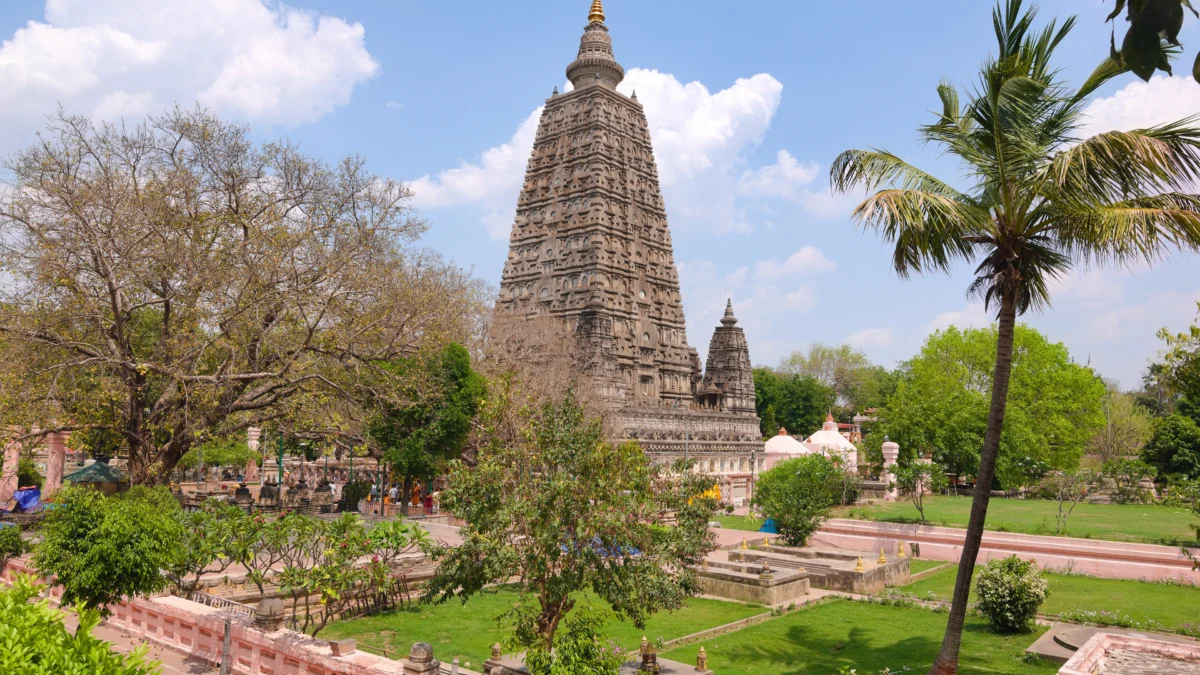
The Mahabodhi Temple Complex at Bodh Gaya marks the place where, according to Buddhist tradition, Siddhartha Gautama attained enlightenment and became the Buddha. It is the most revered pilgrimage site in the Buddhist world, and UNESCO inscribed it as a World Heritage Site in 2002.
Some elements of the site go back to the time of Emperor Ashoka in the 3rd century BCE. Most of what stands today dates from around the 6th century CE, with several major restorations since the 19th century. The main temple is built largely of brick covered with stucco, which makes its survival all the more remarkable.
Inside the complex grows a Bodhi tree believed to be a descendant of the tree under which the Buddha meditated. Pilgrims arrive from across Asia and beyond, and many Buddhist countries have built monasteries in the town around the temple.
Under the Bodh Gaya Temple Act of 1949, the temple is managed by a committee with both Buddhist and Hindu members.
Getting there
Gaya Junction is the nearest major railway station. Gaya International Airport is close to Bodh Gaya.
Visitor information
Timings and rules on phones, cameras and footwear are set by the temple management and can change. Check current notices before you visit.
Timings, fees and access can change. Please confirm with official sources before you travel.