Litti Chokha: The Soul of Bihari Cuisine
Smoky sattu-stuffed wheat balls, ghee and mashed chokha. What Bihar’s most famous plate reveals about the whole of Bihari cooking.
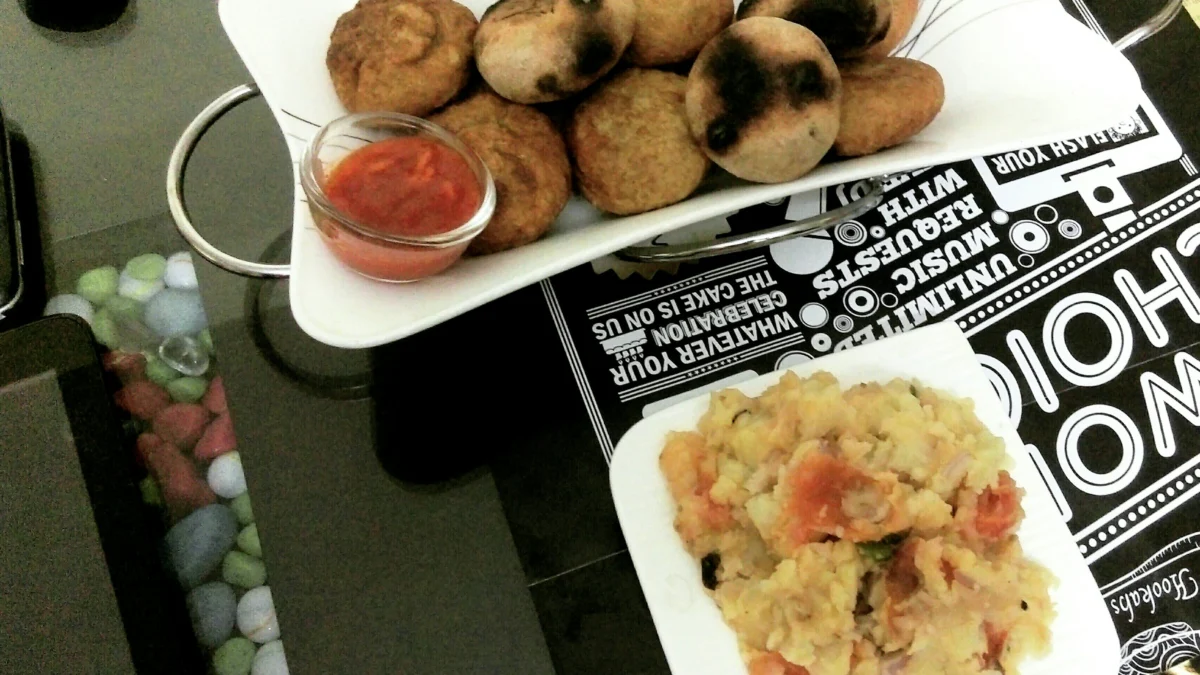
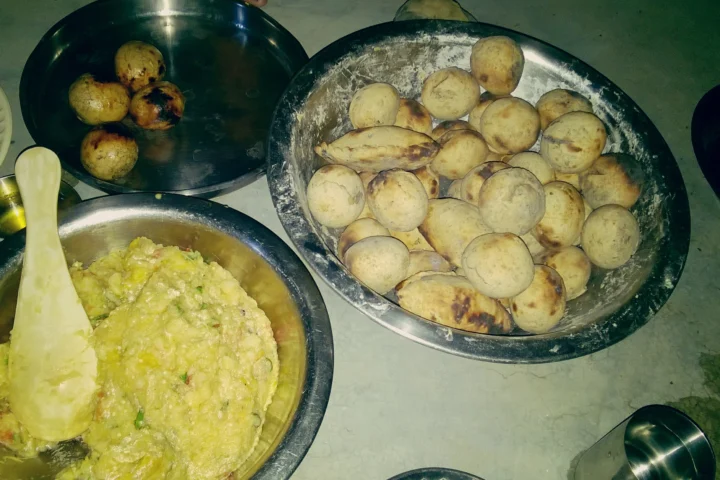
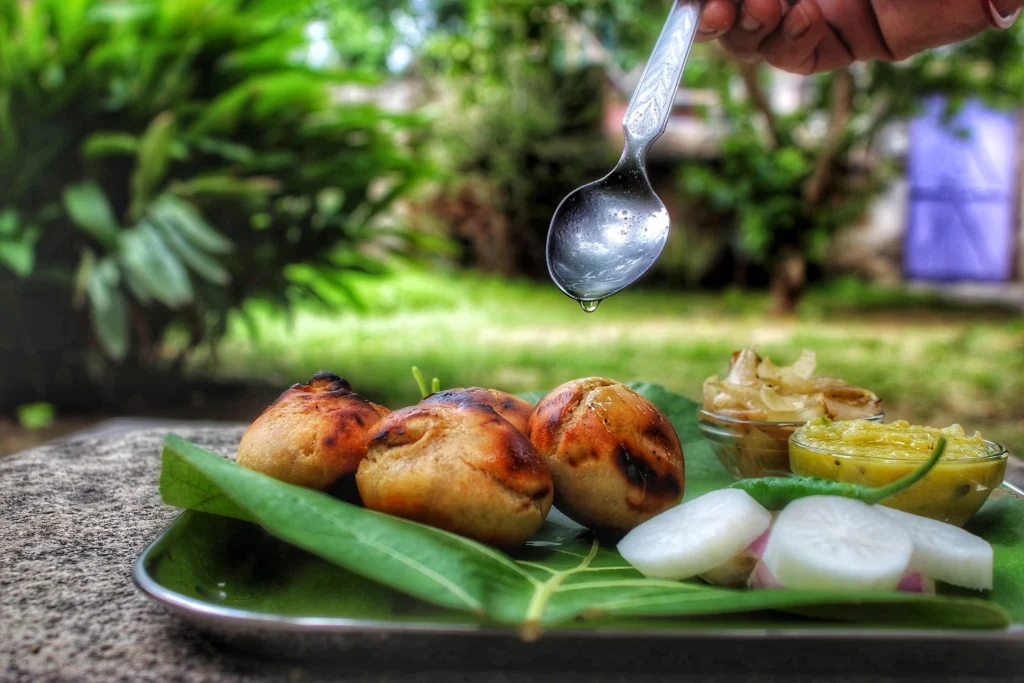
If you had to explain Bihari food with a single plate, it would be this one: a few rough, smoky balls of baked wheat dough, cracked open and glistening with ghee, beside a heap of mashed brinjal, potato and tomato sharp with mustard oil, garlic and green chilli. Litti chokha is cheap, filling and eaten everywhere from village courtyards to Patna’s busiest roadside stalls. It is often called the state’s signature dish, and for good reason. Almost everything that makes Bihari cooking distinctive is on that plate.
What is on the plate
The Government of Bihar describes litti as wheat and sattu, mixed with spices and kneaded into round, spicy balls that are dipped in ghee, served with chokha made from mashed boiled vegetables, usually potatoes, brinjal or tomatoes. The filling is the heart of it: sattu, roasted gram flour, mixed with chopped onion, garlic, ginger, green chilli, coriander, lemon juice, ajwain, kalonji and a generous splash of mustard oil. Many cooks also add a spoonful of pickle masala.
Chokha is the perfect partner. Brinjals are charred directly over the flame until the skin blackens, potatoes are boiled or roasted, and tomatoes are blistered. Everything is peeled and mashed by hand with raw mustard oil, garlic, onion, green chilli, coriander and salt. Some families add roasted red chilli for a smoky heat.
Five things litti teaches you about Bihari food
1. Sattu is everywhere. Roasted gram flour is one of Bihar’s great staples. It appears as a drink, a dough, a paratha filling and, above all, as the stuffing of litti. Read more in our story on sattu.
2. Mustard oil is the flavour of Bihar. Bihari cooking uses mustard oil both for cooking and raw, as a seasoning, and its pungent bite is essential to both the filling and the chokha.
3. Smoke is an ingredient. Wikipedia’s survey of Bihari cuisine notes a tradition of “smoked food”, in which smoked red chilli is used to give chokha a strong aroma. Litti itself is traditionally roasted on the embers of a wood, charcoal or cow-dung fire, which gives it a smoky crust.
4. Little is fried. The travel magazine Outlook Traveller has pointed out that litti is cooked without deep-frying. Much Bihari home cooking relies on roasting, steaming and light frying rather than heavy gravies.
5. Food is made for work and travel. Litti keeps well, travels easily and gives energy for hours, which is why it has long been eaten by farmers, labourers and travellers.
History and origins
Litti’s roots lie in the Bhojpuri region of western Bihar and eastern Uttar Pradesh, and the dish is now eaten across Bihar, Jharkhand and the Nepal Terai. Its exact age is not recorded. It is often said to have been eaten by soldiers or travellers in the past because it needs no utensils and keeps well, but such stories are part of the dish’s folklore rather than documented history. What is clear is that it has been a food of ordinary rural families for generations, and that it is tied to some of the region’s religious traditions, including the Panchkosi pilgrimage of Buxar, where litti is offered as prasad.
The family of litti
Litti belongs to a wider family of sattu-stuffed and baked breads in Bihari and Bhojpuri cooking. Wikipedia’s account of Bhojpuri cuisine lists several:
- Phutehri, a kind of litti stuffed with sattu and spices.
- Makuni or berhai, a wheat bread stuffed with sattu and spices and then fried, somewhere between a kachori and a litti.
- Baati, the name often used for a similar baked dough ball in Uttar Pradesh.
Litti is also served with different partners. Chokha and ghee are the classics, but in many homes and eateries litti comes with mutton or chicken curry, dal, raita or chutney.
How litti is cooked today
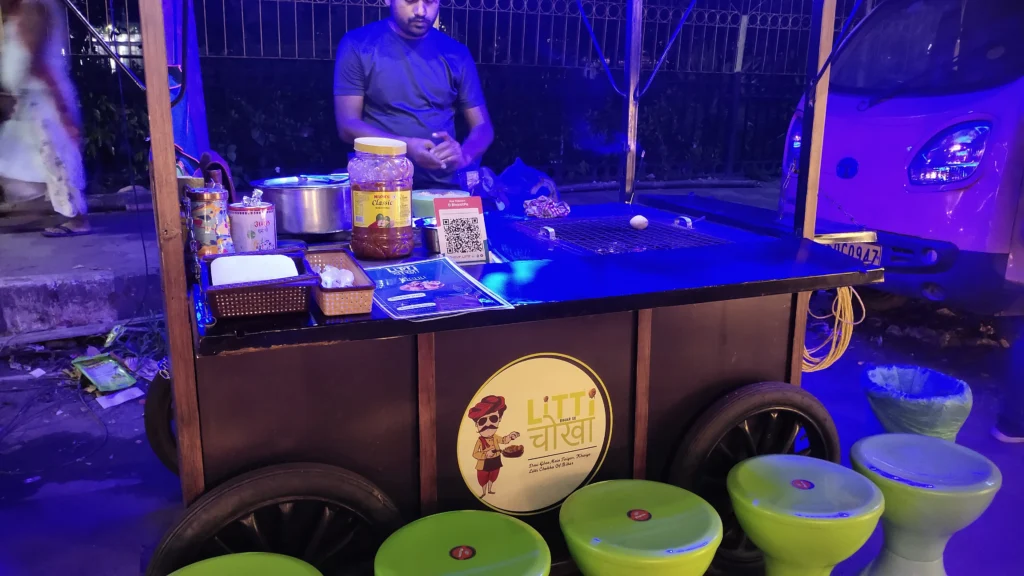
The traditional method is the open fire. Litti are set directly on glowing embers and turned until they crack and char. On festive occasions and winter evenings, families and friends gather around such a fire for a litti party, and the cooking itself is part of the fun. In towns, vendors use charcoal braziers or large iron griddles, while home cooks increasingly bake litti in an oven or air-fryer, or cook them on a tawa. Some fry them, though purists insist that a fried litti is a different thing altogether.
Where to eat it
Litti chokha is sold at street stalls, dhabas and restaurants across Bihar. In Patna, Outlook Traveller has recommended stalls such as D K Litti Chokha on Fraser Road and Bhojpur Litti Chokha at Golambar, and evening litti carts appear in almost every neighbourhood. It is also a fixture at village fairs and at the Sonepur Mela. See our guide to the street food of Patna for more.
Cultural significance
Litti chokha has become a badge of Bihari identity. For many people from the state living elsewhere, it is the first dish they cook to share their culture with friends, and Bihari associations in Indian cities and abroad often organise litti chokha gatherings. It is food that does not pretend to be fancy, and that is part of its appeal: it speaks of fields, fires and family meals.
Modern popularity
In recent years litti chokha has travelled far beyond Bihar. It appears on restaurant menus in Delhi, Mumbai, Bengaluru and Kolkata, at food festivals and at official events promoting Bihar’s culture. Packaged sattu and ready-made litti mixes have made it easier to cook anywhere, and food bloggers and video creators from Bihar have introduced it to new audiences. Yet its essence remains unchanged: wheat, gram, mustard oil, fire and a mound of chokha.
Conclusion
Litti chokha is the soul of Bihari cuisine because it captures its values: local ingredients, simple techniques, strong flavours and food made to be shared. Eat it hot, with plenty of ghee, and you will understand why Biharis everywhere feel at home when they smell litti roasting over a fire. For a deeper look at the dish’s rituals and variations, read our earlier story, Litti Chokha: More Than Just Bihar’s Famous Food.