Maithili, Bhojpuri, Magahi and Angika: The Languages of Bihar
Maithili, Bhojpuri, Magahi, Angika, Bajjika and more. Where Bihar’s languages are spoken, their scripts and literature, and how they are changing.
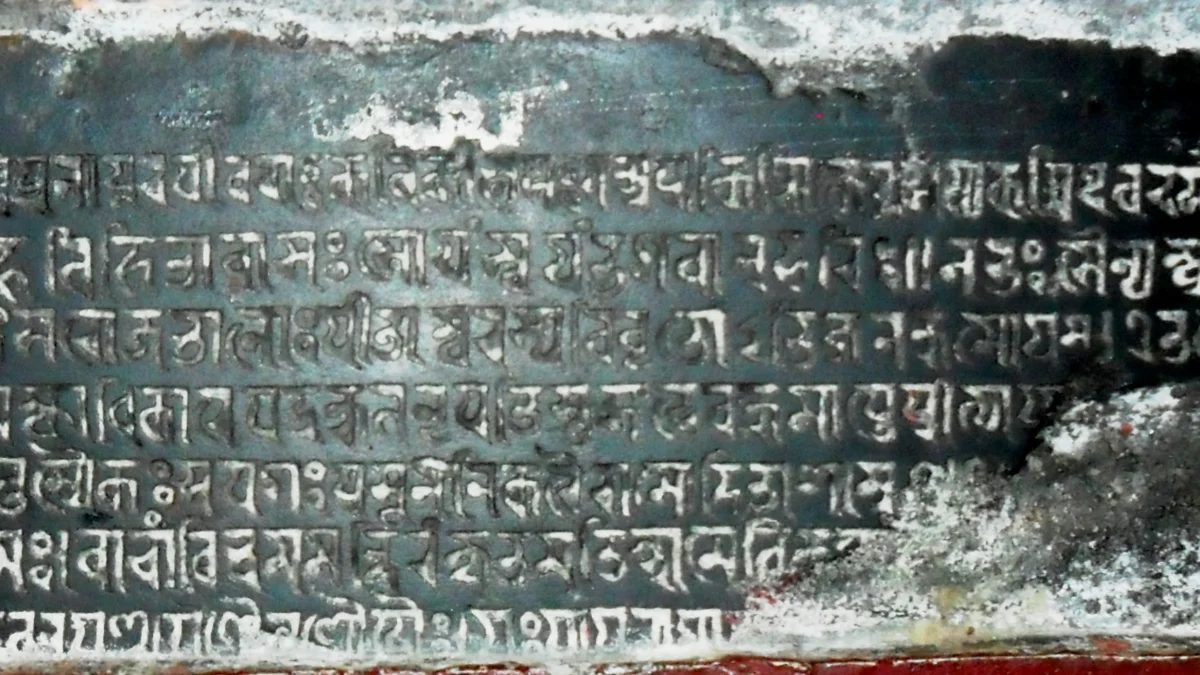
Travel from one end of Bihar to the other and you will hear the language change around you. In the villages of Mithila, people greet you in Maithili. In Ara and Chhapra, it is Bhojpuri. Around Gaya and Nalanda, Magahi. In Bhagalpur and Munger, Angika. In Muzaffarpur and Vaishali, Bajjika. Hindi and Urdu are the official languages of the state, but at home most Biharis speak one of these regional languages, each with its own literature, songs and history.
The family of Bihari languages
Maithili, Bhojpuri, Magahi, Angika and Bajjika belong to the eastern branch of the Indo-Aryan languages, and are often grouped together as the Bihari languages. According to linguists, they share a common ancestry with Bengali, Assamese and Odia in Magadhi Prakrit, the language that developed in the ancient kingdom of Magadha, the region around Patna and Gaya. These modern languages are thought to have emerged from it roughly between the 8th and 11th centuries.
The British linguist George Abraham Grierson studied them closely in the late 19th century. He published a grammar of Maithili in 1881 and, in his Linguistic Survey of India in the early 1900s, grouped Maithili, Magahi and Bhojpuri together as “Bihari”.
Maithili: the language of Mithila
Maithili is spoken in the Mithila region of north Bihar, in districts such as Darbhanga, Madhubani and Saharsa, and across the border in Nepal, where it is the second most widely spoken language. In the 2011 Census of India, about 1.36 crore (13.6 million) people reported Maithili as their mother tongue, though the real number of speakers is believed to be higher.
Maithili has one of the oldest literary traditions among India’s modern languages. The Varna Ratnakara of Jyotirishwar Thakur, written in the 14th century, is regarded as the earliest known prose work in Maithili, and is often described as the first prose work in any modern Indian language. The poet Vidyapati (c. 1352–1448) wrote hundreds of songs in Maithili that are still sung today. Maithili was recognised by the Sahitya Akademi, India’s national academy of letters, in 1965, and in 2003 it was included in the Eighth Schedule of the Constitution, giving it the status of a recognised Indian language. In 2018 it also became a second official language in Jharkhand.
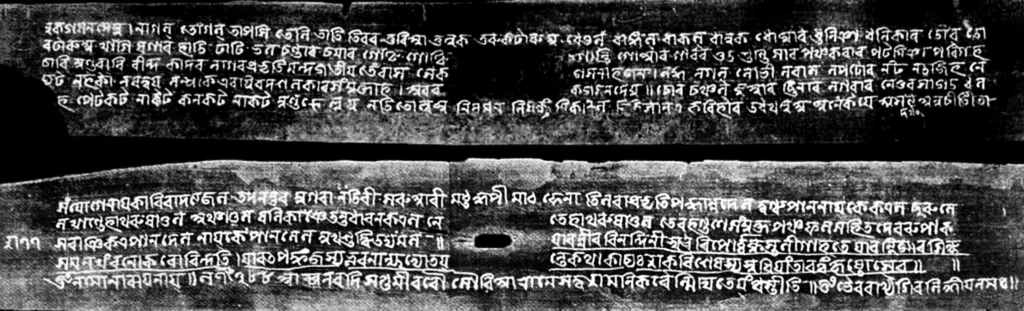
Historically, Maithili was written in its own script, Tirhuta, also called Mithilakshar, which is related to the Bengali and Assamese scripts. Today it is mostly written in Devanagari, but Tirhuta survives on signboards, in religious texts and genealogical records, and has seen a revival of interest in the 21st century.
Bhojpuri: a language that crossed oceans
Bhojpuri is spoken in western Bihar, eastern Uttar Pradesh, parts of Jharkhand and southern Nepal. In Bihar its heartland is the old Shahabad district, now Bhojpur, Buxar, Rohtas and Kaimur, and the Saran region of Saran, Siwan and Gopalganj, with northern varieties spoken in the Champaran districts and Muzaffarpur. In the 2011 Census, 5.06 crore (about 50.6 million) people in India reported Bhojpuri as their mother tongue, though the census counts it as a mother tongue grouped under Hindi rather than as a separate language.
Bhojpuri has travelled further than any other Bihari language. Between 1838 and 1917, labourers from the Bhojpuri region were taken to British colonies such as Fiji, Mauritius, Guyana, Trinidad and Tobago and South Africa, and to the Dutch colony of Suriname, as indentured plantation workers. Their language survives there in forms such as Mauritian Bhojpuri, Sarnami in Suriname and Caribbean Hindustani, and Fiji Hindi draws on Bhojpuri and Awadhi. Bhojpuri is also the language of a large film and music industry, and of the plays of Bhikhari Thakur. There is a long-standing demand for Bhojpuri to be included in the Eighth Schedule.
Magahi: the speech of Magadha
Magahi is spoken in south and central Bihar, in the region of ancient Magadha, including Patna, Gaya, Nalanda, Jehanabad and Nawada, and in parts of Jharkhand. Its name comes from Magadhi Prakrit. The 2011 Census recorded about 1.27 crore (12.7 million) Magahi speakers, also grouped under Hindi, but the language has no constitutional recognition, and it was absorbed under Hindi in the 1961 Census, which is one reason its speakers are often under-counted.
Angika: the language of Anga
Angika is spoken in south-eastern Bihar, in most of Munger, the whole of the Bhagalpur division, including Bhagalpur and Banka, and parts of the Purnia division, as well as in the Santhal Parganas of Jharkhand and the Morang district of Nepal. Its name recalls the ancient kingdom of Anga. Grierson classed it as a southern dialect of Maithili, but other scholars, including Rahul Sankrityayan, argued that it is a distinct language. Angika has been declared an additional official language of Jharkhand. Its culture includes the Manjusha painting tradition and the legend of Bihula.
Bajjika and other languages
Bajjika is spoken in the area of ancient Vajji, around Vaishali and Muzaffarpur, and parts of Sitamarhi and Sheohar, and is often counted under Maithili or Hindi in the census. In the Purnia division, Surjapuri is spoken in Araria, Purnia, Katihar and Kishanganj. Bihar is also home to the Austroasiatic language Santali, with almost half a million speakers in 2011, and the Dravidian languages Kurukh and Malto, as well as Bengali and Tharu.
Hindi and Urdu: the official languages
Hindi is the official language of Bihar, and Urdu is its second official language. Bihar has a long history of language politics. In 1881, Hindi displaced Urdu as the official language of the province, and after independence the Bihar Official Language Act of 1950 gave Hindi sole official status. Urdu was later recognised as the second official language. Because Hindi is used in schools, government and the media, many Biharis speak it alongside their mother tongue, and many report Hindi as their language in the census.
The scripts of Bihar
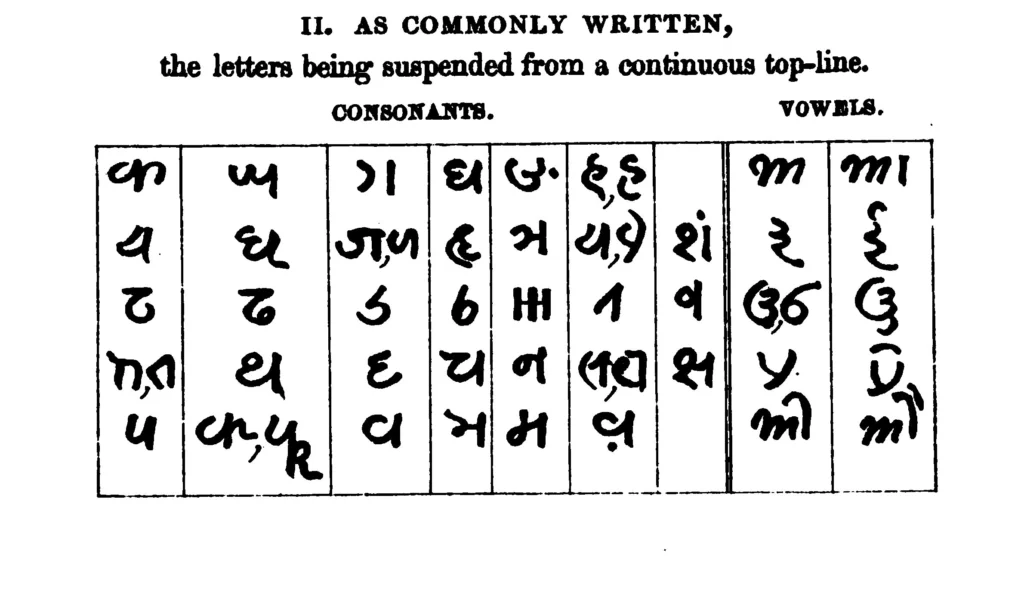
Bihar’s languages have been written in several scripts. Tirhuta was the traditional script of Maithili. Kaithi was used across north India for administration and everyday writing from at least the 16th century until the early 20th century, and was the traditional script of Bhojpuri and Magahi. Government gazetteers report Kaithi still being used in a few districts of Bihar in the 1960s. Today Devanagari is used for almost all of Bihar’s languages, but both Tirhuta and Kaithi are included in Unicode, so they can now be typed and read on computers and phones.
Significance
Bihar’s languages carry its culture. Its folk songs, festival stories, proverbs, wedding rituals and theatre are all rooted in them. They also connect Bihar with Nepal and with the descendants of Bihari migrants in Mauritius, the Caribbean, Fiji and South Africa.
Facts worth knowing
- Maithili is the only Bihari language in the Eighth Schedule of the Constitution, since 2003.
- The Varna Ratnakara of Jyotirishwar Thakur is considered the earliest known Maithili prose work.
- Around 450,000 indentured labourers, mostly Bhojpuri speakers, arrived in Mauritius between 1834 and the early 1900s.
- Kaithi and Tirhuta are both now part of the Unicode standard.
How Bihar’s languages are changing
Speaker numbers for the Bihari languages are uncertain because many speakers report Hindi in the census. Hindi and English dominate education and work, and many young Biharis in cities speak their mother tongue less than their parents did. At the same time, there are campaigns for constitutional recognition of Bhojpuri, Magahi and Angika, digital tools for Tirhuta and Kaithi, growing online content in regional languages and a large Bhojpuri entertainment industry.
Conclusion
Bihar is not a one-language state. Its people speak Maithili, Bhojpuri, Magahi, Angika, Bajjika and more, each with a history going back centuries. Learning even a few words of the local language is one of the best ways to connect with people when you travel in Bihar. For the songs these languages carry, read our guide to the folk songs of Bihar.