Chhath Puja: The Festival That Connects Every Bihari
Four days of fasting and prayer to the sun, ending with offerings at the water’s edge at sunset and sunrise. The festival that brings every Bihari home.
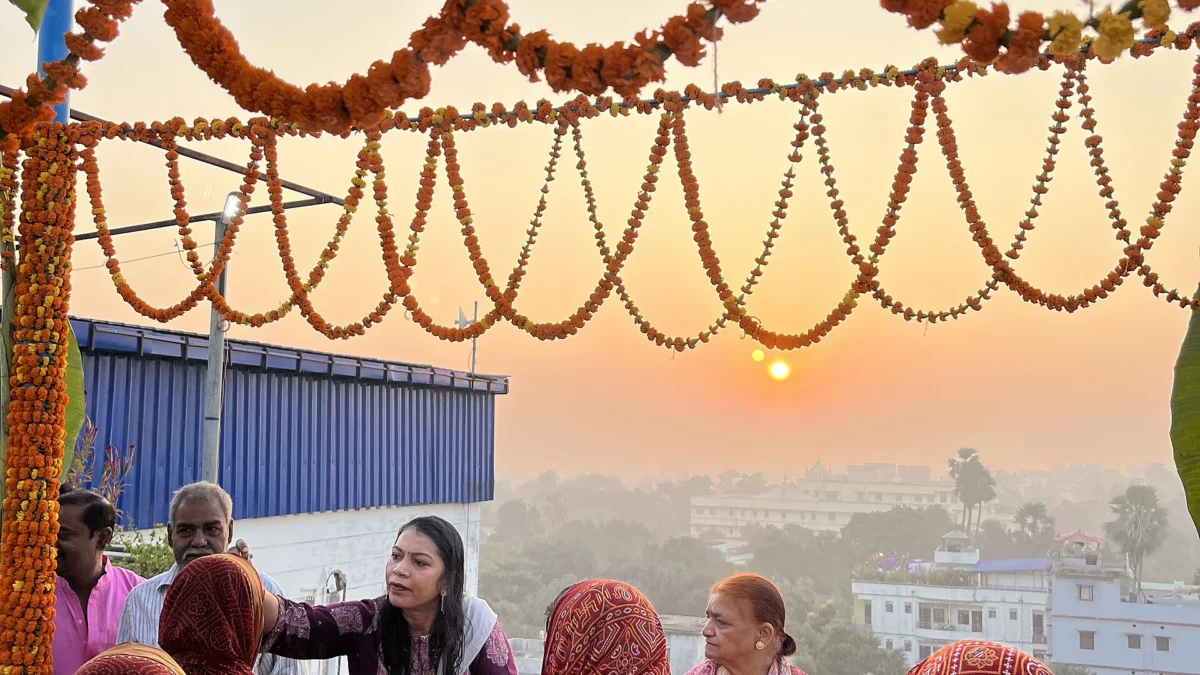
Chhath is the festival most closely associated with Bihar. Over four days, devotees worship Surya, the sun god, and Chhathi Maiya, offering thanks at riverbanks and ponds as the sun sets and again as it rises. It is celebrated across Bihar, Jharkhand, eastern Uttar Pradesh and southern Nepal, and by people from these regions wherever they have settled, from Delhi, Mumbai and Kolkata to Mauritius, the Gulf, the United States and beyond.
No other festival brings Biharis home in such numbers. In the days before Chhath, trains and buses to Bihar are packed with people returning from distant cities, and on the evening of the first arghya it can seem as if the whole state has gathered at the water’s edge. That is why Chhath is so often described as the festival that connects every Bihari.
When Chhath is celebrated
The main festival falls in the Hindu month of Kartik, six days after Diwali, from the fourth to the seventh day of the bright fortnight. Its central day is Shashthi, the sixth lunar day, which gives the festival its name and its other name, Surya Shashthi Vrata. A second observance, Chaiti Chhath, is held in spring in the month of Chaitra. In 2026, Kartik Chhath falls from 13 to 16 November; see our listing for Chhath Puja 2026 for dates.
History and legends
Chhath is often called an ancient festival, and its worship of the sun is rooted in very old traditions. Its exact origins, however, are not documented, and the stories told about them are legends, not history.
Several legends link Chhath to the epics. One holds that Sita performed the Chhath vrat after returning to Ayodhya, and people in Munger believe she performed it there; the Sitacharan temple, on a boulder in the Ganga at Munger, is a major centre of faith during the festival. Another links it to the Mahabharata, saying that Kunti and Draupadi worshipped the sun in this way, and that Karna, the son of Surya, was a devotee of the sun. A Puranic story tells of King Priyavrata, whose child was born dead until Shashthi Devi, the goddess later known as Chhathi Maiya, appeared and restored the baby to life, promising to protect all children. Another tradition links the region of Buxar with the hermitage of the sage Kashyapa and Aditi, mother of the sun.
Chhathi Maiya is regarded in tradition as a protector of children and a giver of long life and health, which is why many devotees keep the fast for the well-being of their children and families.
The four days
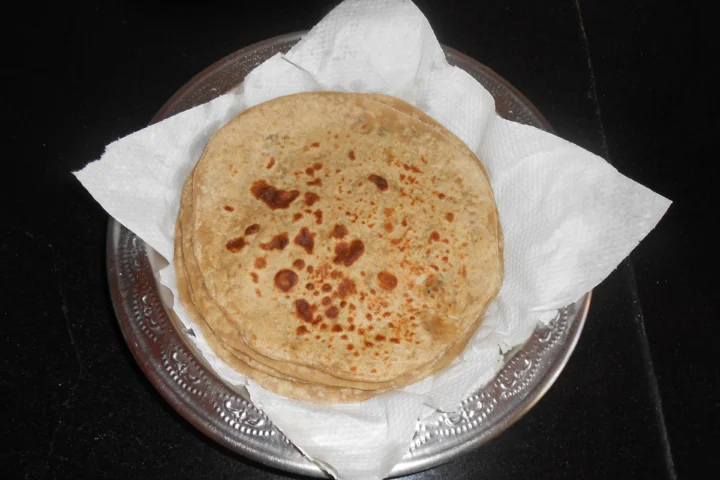
Nahay Khay. On the first day, the vrati, the person keeping the fast, takes a holy bath. The house and the paths to the ghat are thoroughly cleaned. The vrati cooks and eats a simple, pure meal, commonly lauki bhaat, rice with bottle gourd and chana dal.
Kharna. After fasting through the day, the vrati breaks the fast in the evening with rasiaav, a kheer made with jaggery, and roti. A fast without water follows, lasting until the final morning.
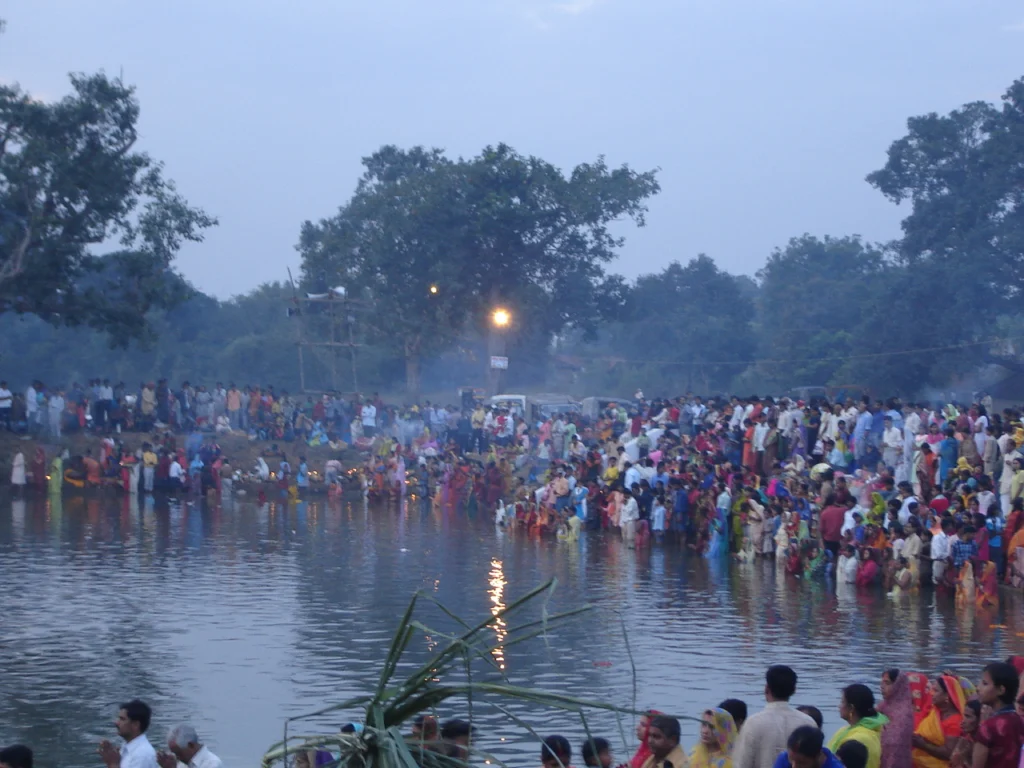
Sandhya Arghya. The day is spent preparing offerings at home, strictly vegetarian and cooked without salt, onion or garlic. In the evening the whole household accompanies the vrati to a river, pond or other water to offer arghya to the setting sun. Back at home, many families perform kosi bharai, tying five to seven sugarcanes into a canopy under which clay lamps are lit and offerings are placed.
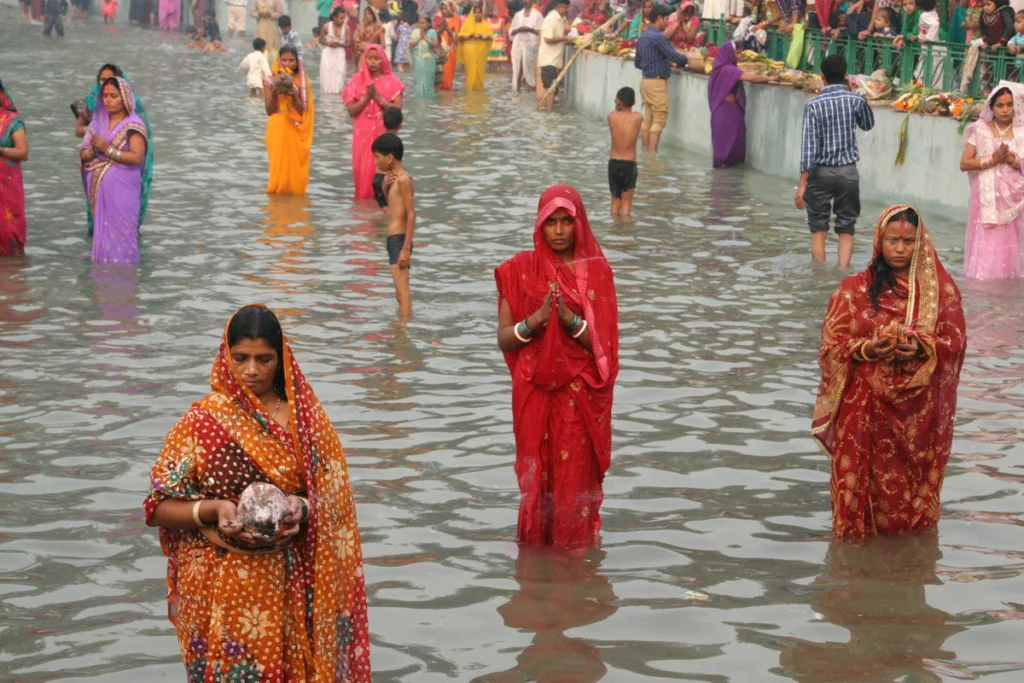
Usha Arghya. Before dawn, devotees return to the water and wait, standing in it, for the sun to rise. After offering arghya to the rising sun and praying for their families, they break the fast with prasad and water in the parana rite.
Offerings, baskets and songs
The offerings include thekua, rice laddoos and kasar, sugarcane, coconuts, bananas, sweet limes and other seasonal fruit, arranged in bamboo soop and baskets. These baskets, made by hand for the festival, are part of Bihar’s everyday crafts, and families often buy new ones each year. The basket of offerings is carried to the ghat on the head, often by the men of the family.
Chhath songs fill the ghats through the festival. Many of the most loved were made famous by Sharda Sinha, whose recordings are played across Bihar every year. Read more about them in our guide to the folk songs of Bihar.
People, places and communities
Chhath is observed by people of every caste and class, and in many places by people of other faiths who join their neighbours at the ghat. The vratis are usually women, but men also keep the fast. In some families, once a member begins observing Chhath, it is expected to continue every year and be passed on to the next generation, and it is skipped only in a year of mourning.
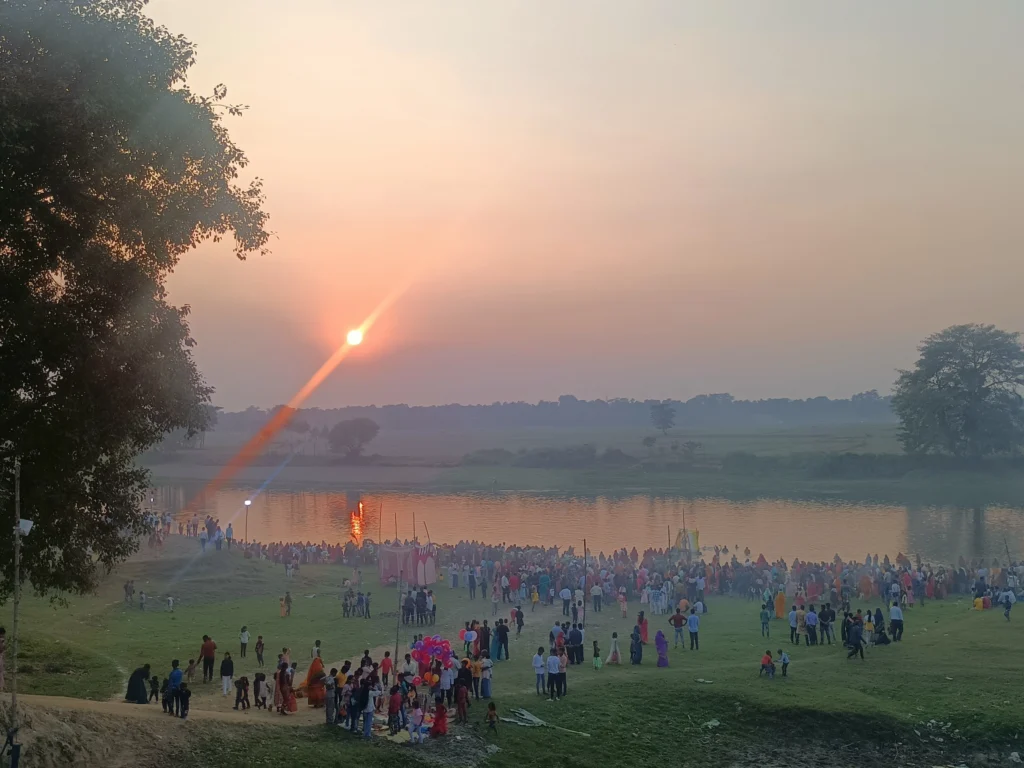
The festival is celebrated at every river, pond and canal in Bihar, and in cities at temporary ghats and even rooftop tanks. The ghats of the Ganga in Patna draw huge crowds, and ancient sun temples such as the one at Deo in Aurangabad district attract pilgrims from across the state.
Why Chhath matters
Chhath is unusual among major Hindu festivals. It needs no priest and no idol: the devotee worships the sun directly, standing in water. Its rituals emphasise purity, discipline and gratitude, and its offerings are made from the produce of the fields. It is also a deeply communal festival. Neighbours clean the paths to the ghat together, and those who are not fasting help those who are, in the belief that serving a vrati brings blessings.
Regional variations
The core of Chhath is shared everywhere, but details vary. Songs, offerings and the order of rituals differ between Mithila, the Bhojpuri region and Magadh. Some families observe both Kartik and Chaiti Chhath, others only one. Among migrants, the festival has adapted to new surroundings, from the ghats of Howrah and Mumbai’s beaches to lakes in Delhi and community pools abroad.
Facts worth knowing
- Chhath is celebrated twice a year, in Kartik and in Chaitra.
- Its rituals involve a fast without water that lasts about 36 hours, from the evening of Kharna to the final morning.
- The festival is dedicated to the sun, worshipped both at sunset and at sunrise.
- The Sitacharan temple in the Ganga at Munger is associated with the legend of Sita performing Chhath.
How Chhath has changed
Chhath has grown from a regional festival into one celebrated by Biharis across the world, and it is now marked by public holidays and arrangements in many cities outside Bihar. Governments and civic bodies prepare ghats, lighting, safety barriers and boats each year. Concern for clean rivers has also grown, since polluted water is a real problem in many places, and some families now perform the rituals at clean tanks or at home.
Chhath in modern Bihar
In Bihar today, Chhath remains the biggest festival of the year. Markets fill with sugarcane, fruit and bamboo baskets, the state declares holidays, and the evening and morning arghya bring millions of people to the water. For Biharis everywhere, it is the moment when home matters most.
Conclusion
Chhath is a festival of the sun, the water and the family. It asks for discipline and offers, in return, a powerful sense of belonging. If you want to see Bihar at its most united, stand at a ghat at dawn on the last day of Chhath, as thousands wait in the water for the sun to rise.