Bidesia: The Folk Theatre That Tells Bihar’s Migration Story
A wife waits in the village while her husband works in Calcutta. How Bhikhari Thakur’s Bidesia turned the pain of migration into folk theatre.
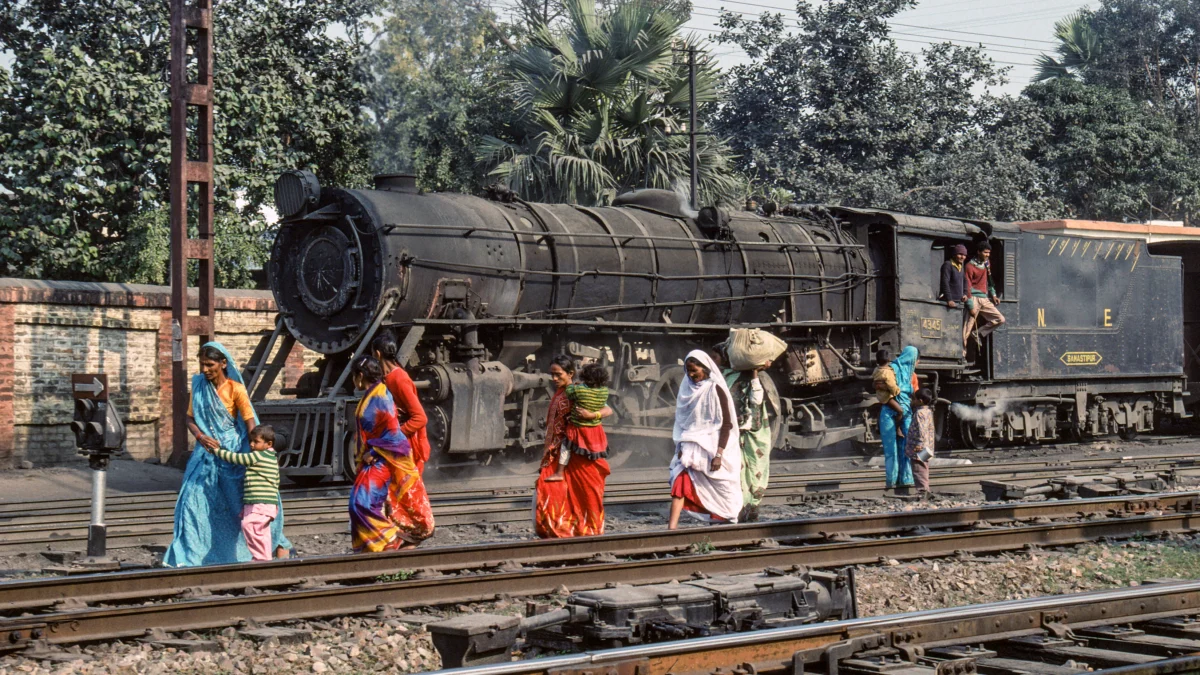
For more than a century, men from the villages of western Bihar have boarded trains to distant cities in search of work, leaving wives, children and parents behind. The word for such a man in Bhojpuri is bidesi, the one who has gone to a foreign land, and the songs and plays about him are called Bidesia. In the hands of the playwright Bhikhari Thakur, Bidesia became one of the most powerful forms of folk theatre in north India, a story of migration told from the point of view of the woman left behind.
Origins: songs of separation
Songs of separation are much older than Bidesia theatre. Indian poetry has long dwelt on biraha, the longing of lovers apart, and the monsoon songs of the Bhojpuri region, such as kajari, are full of it. In the 19th century this old theme took on a new, very concrete meaning. As the colonial economy drew labour from the Bhojpuri-speaking districts, men left for the jute mills and docks of Calcutta (now Kolkata), the tea gardens of Assam and, as indentured labourers, the plantations of Mauritius, Trinidad, Fiji and Suriname. Songs began to describe the bidesi and the wife waiting for him. A kajari titled Kajari Bidesia is credited to the Banaras poet Pandit Beniram in the 1860s.
Bhikhari Thakur and the play
The man who turned these songs into theatre was Bhikhari Thakur (1887–1971). Born into a barber family in Kutubpur, a diyara (riverine) village near Chhapra in Saran, he himself left home for work as a young man, travelling to Kharagpur, Puri and Calcutta and earning his living by cutting hair. In those cities he watched Ramlila performances and, for the first time, the cinema. When he returned to his village he formed a small troupe, first to perform Ramlila and then to stage plays he wrote and directed himself.
His best-known play is Bidesiya, also published under the titles Kaljug Bahar and Bahara Bahar. It was composed and staged in 1912 and published as a book in 1917, and it became so popular that the name came to stand for a whole style of folk theatre in the Bhojpuri region. Thakur wrote more than a dozen plays, including Gabarghichor, Beti Bechwa and Bhai Birodh, which tackled the sale of daughters in marriage, quarrels between brothers and other social evils. He is often called the Shakespeare of Bhojpuri.
The story of Bidesiya
The play follows a young man, Bidesi, who leaves his village to earn money in Calcutta, where he takes a second wife, Saloni. At home, his wife Pyari Sundari waits for him, struggling with loneliness, poverty and the unwanted attention of others. She asks a passing traveller, the Batohi, to find her husband and carry her message to him. When the traveller finds Bidesi, he reminds him of his wife and his home. The play brings the characters together in the end, and its resolution is open to different readings, but the emotional heart of the story is always Pyari Sundari’s grief.
The play’s characters include Bidesi, Pyari Sundari, the Batohi, Saloni, Bidesi’s younger brother and a friend. A clown figure called the labaar, similar to the vidushak of classical Indian theatre, enters between scenes to joke with the audience.
How Bidesia is performed
Bidesia is staged in the open, often on a simple platform in a village, at a wedding or at a fair, with the audience sitting on the ground. A performance begins with a mangalacharan, a prayer, after which the sutradhar, the narrator, introduces the characters and the story. The play mixes spoken dialogue, monologues, satire and above all song, accompanied by dholak, harmonium and manjira (small cymbals).
As in many folk theatre traditions of north India, all the roles, including women’s, were traditionally played by men. Thakur’s troupe drew on the tradition of male performers dressed as women, which is discussed in our story on Launda Naach. Performances could last through the night.
People and places
Bidesia belongs to the Bhojpuri-speaking region: the districts of Saran, Siwan, Gopalganj, Bhojpur and Buxar in Bihar, and eastern Uttar Pradesh. Thakur’s own troupe travelled widely, including to the cities where migrants from the region lived, such as Calcutta, so that the play was seen both by the women who stayed behind and by the men who had left.
Significance
Bidesia matters because it puts the human cost of migration on stage. As a 2025 essay in VillageSquare put it, Bidesia gave rural women, who were often denied a public voice, a space to express their trauma, question injustice and narrate their inner worlds, even though the roles were performed by men. Its songs, written from the woman’s perspective, range from love and loyalty to anger and satire, and they ask whether the money earned in the city can ever be worth the suffering it causes.
Bhikhari Thakur also used his plays to criticise caste discrimination, alcoholism and the treatment of women, which makes Bidesia a reformist art as well as a popular one. Some scholars have described the play’s popularity in its time as comparable to that of the Ramayana in the region.
Variations
After Thakur, many troupes performed Bidesia and plays in its style, and the word came to describe both a theatrical form and a genre of songs. Bidesia songs are sung on their own, away from the stage, and the theme of the absent husband appears throughout Bhojpuri music. Modern productions by theatre groups have adapted the play for urban audiences, and its themes have appeared in films and music videos.
Facts worth knowing
- Bhikhari Thakur’s Bidesiya was first staged in 1912 and published in 1917.
- Thakur’s play Gabarghichor is often compared with Bertolt Brecht’s The Caucasian Chalk Circle.
- The labaar, the clown of Bidesia, plays a role similar to the vidushak of classical Sanskrit drama.
- Indentured labourers from the Bhojpuri region carried its songs to Mauritius, Trinidad, Fiji and Suriname.
How Bidesia has changed
Traditional Bidesia performances have declined, as cinema, television and online entertainment have replaced the all-night village performance. But the form has not disappeared. Theatre collectives continue to stage Bidesia, its songs remain part of Bhojpuri popular culture, and the play has been studied, translated and performed far from Bihar.
Bidesia in modern Bihar
The story Bidesia tells has not ended. Migration remains a defining part of life in Bihar, with millions of men working in Delhi, Mumbai, Bengaluru and the Gulf. The trains have changed, and phones have replaced the messages carried by travellers, but the experience of the woman left behind in the village is still familiar to many families. That is why Bidesia continues to resonate more than a century after Bhikhari Thakur first staged it.
Conclusion
Bidesia is folk theatre born from a very real experience: the separation of families by poverty and migration. Bhikhari Thakur gave that experience a voice, a stage and a set of unforgettable songs. To understand Bihar, and the millions of Biharis who live far from home, Bidesia is a good place to start. For more on Bihar’s music, read our guide to the folk songs of Bihar.