Launda Naach: The Folk Performance That Entertained Generations
Male dancers in saris leading the wedding procession and staging plays all night. The history, artists and controversies of Launda Naach.
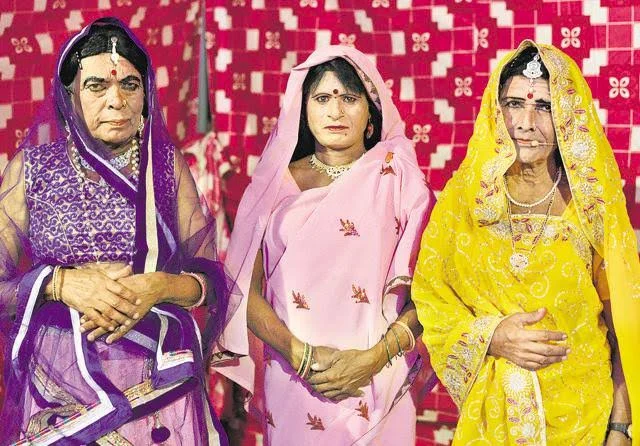
For generations, no wedding procession in the Bhojpuri villages of western Bihar was complete without them: male dancers in saris, make-up and jewellery, dancing, singing and joking in front of the groom’s party as it made its way to the bride’s home, and performing late into the night. This is Launda Naach, also written Lavanda Naach, a folk performance tradition in which men take on women’s roles. It has entertained audiences for well over a century, given the world one of India’s great folk playwrights and some of its most remarkable performers, and it has also been the subject of controversy.
What the name means
In Bhojpuri, launda means a young man or boy, and naach means dance. The term has also been used as an insult, for men considered effeminate and of “lower” caste, and the name of the art form has always carried some of that stigma. One explanation of its origin is that the term distinguished the dance of boys, popular among poorer and lower-caste communities, from the baiji naach of professional women performers, which was patronised by landlords and moneylenders.
History and origins
Men performing women’s roles is an old feature of Indian theatre, and the tradition of male performers dressed as women in the Bhojpuri region is believed to be centuries old. Exactly how old is hard to establish from written records, and claims of very early origins should be treated with caution.
What is well documented is the transformation of Launda Naach in the early 20th century by Bhikhari Thakur (1887–1971) of Kutubpur in Saran. Thakur, often called the Shakespeare of Bhojpuri, turned the old naach into a people’s theatre, combining, in one description, songs, dance, comedy, satire, pun, banter, parody and theatre, with men impersonating women in performances that lasted all night. With his troupe he staged plays such as Bidesiya, Gabarghichor and Beti Bechwa that dealt with migration, the sale of daughters and the struggles of the rural poor. Thakur is widely regarded as the father of the naach theatre tradition.
How Launda Naach is performed
A Launda Naach troupe usually includes dancers who play women’s roles, actors, singers and musicians. The music is provided by instruments such as the dholak, harmonium, nagara and jhal (cymbals). Performances take place in the open, on a simple raised platform or a cleared space, with the audience sitting around.
At weddings, the dancers lead the groom’s procession, the baraat, and then perform for the guests. In the naach theatre of Bhikhari Thakur’s tradition, the performance is a full play, with songs and dances woven into a story, interrupted by comic scenes and improvised jokes. The performers who play women spend hours on their make-up and costumes, and the best of them were famous for the grace and expressiveness of their dancing.
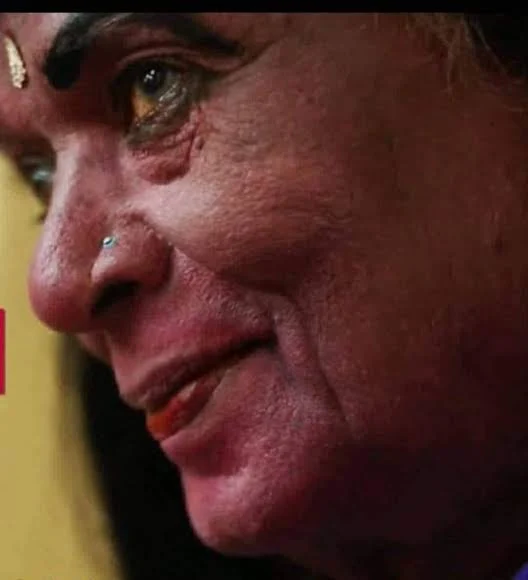
A 2021 profile of Ramchandra Manjhi in The Better India described a typical naach evening. The show begins around 8 pm with a prayer, followed by Bhojpuri songs, solo and group dances and satirical commentary. The play itself starts around midnight and runs until four or five in the morning, accompanied by harmonium, nagara, dholak, tabla, jhal and sarangi, on a wooden stage with a tent behind it for make-up. Troupes perform by invitation, for weddings and other family occasions.
Ramchandra Manjhi: the last of Thakur’s troupe
The most celebrated Launda Naach performer of recent times was Ramchandra Manjhi. Born in 1925 in Tajpur in Saran district into a Dalit family, he joined Bhikhari Thakur’s troupe at the age of about ten and performed with it until Thakur’s death in 1971. He inherited a large repertoire of naach theatre, including Bidesiya, Gabarghichor and Beti Bechwa, and is often described as the last disciple of Bhikhari Thakur.
Manjhi was honoured with the Sangeet Natak Akademi Award in 2017, the centenary year of the publication of Thakur’s Bidesiya, and received it from the President of India in 2019. In 2021 he was awarded the Padma Shri, India’s fourth-highest civilian honour. He continued to perform into his nineties and died in Patna on 7 September 2022. He also appeared in the documentary Naach Bhikhari Naach, about Launda Naach and Thakur’s legacy.
In his last years Manjhi performed with the Bhikhari Thakur Repertory Training and Research Centre, a troupe run by the performing arts scholar Jainendra Dost to keep Thakur’s plays alive and train younger artists. In June 2021, in his late nineties, he played the second wife in Bidesiya in West Champaran, doing his own make-up. “I have done Naach all my life. It is my identity,” he told The Better India.
People, places and communities
Launda Naach belongs to the Bhojpuri-speaking region of western Bihar, including Saran, Siwan, Gopalganj and Bhojpur, and eastern Uttar Pradesh. It travelled with Bhojpuri-speaking migrants and is also known in Nepal, Mauritius and the Caribbean. Many performers have come from Dalit and other marginalised communities, for whom the troupes offered a livelihood and, sometimes, a measure of fame.
Significance
Launda Naach matters in several ways. It was the stage on which Bhikhari Thakur’s socially conscious theatre reached millions of villagers who had no access to any other kind of drama. It preserved a large body of Bhojpuri songs and stories. And it raises questions about gender and performance that have interested scholars and artists: about what it means for men to perform femininity, and how those performances have been received by audiences who both enjoyed and mocked them.
Variations
Launda Naach has never been one fixed form. At its simplest, it is dancing at weddings. In the tradition of Bhikhari Thakur, it is full-length theatre. Between the two are many troupes, each with its own repertoire of songs, sketches and plays. Over time, the form has also absorbed songs from Bhojpuri cinema and popular music.
Facts worth knowing
- Ramchandra Manjhi joined Bhikhari Thakur’s troupe as a child and performed for more than eight decades.
- He received the Sangeet Natak Akademi Award (2017) and the Padma Shri (2021).
- Launda Naach dancers traditionally lead the groom’s procession at Bhojpuri weddings.
- Bhikhari Thakur’s naach performances could last all night.
Criticism and change
Launda Naach has faced criticism from several directions. Its performers have often been treated with contempt, and the word launda remains a slur. As other forms of entertainment spread, critics have said that the tradition has lost its professionalism and become a site of objectification and abuse. In recent decades, troupes known locally as orchestras, or aarkestra, with women dancers performing to film songs, have largely replaced Launda Naach at weddings in parts of the region. These troupes have been linked in reports with exploitation and trafficking, which has added to concerns about how women are treated in the entertainment business.
Launda Naach in modern Bihar
Today, traditional Launda Naach is rarer than it was, but it has also gained new respect. Ramchandra Manjhi’s national honours brought attention to the form, researchers and theatre groups have documented and revived Bhikhari Thakur’s plays, and young performers have taken them to festivals and stages beyond Bihar.
Conclusion
Launda Naach is a tradition of contradictions: loved and mocked, popular and marginal, entertaining and deeply serious. Through it, Bhikhari Thakur and performers like Ramchandra Manjhi gave the Bhojpuri countryside a theatre of its own. To learn more about the songs it carries, read our guide to the folk songs of Bihar.