Sonepur Mela: Asia’s Famous Traditional Fair
A holy bath where the Ganga meets the Gandak, then a month of trade and celebration. The legend, history and changing face of the Sonepur Mela.
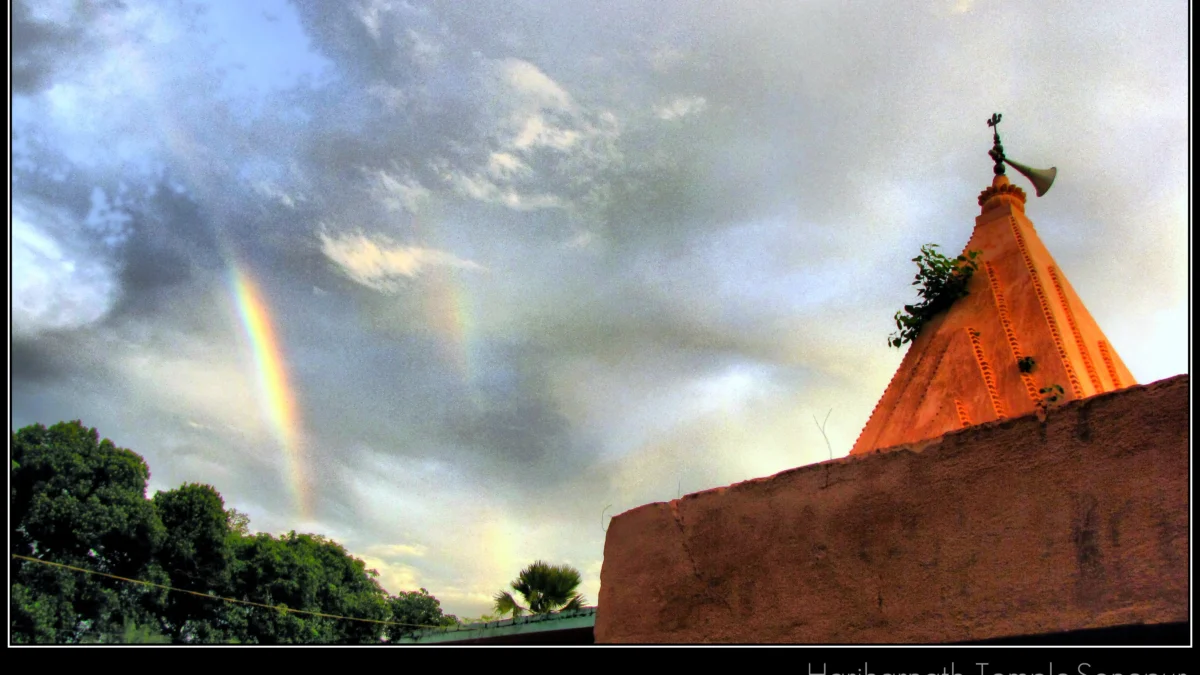
Every November, a stretch of riverbank at Sonepur in Saran district turns into a temporary town. Pilgrims arrive for a dawn bath where two rivers meet, traders set up stalls by the thousand, horses are led through dusty lanes, and the noise of loudspeakers, temple bells and bargaining carries late into the night. This is the Sonepur Mela, also known as the Harihar Kshetra Mela, one of the oldest and best-known fairs in India and widely described as the largest cattle fair in Asia.
Where the rivers meet
Sonepur (also spelt Sonpur) stands on the north bank of the Ganga at its confluence with the Gandak, opposite Patna and next to Hajipur in Vaishali. Confluences are sacred in Hinduism, and this one has long drawn pilgrims. The fair begins around Kartik Purnima, the full moon of the month of Kartik, when devotees take a holy dip at the meeting of the rivers. It then usually runs for between fifteen days and a month, through November and into December.
History and legend
The origins of the fair are old, but much of what is said about them comes from tradition rather than written records, and it helps to separate the two.
The legend. Sonepur is linked with the story of Gajendra Moksha, the deliverance of the elephant king, told in the Bhagavata Purana. In the story an elephant is seized by a crocodile while drinking, and after a long struggle calls out to Vishnu, who comes to save him. Local tradition places this struggle at the confluence of the Ganga and the Gandak, which is one reason elephants have always been part of the fair’s identity. Another tradition holds that the Hariharnath temple was first built by Rama on his way to Janakpur for his marriage to Sita.
The temple. The fair is centred on the Hariharnath temple, whose name joins Hari (Vishnu) and Har (Shiva). The temple is believed to have been repaired by Raja Man Singh, the Mughal general, and the present structure is attributed to Raja Ram Narain, an influential figure of the late Mughal period. The pairing of Vishnu and Shiva in one shrine gives the fair its other name, Harihar Kshetra, the land of Harihar.
Popular claims. It is often said that Chandragupta Maurya bought elephants and horses at Sonepur, and that traders came here from as far as Central Asia. These claims appear in many accounts of the fair, but they are not supported by contemporary records and are best read as part of the fair’s folklore.
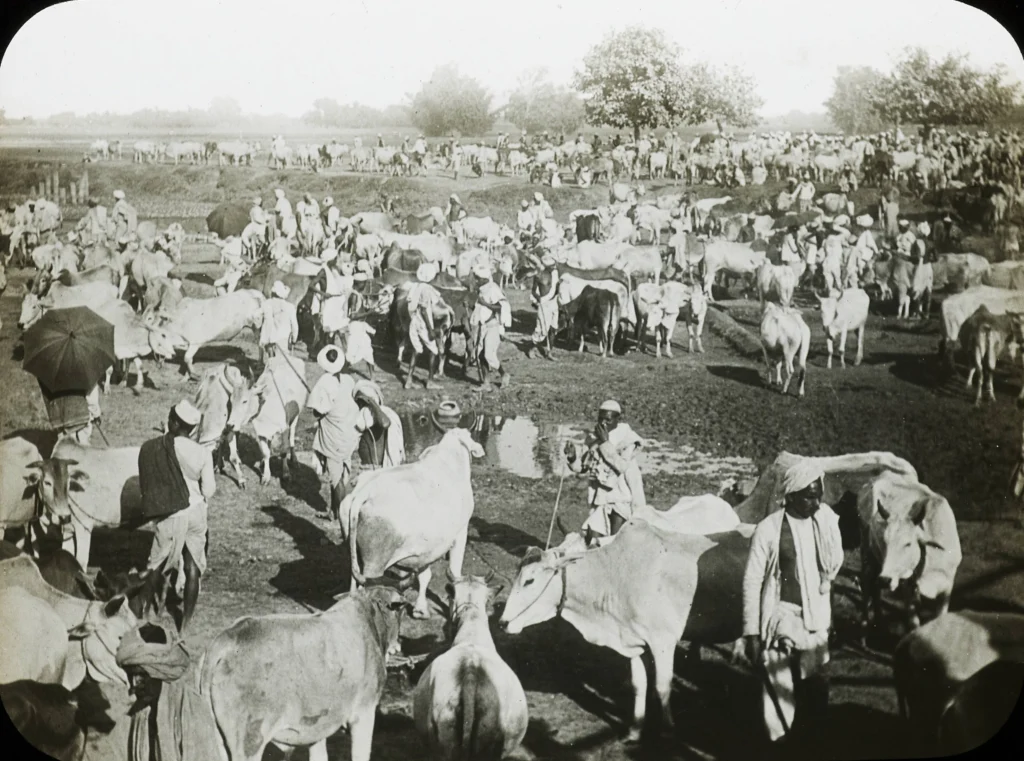
What is documented is that the fair was famous by the colonial period, when it drew traders, landowners and British officials alike. Photographs from the early 20th century, like the 1913 lantern slide below, show herds of cattle spread across the fairground.
The fair itself
At its heart the Sonepur Mela was, and to a large extent still is, a market for animals. Cattle, buffaloes, horses, ponies, goats, dogs and birds have all been traded here. The horse market remains one of the busiest sections, and buyers come from across north India.
The best-known part of the fair was once the Haathi Bazaar, the elephant market, where decorated elephants were lined up for sale. That trade has effectively ended. Elephants are protected under the Wildlife Protection Act of 1972, and from the mid-2000s the authorities stopped allowing transfers of ownership at the fair. Only a handful of elephants are now brought to Sonepur, and they are there for display rather than sale.
Around the animal market grows a vast general fair. Stalls sell clothes, utensils, furniture, farm tools, toys, jewellery and handicrafts. There are food stalls, circuses, rides and theatre tents, and the state government and public bodies set up exhibition pavilions. Bihar State Tourism Development Corporation has run a tourist village with cottages for visitors during the fair, and the Railways have set up their own stalls.
People, places and communities
The fair brings together very different groups of people. Farmers and herders come to buy and sell animals. Pilgrims come for the bath and for darshan at Hariharnath. Traders and artisans come from across Bihar and neighbouring states. Families from Saran, Vaishali and Patna come simply to enjoy the fair, and in recent decades photographers and foreign tourists have come to see a rural fair on a scale they will not find elsewhere.
The fair is organised today by the Saran district administration together with state departments, and its dates are announced each year around the Kartik Purnima bath.
Cultural significance
The Sonepur Mela is a religious festival, a market and a carnival at once. That combination is typical of the great fairs of north India, where a sacred bath on an auspicious day draws crowds that then become a marketplace. For rural Bihar the fair has long been a place to buy animals, tools and household goods for the year ahead, to arrange business and to meet relatives. Its traditions of folk music, nautanki theatre and wrestling matches made it an important stage for popular performers.
Variations over time
The fair has changed with the economy around it. As tractors replaced bullocks, the cattle trade shrank. The elephant trade ended with wildlife protection laws. In 2017 new central rules on cruelty to animals also restricted the sale of cattle at animal markets. In their place, the fair has grown as a cultural and tourist event, with government pavilions, stage programmes, sports such as dangal (wrestling) and boat races, and a much larger general market.
Facts worth knowing
- Sonepur is about 25 km from central Patna, across the Ganga.
- The fair begins around Kartik Purnima, the same full moon that ends the Mithila festival of Sama-Chakeva.
- The Hariharnath temple honours Vishnu and Shiva together, which is why the fair is also called the Harihar Kshetra Mela.
- Trade in elephants is no longer permitted at the fair, and the few elephants that come are for display only.
Sonepur Mela in modern Bihar
Today the Sonepur Mela is promoted by the state as a showcase of rural Bihar. It is still the place where many families buy a horse or cattle, and still a pilgrimage for those who bathe at the confluence on Kartik Purnima. It is also a reminder of how Bihar’s festivals and its economy have always been intertwined. For dates and travel information for this year’s fair, see our listing for the Harihar Kshetra Sonepur Mela 2026.
Conclusion
The Sonepur Mela has outlived empires, railways and the age of the bullock cart, and it has changed with each of them. The elephants have mostly gone, but the bath at dawn, the crowded lanes and the sense of a whole region gathering in one place remain. To understand rural Bihar, few places are as revealing as Sonepur in November.