Thekua: The Sweet That Defines Chhath
A crisp sweet of wheat flour, jaggery and ghee, pressed into wooden moulds and offered to the sun. Why thekua is the heart of Chhath Puja.
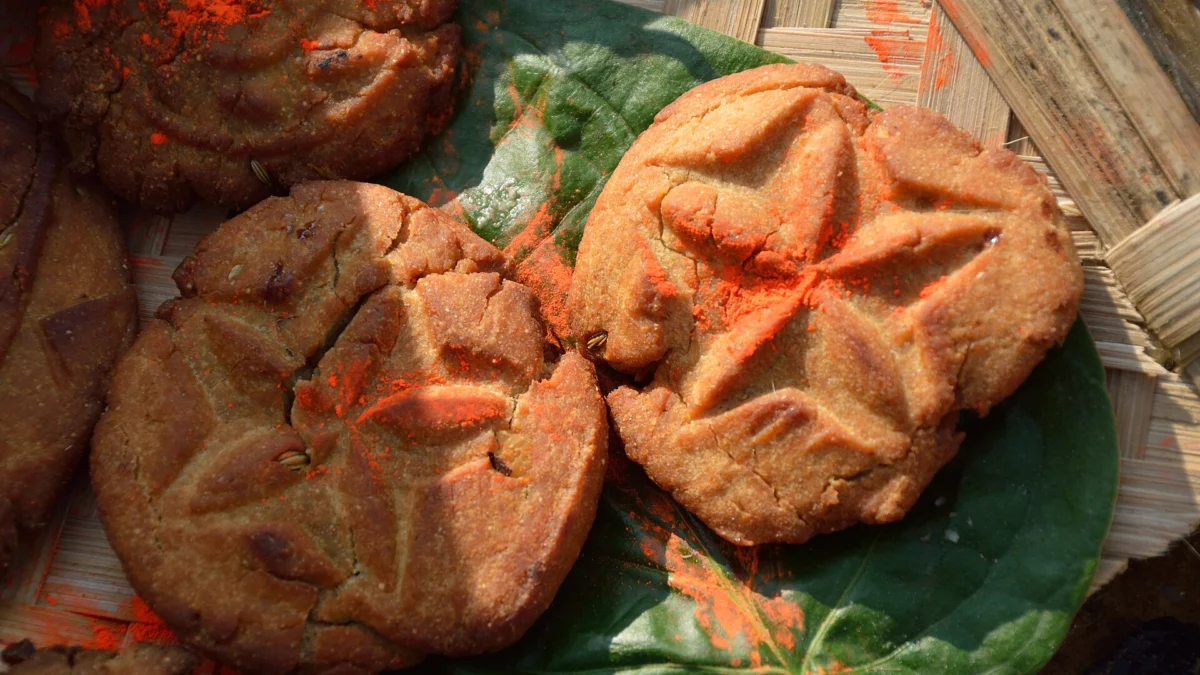
Thekua is a crisp, sweet snack made from wheat flour, jaggery or sugar and ghee, shaped by hand or pressed into wooden moulds and deep-fried. It is the most iconic offering of Chhath Puja, when households make it in large batches, and for many people in Bihar its smell, of ghee, jaggery and cardamom drifting from every kitchen, is the smell of Chhath itself.
What thekua is
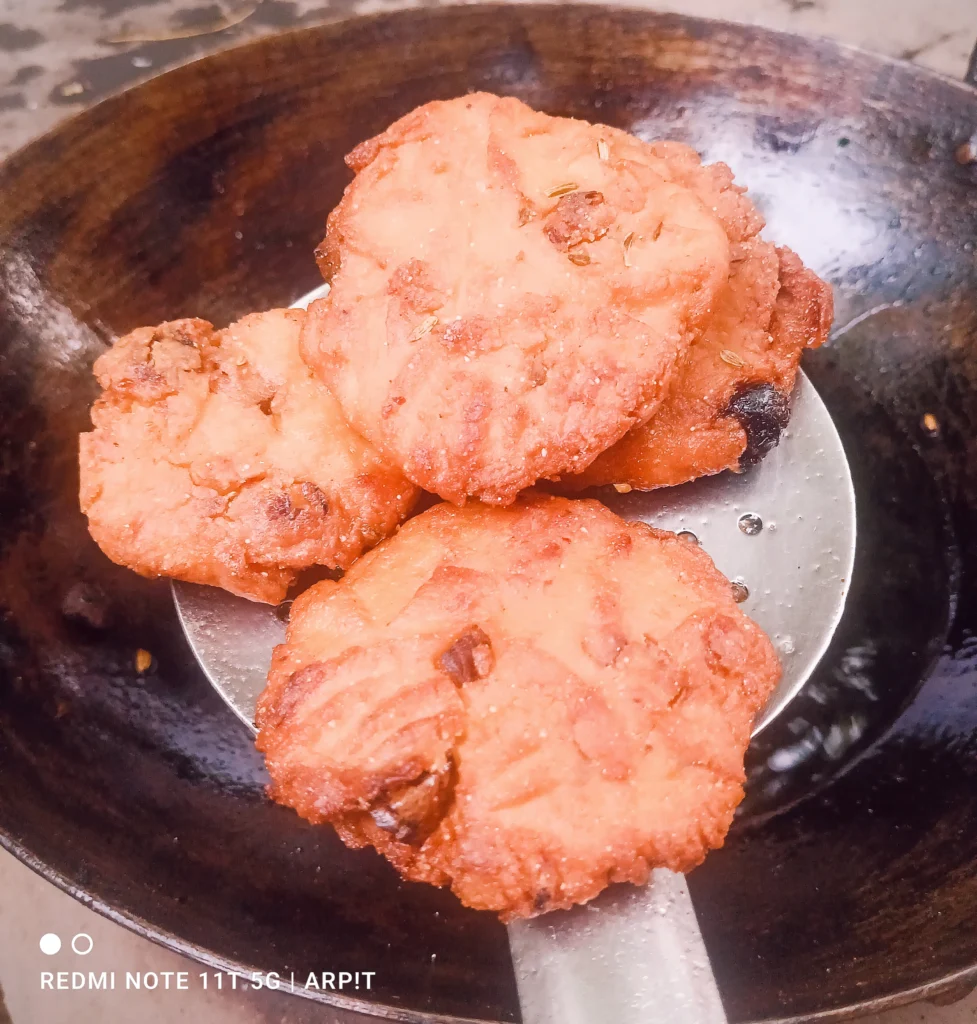
Thekua is made from a stiff dough of whole-wheat flour, jaggery or sugar syrup and ghee, often flavoured with cardamom and sometimes with grated coconut, fennel or dry fruit. The dough is shaped into small discs, usually pressed into carved wooden moulds that leave patterns on the surface, and deep-fried in ghee or oil until reddish-brown. Thekua is soft when hot but hardens as it cools, and it keeps for many days without preservatives. In some areas it is also called khajuria, thokni or thokwa.
History and origins
Thekua is eaten in Bihar, Jharkhand, eastern Uttar Pradesh and southern Nepal, and has been made as a sweet snack in these regions for centuries. Some writers link it to apupa, a sweet cake of flour mentioned in Vedic texts, and claim a history of thousands of years. There is no direct evidence that thekua and apupa are the same, so this is best seen as part of the sweet’s tradition rather than established history. What is certain is that thekua has long been bound up with Chhath and with the everyday hospitality of Bihari homes.
Thekua and Chhath
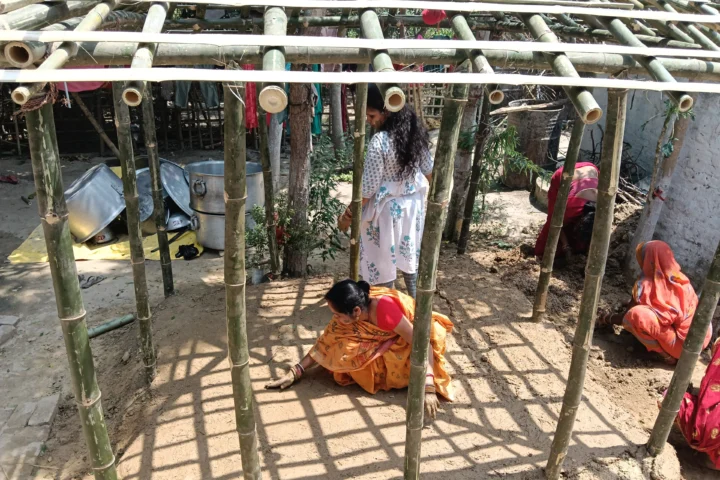
India’s tourism ministry describes thekua as revered as a prasad during Bihar’s Chhath Puja. On the third day of Chhath, families prepare offerings for the evening arghya to the setting sun, and thekua is the centrepiece, arranged with fruit, sugarcane and other sweets in bamboo soop and baskets. Because Chhath demands strict purity, thekua for the festival is prepared with great care, often in the room used for worship, using fresh ingredients and no onion, garlic or salt anywhere in the kitchen. In many families the women keeping the fast, or the elders of the house, make it themselves, and relatives and neighbours join in to shape hundreds of pieces.
After the final morning arghya, thekua is shared as prasad with family, neighbours and anyone who comes to the ghat. Many families also send thekua to relatives who could not come home for the festival, and it is common to see boxes of thekua travelling by train and post across India in November.
Thekua in everyday life
Thekua is not only a festival food. It is a popular breakfast and tea-time snack, and it keeps well, so it is a favourite gift to carry when visiting family. In Nepal and parts of Bihar it is a common koseli, the gift of food that a guest brings when visiting someone’s home. Students and workers leaving home often carry a tin of their mother’s thekua with them.
The wooden moulds
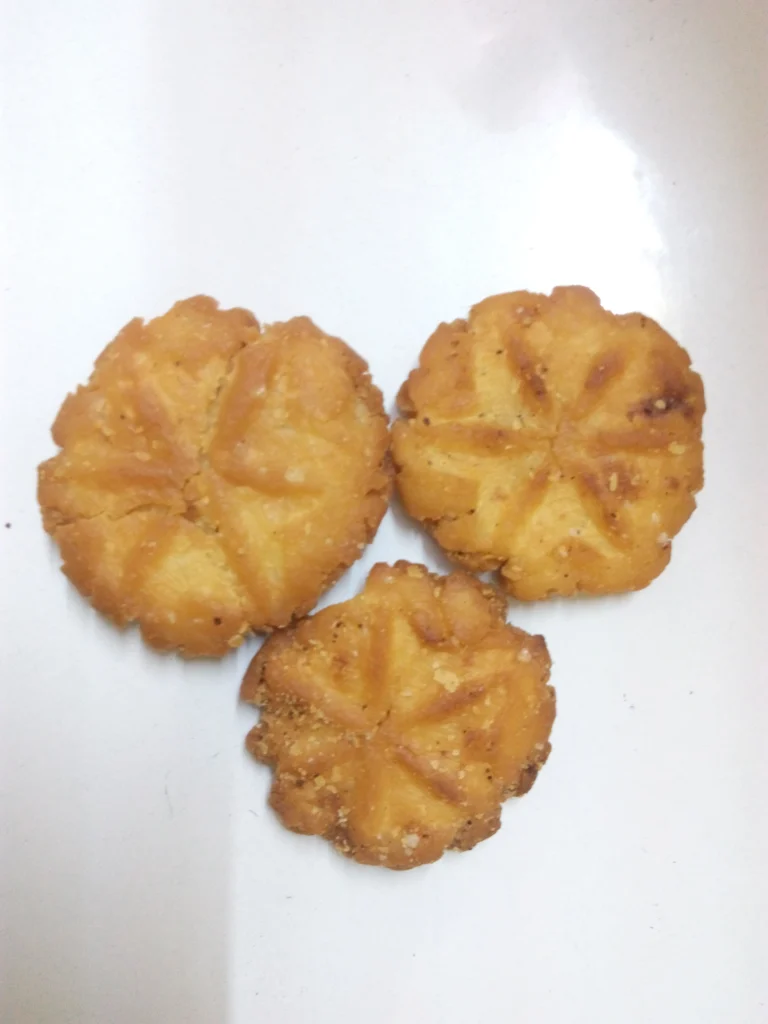
The patterns on thekua come from wooden moulds called thekua sancha, carved with designs such as flowers, leaves, wheels and geometric shapes. The dough is pressed into the mould and turned out with the pattern on its surface. Families often keep their moulds for years, and in the weeks before Chhath they are sold in markets alongside bamboo baskets and clay lamps. Where no mould is available, thekua is shaped by hand and pressed with a fork or the edge of a spoon.
Regional variations
Thekua recipes vary from family to family. Some use jaggery for a darker, richer sweet; others use sugar syrup for a lighter colour. Some add coconut, sesame, fennel or dry fruit. In some homes the dough is enriched with milk or semolina for a softer texture. The shape also varies, from round discs to ovals and leaf shapes. In Jharkhand and Nepal, related sweets are made under different names for festivals and family occasions.
Significance
Thekua captures several things about Bihari culture. It is made from the produce of the region’s fields, wheat and sugarcane, and offered back to the sun that ripened them. It is a sweet of purity and discipline, made with care for the gods. And it is a sweet of sharing, meant to be given away to family, neighbours and strangers alike.
Facts worth knowing
- Thekua is the most important prasad of Chhath Puja.
- It keeps for many days without preservatives, which makes it ideal for travel and gifting.
- Its patterns come from carved wooden moulds.
- In 2019 a group of 16 people in Darbhanga made a thekua weighing 91 kg in an attempt to enter the Limca Book of Records.
How thekua has changed
For most of its history, thekua was made only at home. Today it is also sold by sweet shops and online, especially around Chhath, and packaged thekua reaches Bihari families across India and abroad. Health-conscious versions made with millet flour, less sugar or air-frying have appeared. But for Chhath itself, most families still insist on making thekua at home, by hand, in the traditional way.
Thekua in modern Bihar
In Bihar today, the week of Chhath is the week of thekua. Wheat is washed and dried, jaggery is bought fresh, and kitchens are busy late into the night. Even those who cannot keep the fast often help make the thekua, and for many young Biharis, shaping thekua with their mothers and grandmothers is one of their happiest memories of the festival.
Conclusion
Thekua is a simple sweet, made from wheat, jaggery and ghee, but it carries the meaning of Bihar’s greatest festival. It is offered to the sun, shared with neighbours and carried across the country to those far from home. If you are offered a piece of thekua at Chhath, accept it gladly: it is a blessing. For more of Bihar’s sweets, read about Silao khaja and malpua, anarsa and tilkut.