Nalanda Mahavihara
The excavated ruins of one of the great centres of learning in the ancient world, near Rajgir. A UNESCO World Heritage Site.
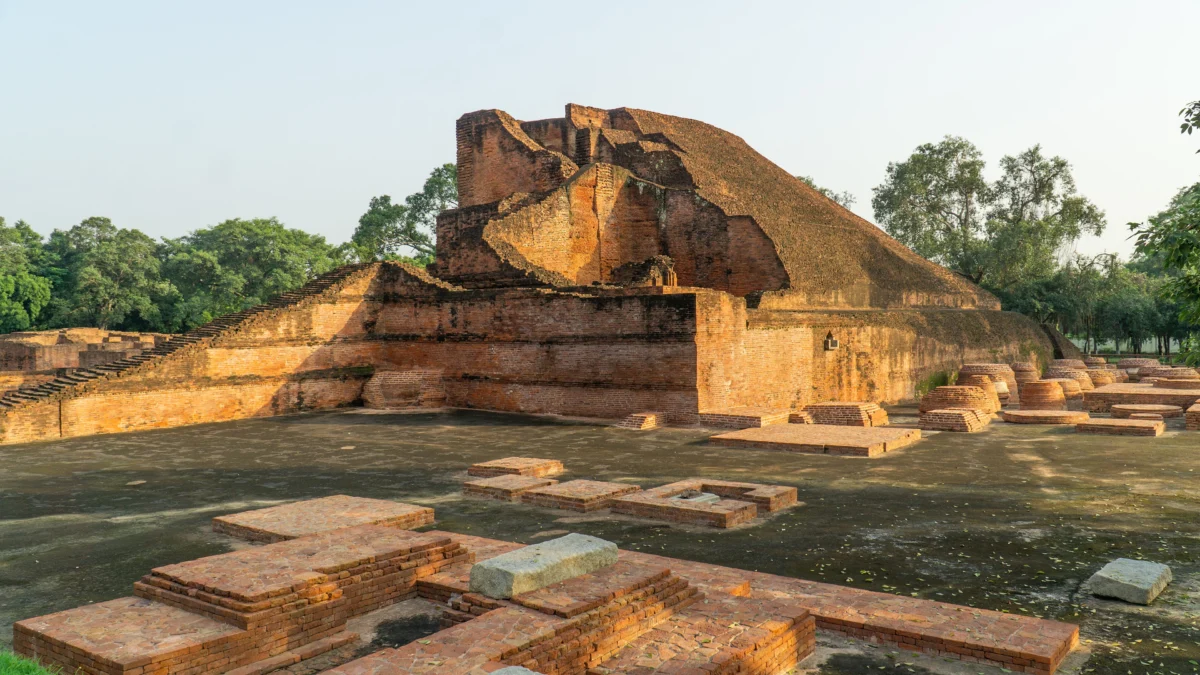
The ruins of Nalanda Mahavihara, near Rajgir, are what remains of one of the great centres of learning in the ancient world. UNESCO lists the Archaeological Site of Nalanda Mahavihara as a World Heritage Site.
The monastery flourished for centuries from around the 5th century CE and drew teachers and students from across Asia. Scholars associated with it include Nagarjuna, Dharmakirti, Shilabhadra and the Chinese pilgrim Xuanzang, who studied here in the 7th century.
Systematic excavation by the Archaeological Survey of India between 1915 and 1937 uncovered rows of monasteries, temples and stupas. The best-known structure is the stupa associated with Sariputta, a leading disciple of the Buddha who, by tradition, was born and died at Nalanda.
Historians caution against calling Nalanda a university in the modern sense, but its scale and its reputation as a place of study are not in doubt.
Getting there
The site is close to Rajgir and Bihar Sharif. Nalanda and Rajgir both have railway stations.
Visitor information
The site and its museum are maintained by the Archaeological Survey of India. Check current timings and ticket details with the ASI before you visit.
Timings, fees and access can change. Please confirm with official sources before you travel.