Chana Ghugni: The Everyday Favourite of Bihar
Black chickpeas cooked in mustard oil and spices, eaten with chura, puffed rice, dhuska or roti. Why ghugni is Bihar’s everyday favourite.
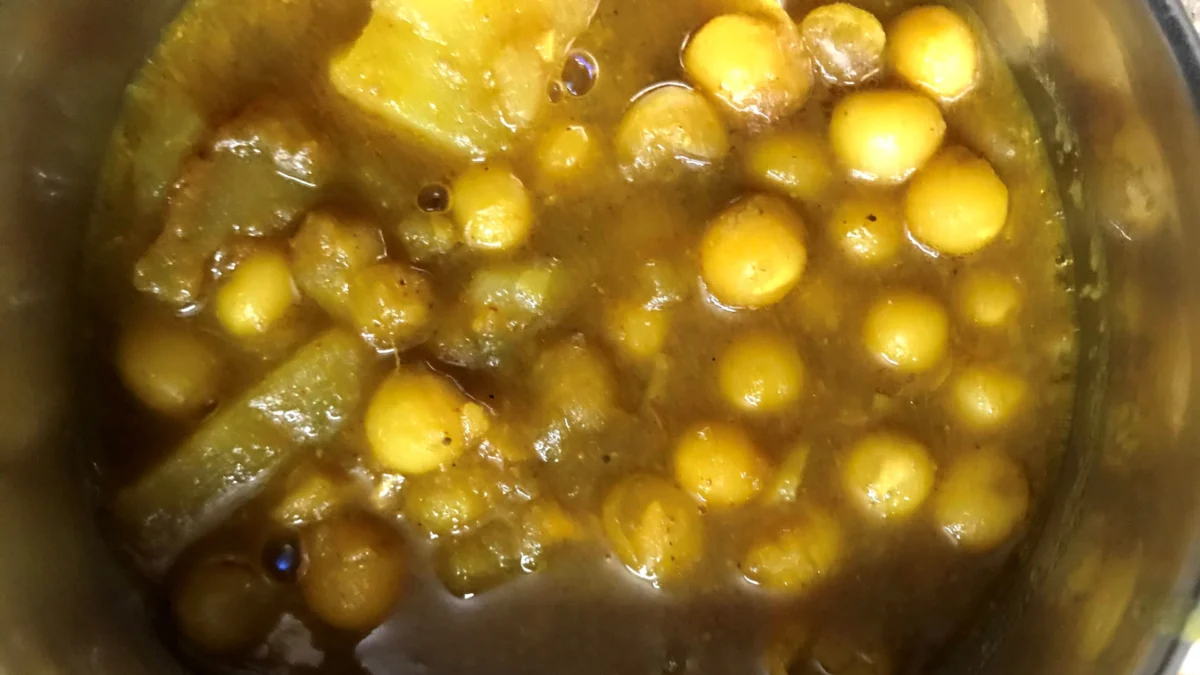
Some dishes are famous; others are simply always there. Chana ghugni belongs to the second kind. A bowl of black chickpeas, cooked with onion, garlic, chilli and spices in mustard oil, finished with raw onion, coriander and a squeeze of lemon, it turns up at breakfast, at tea time, at railway stations and village fairs. The Government of Bihar describes it as a spicy-tangy evening snack prepared in almost every household in the state. It is cheap, filling and endlessly adaptable, and Biharis eat it with almost anything.
What ghugni is
Ghugni is a dish of soaked and cooked peas or chickpeas eaten across eastern India, from Bihar and Jharkhand to West Bengal and Odisha, and in Nepal and Bangladesh. In Bihar, the most common version uses kala chana, black chickpeas. Wikipedia’s survey of Bihari cuisine describes the method: black gram soaked lightly or overnight, then sautéed in mustard oil in a wok, flavoured with spices ground into a paste on a sil (grinding stone), with some of the chana itself ground to thicken the masala. Water is added for as much gravy as desired.
Bihar also has a lighter, seasonal version. In winter, green chickpeas (hara chana) or freshly harvested green peas are lightly pan-fried in mustard oil with cumin seeds and green chillies, without being curried like the eastern Indian versions.
History and origins
Ghugni has no recorded inventor or date. It is a dish of the Gangetic plains and the eastern uplands, where pulses are grown and eaten widely, and its many local forms reflect the crops and customs of each region. In Bengal it is usually made with dried white peas; in Odisha it is called guguni and eaten with puri, idli or pitha; in Kolkata a minced-meat version is popular. Bihar’s preference for black chickpeas and mustard oil gives its ghugni a robust, earthy character.
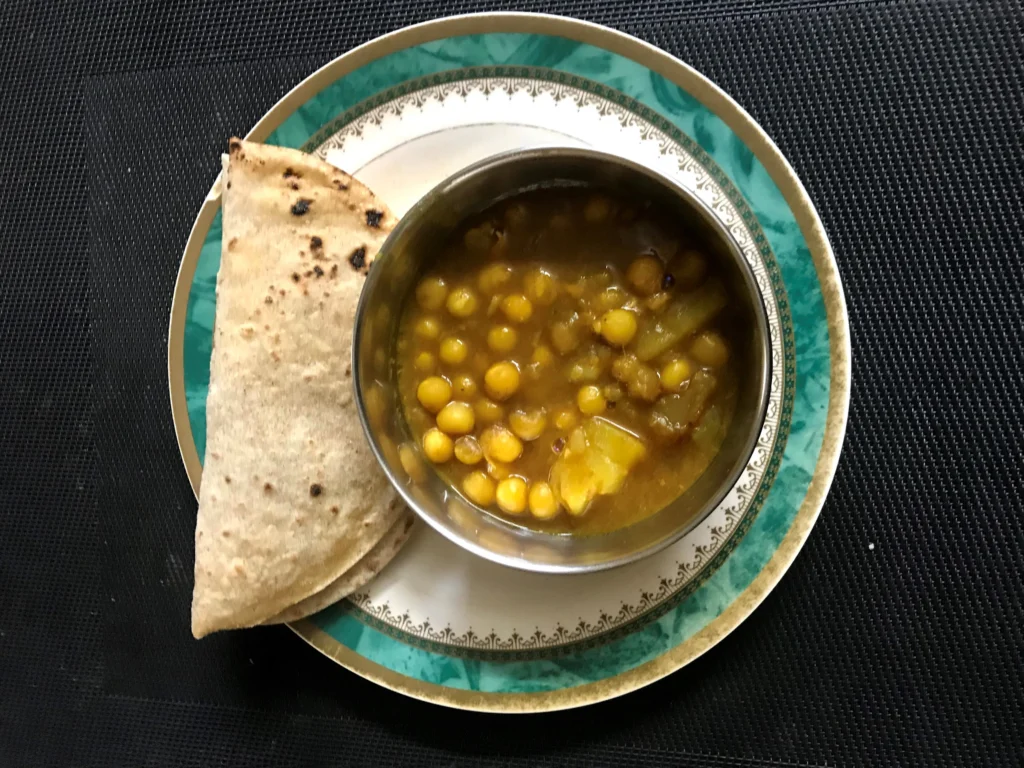
The many partners of ghugni
What makes ghugni so popular is that it goes with everything. Among the combinations eaten in Bihar:
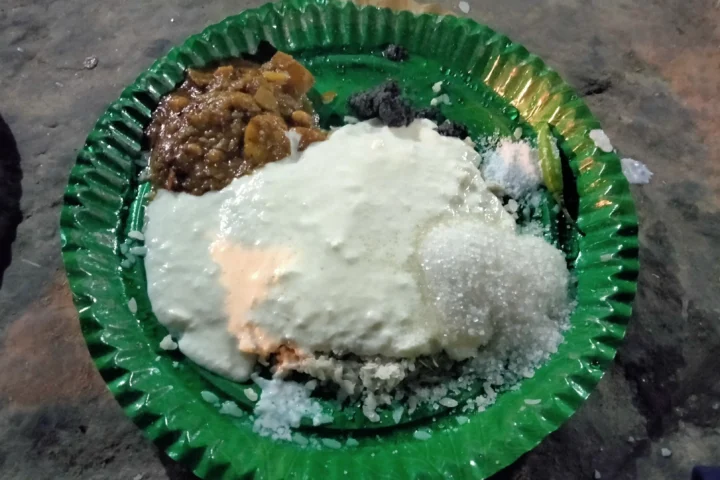
- Chura ghugni: ghugni with flattened rice, a classic breakfast in Mithila and across north Bihar. The Government of Bihar mentions ghugni served with chuda ka bhuja, fried flattened rice. Read more in our story on chura ghugni.
- Ghugni and dhuska: deep-fried rice-and-lentil fritters with ghugni, popular in Bihar and Jharkhand, and listed by India’s tourism ministry among the must-have dishes of Patna.
- Ghugni-mudi: ghugni with puffed rice, described as a favourite of the Anga region around Bhagalpur.
- Roti or puri ghugni: ghugni with flatbreads, as a light meal.
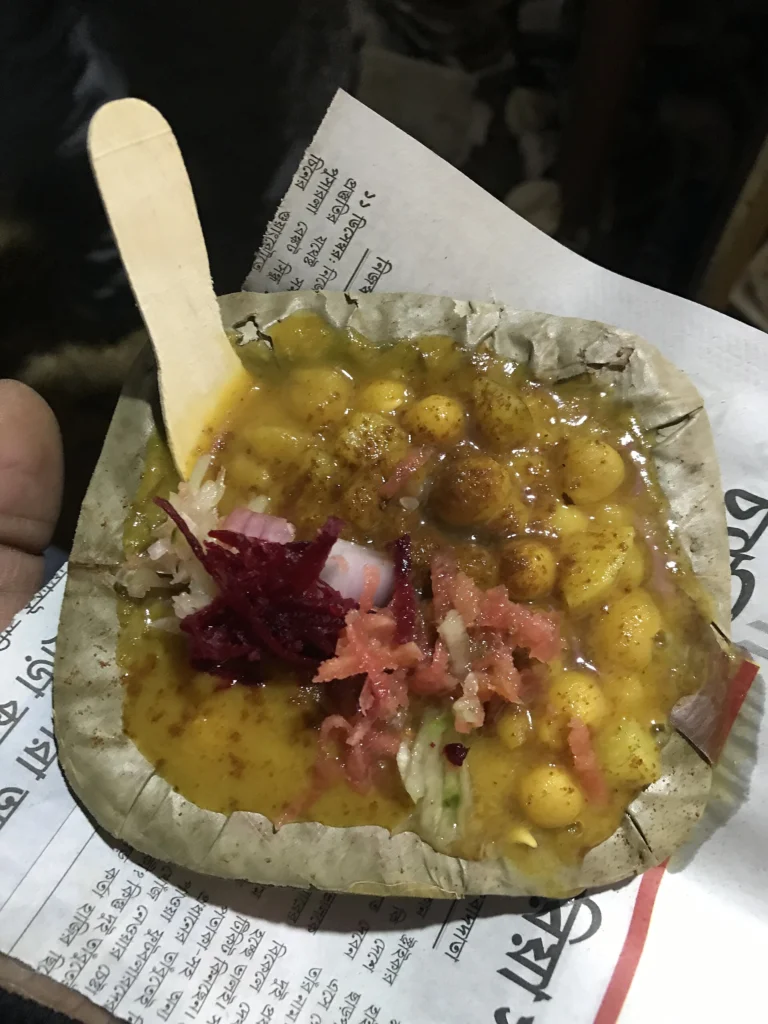
- Ghugni chaat: ghugni topped with onion, tomato, chutneys and crunchy bits, an evening snack at chaat stalls.
How chana ghugni is made at home
The basic method is simple. Kala chana is soaked overnight and boiled until tender. Mustard oil is heated until it smokes, then cooled slightly. Cumin, bay leaves and dried chillies go in, then onions, garlic and ginger, fried until golden. Turmeric, coriander, cumin and chilli powder, or a wet masala ground on the sil, are added and cooked until the oil separates, then the chana with some of its cooking water. Some cooks mash a few chickpeas to thicken the gravy. The ghugni is finished with chopped onion, green chilli, coriander and lemon juice. Street versions sometimes add peanuts or dried green peas, as the travel magazine Outlook Traveller noted of ghugni served in Patna.
Where to eat it
Ghugni is sold from carts, small dhabas and tea stalls across Bihar, especially in the morning and evening. In Patna, Outlook Traveller has recommended places such as Grihaangan Food in Anandpuri and Tuntun Ji Ka Dhaba near the Patna Board Office. At railway stations and bus stands, ghugni is often served in leaf bowls with a spoon of chutney.
Cultural significance
Ghugni is democratic food. It is eaten by students, labourers, office workers and families alike, and it costs very little. It is also a food of hospitality: when guests drop in unexpectedly, a bowl of ghugni with chura or puffed rice can be put together in minutes. During winter festivals such as Makar Sankranti, chura, curd and ghugni often appear together.
Regional variations within Bihar
In Mithila, ghugni is a standard breakfast with chura and a cup of tea, according to Wikipedia’s account of Maithil cuisine. In the Bhojpuri region, ghugni with dhuska or puri is common. Around Bhagalpur, ghugni-mudi is a familiar snack. Some families add potatoes to make aloo ghugni, others add meat, as in Kolkata. In winter, green peas and fresh green chickpeas replace dried chana.
Modern popularity
Ghugni has stayed close to its roots, but it is now also found in Bihari restaurants in other cities, in packaged ready-to-eat forms and in food videos made by Bihari creators. Its health appeal, a protein-rich dish of pulses cooked with little oil, has helped it find new fans.
Conclusion
Chana ghugni is the everyday favourite of Bihar because it is humble, quick, nourishing and flexible. Whether it is eaten with chura in the morning or with puffed rice in the evening, it is a taste that most Biharis grew up with. For more of Bihar’s street food, see our guide to the street food of Patna.