Bhagalpur Silk: The Story Behind Bihar’s Resham Nagari
Wild tussar cocoons, thigh-reeled yarn and generations of weavers. The history, craft and people behind the famous silk of Bhagalpur.
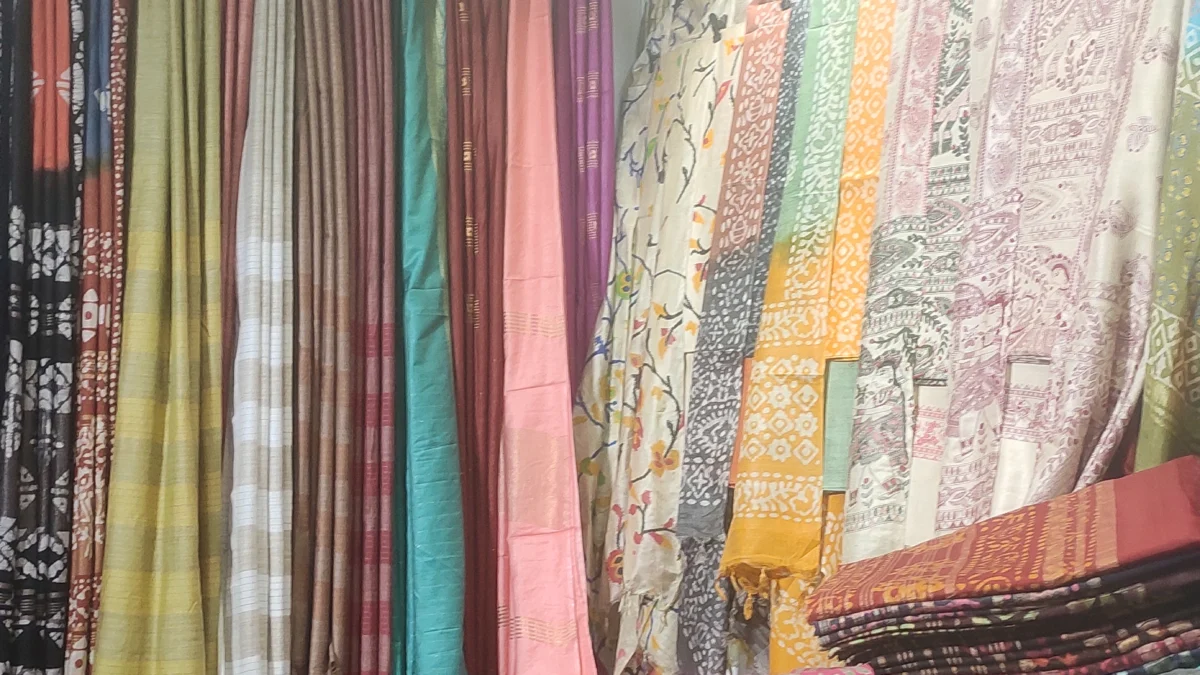
Walk through the lanes of Nathnagar and Champanagar in Bhagalpur and you will hear it before you see it: the steady clack of handlooms behind half-open doors. Bhagalpur is known across India as the Silk City, and in Hindi as Resham Nagari. Its silk, above all its tussar, has a soft golden sheen and a slightly textured feel that sets it apart from the smooth mulberry silks of Banaras or Kanchipuram. Behind every Bhagalpuri sari is a chain of skilled work that runs from forest cocoons to riverside workshops, and a history that the city is proud of.
What makes Bhagalpur silk different
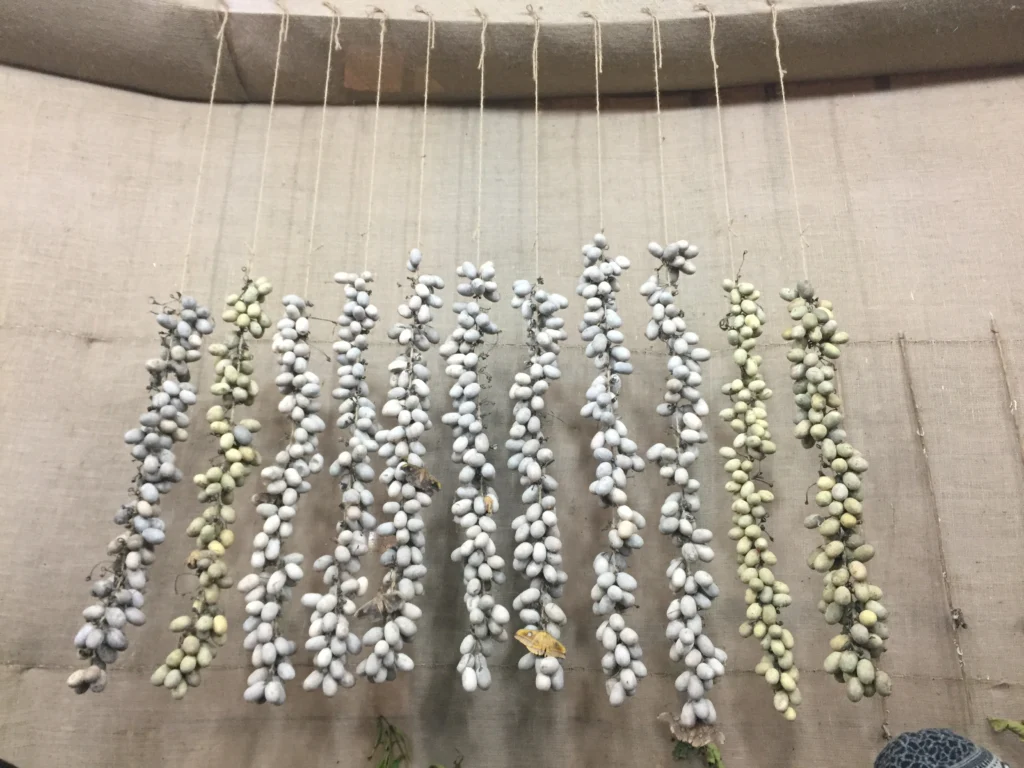
The silk most closely associated with Bhagalpur is tussar, a wild silk. Unlike mulberry silk, which comes from silkworms reared indoors on mulberry leaves, tussar comes from silkworms of the genus Antheraea that live in the forests of eastern and central India and feed on the leaves of trees such as asan and arjun (Terminalia species) and sal. The cocoons are collected largely by Adivasi communities in the forested uplands of Jharkhand, Odisha and neighbouring states. India is the world’s only producer of this tropical tussar, and Jharkhand is now its largest producer.
Tussar silk has a natural, deep-gold colour and a dull, warm sheen rather than a bright gloss. It is more textured than mulberry silk, light and breathable, and Bhagalpuri weaves are often recognised by their stripes and checks of varying density. Bhagalpur’s weavers also work with other silks and blends, including matka, katia and eri.
History and origins
Bhagalpur lies on the southern bank of the Ganga and is associated with Champa, the capital of the ancient kingdom of Anga mentioned in the Ramayana and the Mahabharata. Official accounts, including those of the Bhagalpur district administration and India’s tourism ministry, describe its silk tradition as very old, with royal patronage in medieval times and special favour in the Mughal period. Some claims made about its antiquity, such as exports to the Mediterranean world under royal protection, are part of the city’s proud tradition but are difficult to document.
The firmer historical record begins in the colonial period. In 1810 and 1811 the surveyor Francis Buchanan-Hamilton, who documented the districts of Bihar for the East India Company, wrote a detailed account of Bhagalpur’s tussar industry. During British rule, Bhagalpuri tussar was a valued export to Europe. In the 20th century, cheaper mill-made and synthetic fabrics led to a decline in production, and the industry has had to reinvent itself more than once since.
From cocoon to cloth
Making Bhagalpur silk involves a long sequence of skilled tasks, many done by hand and often by different families. The Bhagalpur district administration highlights three distinctive steps:
- Special boiling. The cocoons are boiled to soften them and release the filament. The district notes that the local boiling method makes the yarn soft and gives fabrics a shine that increases with each wash.
- Thigh reeling. Reelers, very often women, draw the filament from the cocoons and twist it by rolling it against the thigh. The district says this method makes fabric three to four times stronger and keeps the yarn lustrous.
- Kundi finish. A finishing process that improves the feel, lustre and look of the woven fabric.
The yarn is then dyed, wound and woven on handlooms and powerlooms into saris, dupattas, stoles, dress fabric and furnishings. A Bhagalpuri sari is often heavier than it looks, because extra weft threads are added in the pallu.
The people behind the silk
According to a 2025 factsheet from the Government of India, Bhagalpur is home to nearly 30,000 weavers working on about 25,000 looms, and the sector, including reeling, dyeing and allied work, supports more than one lakh livelihoods. The district administration puts the number of weavers higher, at more than 35,000. Many weavers come from the Ansari (Julaha) Muslim community and the Tanti community, and weaving is often a family occupation passed down through generations. Nathnagar and Champanagar are among the main weaving areas, and clusters also exist in surrounding villages.
Designers and organisations have helped renew interest in the fabric. Designer Samant Chauhan, from Munger, has spoken about building his label on Bhagalpuri silk at a time when it was little known even within the fashion industry. In Godda in neighbouring Jharkhand, the Berozgar Mahila Kalyan Sanstha, founded in 1993, has worked to revive tussar weaving and experimented with Ahimsa silk, made without killing the silkworms.
Significance
Bhagalpur silk is important for Bihar both culturally and economically. A Bhagalpuri sari is a staple of weddings and festivals in the state and a familiar gift. Economically, the Government of India estimates that nearly half of Bhagalpur’s silk output is exported, to buyers in the United States, Europe and East Asia. The district administration lists West Asia, Europe, the US and Japan among its markets. Silk is Bhagalpur’s product under the One District One Product programme.
Regional connections
Bhagalpur silk is a regional story as much as a city one. Cocoons and raw silk come largely from the forests of Jharkhand, which was part of Bihar until 2000, while weaving is centred in Bhagalpur and the villages around it. In recent years, weavers have combined Bhagalpur silk with local art forms, especially Manjusha art from Bhagalpur itself and Madhubani painting.
Facts worth knowing
- Bhagalpur silk received Geographical Indication (GI) status in 2013.
- India is the exclusive producer of tropical tussar silk, and Jharkhand is its largest producer.
- Francis Buchanan-Hamilton described Bhagalpur’s tussar industry in detail in 1810–11.
- The Silk Mark Organisation of India holds Silk Mark Expos where Bhagalpur weavers sell directly to buyers.
How the industry has changed
The silk industry of Bhagalpur has faced hard times: competition from cheap synthetic fabrics, the spread of powerlooms, fluctuating yarn prices and the power of middlemen, who often pay weavers far less than the final selling price. In response, cooperatives, government schemes and designers have tried to give weavers better access to markets. The district administration runs a helpdesk at Resham Bhawan in Bhagalpur for weavers, and central schemes support looms, training and quality testing.
Bhagalpur silk today
Today, Bhagalpur silk can be found on fashion runways, in state emporiums and in the city’s own markets, where showrooms sell saris, stoles and fabric by the metre. For visitors, a walk through the weaving neighbourhoods of Nathnagar and Champanagar is one of the best ways to see the craft at work. Buyers are advised to look for the Silk Mark label, which certifies that a product is genuine silk.
Conclusion
Bhagalpur’s silk is the work of forest collectors, reelers, dyers and weavers, many of them working in the same family trades as their parents and grandparents. Its golden sheen has survived empires, industrialisation and changing fashions. When you wear a Bhagalpuri sari or stole, you are wearing a piece of the history of Anga, and supporting one of Bihar’s great living crafts.