Barabar Caves
The oldest surviving rock-cut caves in India, polished to a mirror finish in the Maurya period. Some carry inscriptions from the time of Ashoka.
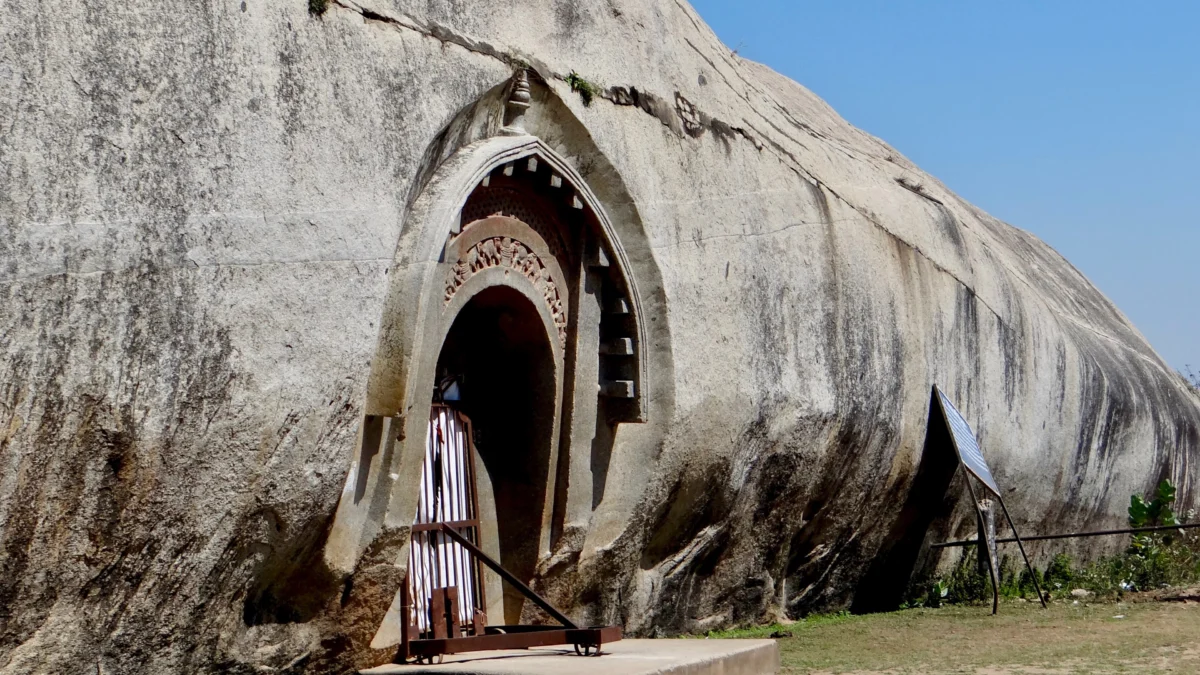
Cut into the granite hills of Makhdumpur in Jehanabad district, the Barabar Caves are the oldest surviving rock-cut caves in India. Most date from the Maurya period, and several carry inscriptions from the reigns of Emperor Ashoka and his grandson Dasharatha.
Barabar Hill has four caves: Karan Chaupar, Lomas Rishi, Sudama and Visvakarma. Three more lie on Nagarjuni Hill nearby. The interiors are polished to a glass-like finish and are known for their striking echo.
The carved entrance of the Lomas Rishi Cave is the earliest surviving example of the curved chaitya arch, a form that became central to later Indian rock-cut architecture. The caves were used by ascetics of the Ajivika sect, founded by Makkhali Gosala, a contemporary of the Buddha and Mahavira.
E. M. Forster placed the fictional Marabar Caves of his novel A Passage to India in hills modelled on these.
Getting there
The caves are in the Makhdumpur area of Jehanabad district, north of Gaya.
Visitor information
The caves are a protected monument. Check access and current conditions locally before you travel.
Timings, fees and access can change. Please confirm with official sources before you travel.