Vivah Panchami: Celebrating Ram and Sita’s Wedding in Mithila
Mithila celebrates the wedding of Ram and Sita as a family wedding. How Vivah Panchami is marked in Sitamarhi, Janakpur and the homes of north Bihar.
In most of India, Ram is worshipped as a prince of Ayodhya. In Mithila he is something more familiar: the son-in-law. According to the Ramayana, Sita was the daughter of King Janaka of Videha, the kingdom that tradition places in the plains of north Bihar and the Nepal Terai. So when the wedding of Ram and Sita is celebrated each winter on Vivah Panchami, Mithila celebrates it as a family wedding, with songs, processions, rituals and the same customs that are followed when a daughter of the house is married.
When Vivah Panchami falls
Vivah Panchami is observed on the fifth day (Panchami) of the bright fortnight of the month of Margashirsha, also called Agrahayana or Aghan, which usually falls in late November or December. It is celebrated in temples associated with Ram and Sita across India, including in Ayodhya, but its biggest celebrations are in the places linked with Sita’s own story: Sitamarhi in Bihar and Janakpur in Nepal.
The story: what the texts say and what tradition adds
The wedding of Ram and Sita is told in the Valmiki Ramayana, the ancient Sanskrit epic. In it, King Janaka finds an infant girl in a furrow while ploughing a field as part of a ritual, adopts her and names her Sita, from the Sanskrit word for furrow. When she is grown, Janaka declares that she will marry the man who can string the great bow of Shiva. Many princes fail. Ram, who has come to Mithila with the sage Vishwamitra and his brother Lakshman, lifts the bow and breaks it, and the marriage is arranged with the consent of his father, King Dasharatha of Ayodhya.
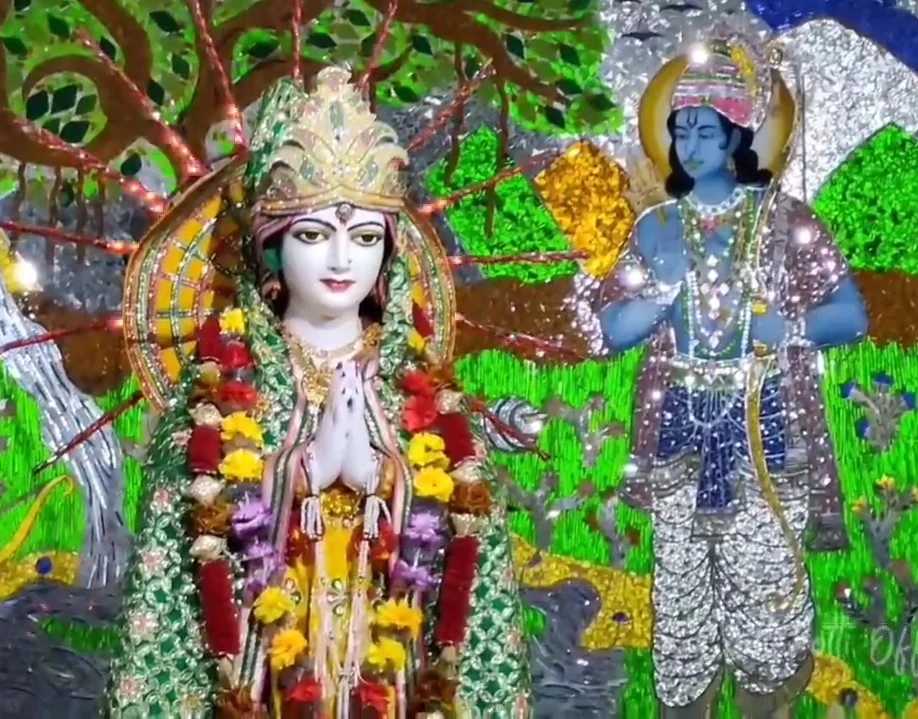
Later retellings, especially the Ramcharitmanas of Tulsidas, written in Awadhi in the 16th century, added much-loved scenes that are now part of the festival. One of these is the first meeting of Ram and Sita in a flower garden, the Pushpavatika, before the contest of the bow.
The geography of the story is a matter of faith and local tradition rather than archaeology. Several places claim a role in it. Punaura Dham near Sitamarhi is revered as the spot where Sita was found, and Janakpur in Nepal is revered as Janaka’s capital. Phulhar in Madhubani district is held by local tradition to be the garden where Ram and Sita first saw each other. These beliefs are deeply held and give Vivah Panchami its sense of place, but they are best understood as sacred geography, not as documented history.
Celebrations in Sitamarhi
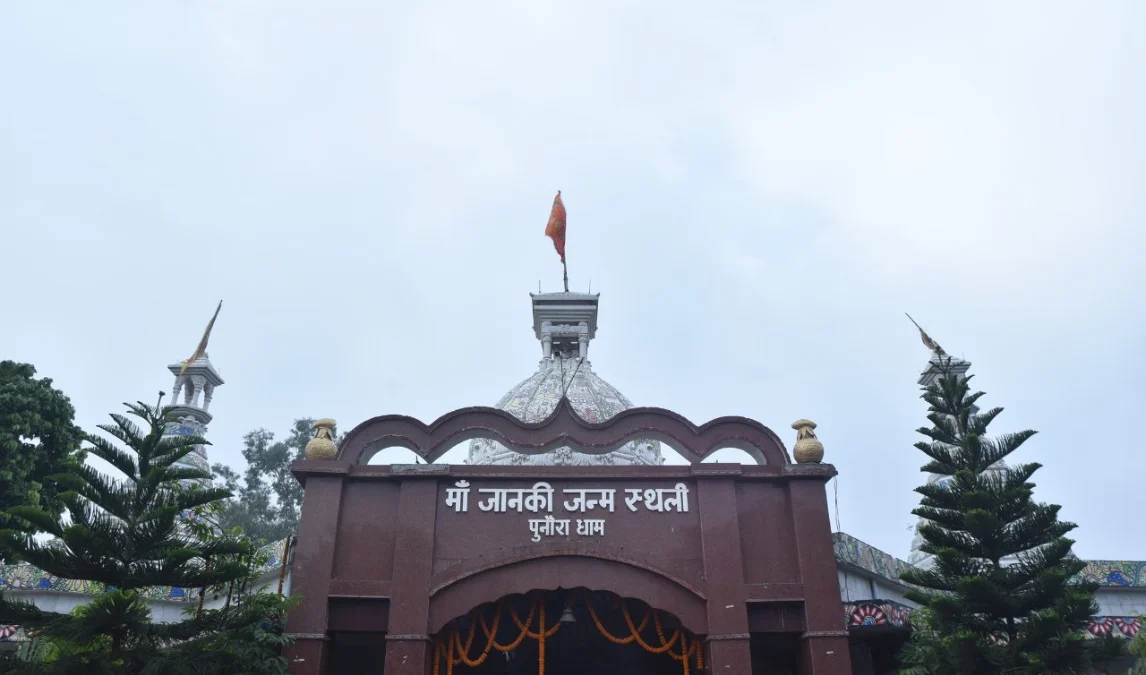
Sitamarhi, in the north of Bihar near the border with Nepal, is the centre of Vivah Panchami on the Indian side. Punaura Dham, the temple complex revered as Sita’s birthplace, stands about 5 km southwest of the town. Behind the temple is a pond called Janaki Kund. Punaura Dham is one of the few temples in India dedicated to Sita, where she is worshipped in her own right, and it is part of the Ramayana Circuit promoted by the Government of India.
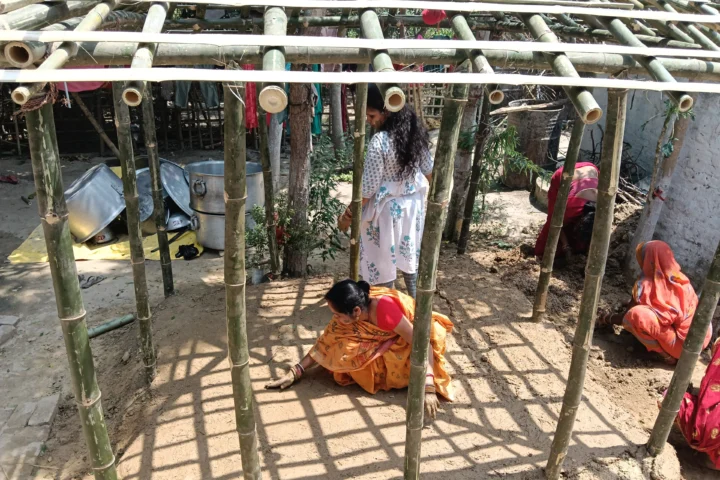
At Vivah Panchami, the temples of Sitamarhi stage the wedding as a sequence of Mithila marriage rites. In 2025, Patna Press reported that at the Punaura Dham Janaki temple the rituals began with matkor, the ceremony in which women of the family dig earth and worship it at the start of a wedding, followed by wedding songs, haldi (the turmeric ceremony) and other Mithila marriage customs, ending with the symbolic wedding of Ram and Sita at night. At the Janaki temple in the town, a Nishan Shobha Yatra, a procession of devotees carrying sacred flags and singing hymns, is held as part of the festival. Homes are decorated and women sing the traditional songs of a Mithila wedding.
Celebrations in Janakpur
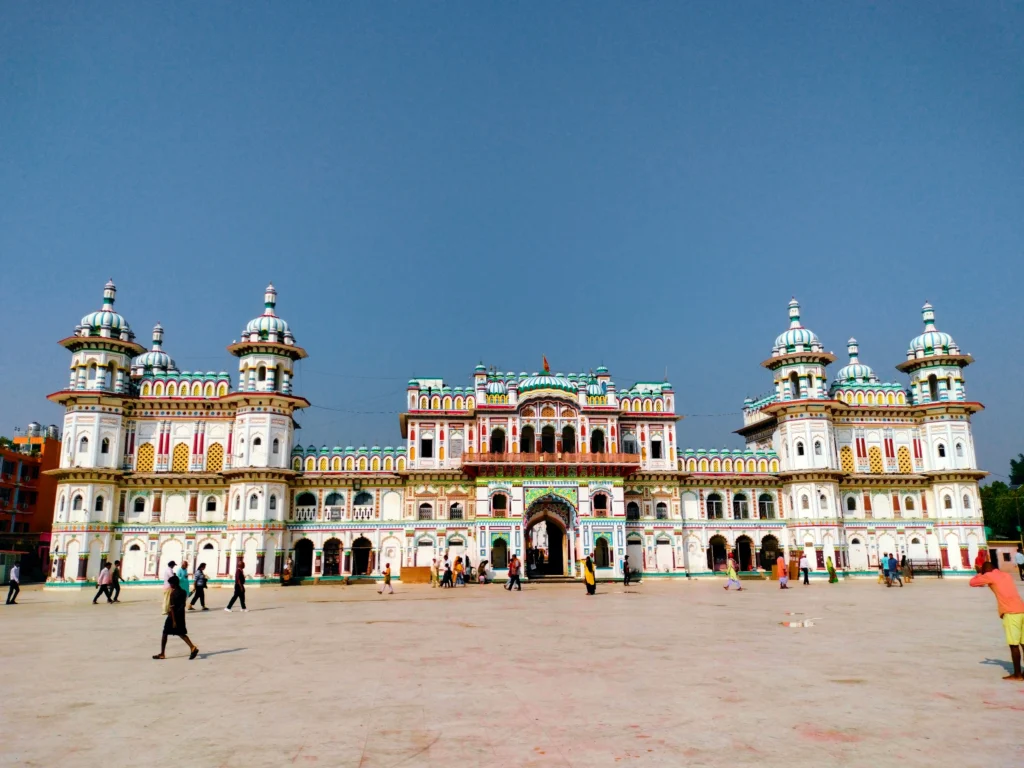
Across the border in Janakpur, Vivah Panchami is a seven-day festival that turns the whole city into a stage, as the Kathmandu Post put it. A couple dressed as Ram and Sita is paraded through the city at the start, and the following days re-enact each step of the wedding: the meeting in the garden (Phulbari Lila), the tilak ceremony, the contest of the bow (Dhanush Yagya), matkor, the swayamvar and the wedding feast (Ramkalewa). The swayamvar, held on the sixth day, is the climax, when images of Ram from the Ram Mandir and Sita from the Janaki Mandir are carried in decorated palanquins and married. During the festival the chief priest of the Ram Mandir plays King Dasharatha and the chief priest of the Janaki Mandir plays King Janaka. Hundreds of sadhus from India travel to Janakpur, standing in for the groom’s wedding party, and are treated as wedding guests.
People, places and communities
Vivah Panchami is celebrated by Maithili-speaking communities on both sides of the India–Nepal border, by temple trusts and priests, and by pilgrims who come from Ayodhya, Varanasi and across north India. Women are at the centre of the domestic celebrations, because the songs, rituals and arrangements of a Mithila wedding are largely in their hands. Ayodhya and Janakpur, the cities of the groom and the bride in tradition, became sister cities in 2014.
Cultural significance
For Mithila, Vivah Panchami affirms an identity. Sita is remembered here as a daughter of the land, and Ram as the region’s son-in-law. That relationship runs through Maithili culture. Many traditional wedding songs of Mithila address the bride and groom as Sita and Ram, and the marriage of Ram and Sita is one of the most popular subjects of Madhubani painting, including the kohbar paintings made for a bridal chamber. To learn more about these customs, read our story on Mithila weddings.
Regional variations
In Ayodhya and in many Ram temples elsewhere, Vivah Panchami is marked with special worship and a ceremonial wedding of the deities. In Mithila the celebration is more like a real wedding, following local customs step by step. In Janakpur the festival spreads over a week of public re-enactments, while in Sitamarhi it centres on temple rituals and processions. In many homes the day is marked simply with worship, songs and readings from the Ramayana.
Facts worth knowing
- The name Sita comes from the Sanskrit word for a furrow, recalling how Janaka found her while ploughing.
- Punaura Dham is one of the relatively few temples where Sita is worshipped independently, not only as Ram’s consort.
- The Pushpavatika, the garden meeting of Ram and Sita that is re-enacted at Vivah Panchami, is a scene made famous by the Ramcharitmanas of Tulsidas.
- Janakpur’s week-long festival includes re-enactments of the matkor and tilak, customs still followed in Mithila weddings today.
How the festival has changed
Vivah Panchami has grown in scale in recent decades. Better roads and buses link Sitamarhi, Janakpur and Ayodhya, and the Ramayana Circuit has encouraged pilgrimage between them. Temple trusts in both countries now plan for large crowds, with lighting, temporary shelters and security. Governments on both sides of the border have taken an interest in the festival, and political leaders from India have attended the celebrations in Janakpur.
Vivah Panchami in modern Bihar
In Bihar, the festival is part of a wider renewal of attention to Sitamarhi and to Sita as a figure of Mithila’s heritage. Plans to develop Punaura Dham as a pilgrimage centre have brought new visitors, while families across Mithila continue to mark the day as they always have, with songs and simple worship at home.
Conclusion
Vivah Panchami is the celebration of a wedding that, for the people of Mithila, never quite stopped being a family occasion. Whether you see it in the temples of Sitamarhi, the crowded streets of Janakpur or a village courtyard where women sing the old wedding songs, it shows how closely the story of Ram and Sita is woven into the culture of north Bihar.