Sama-Chakeva: The Beautiful Festival of Mithila
Clay birds, moonlit fields and songs for brothers. How the women of Mithila celebrate Sama-Chakeva, the festival of a sister and her brother.
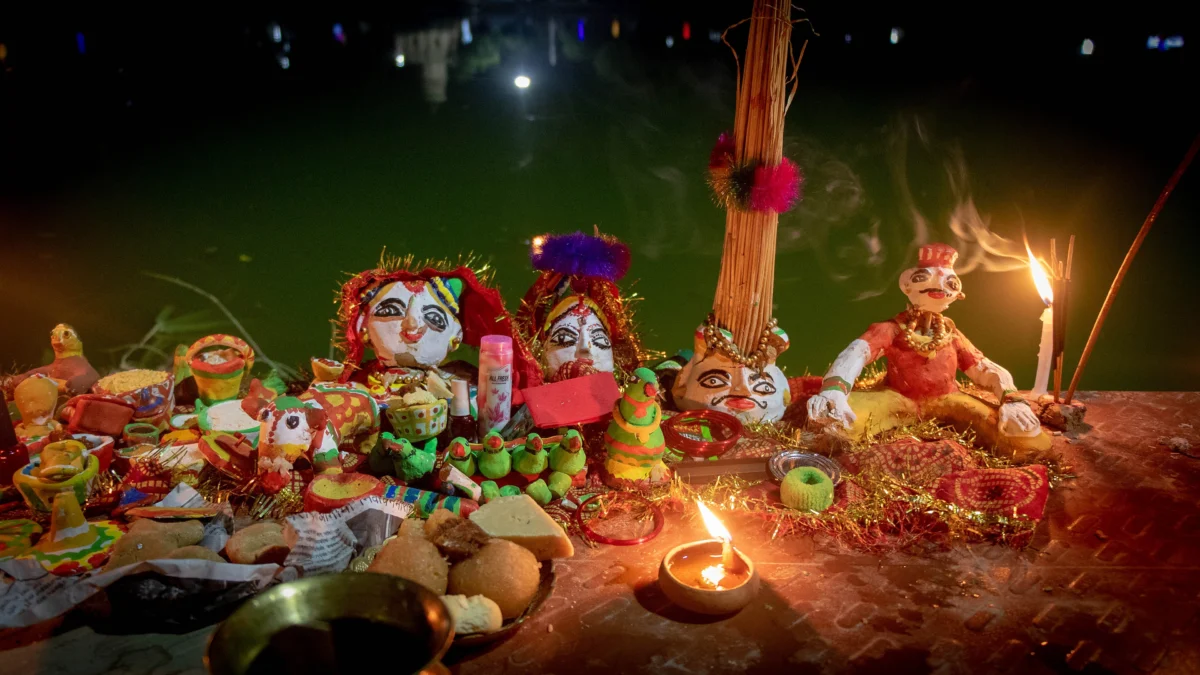
On autumn nights in Mithila, after the last songs of Chhath have faded from the ghats, groups of girls and women walk out into the fields with bamboo baskets balanced on their heads. Inside the baskets sit small clay birds and figures, painted in bright colours. The women sing as they walk, songs addressed to their brothers, and they set the baskets down under the moon to play out an old story. This is Sama-Chakeva, one of the most charming festivals of north Bihar, and one of the few in India built around the love between a sister and her brother.
The festival belongs to the Maithili-speaking region that stretches across north Bihar and the Terai of Nepal. It is celebrated by Maithil families and by the Tharu community, and it lasts from shortly after Chhath until Kartik Purnima, the full moon of the month of Kartik, which usually falls in November.
The story behind the festival
Sama-Chakeva is rooted in a folk legend, and it is worth being clear that this is a story told and retold in Mithila rather than a documented historical event. The Bihar Museum describes it as an ancient folk tale in which a brother uses his penance and self-sacrifice to save his sister from misfortune.
In the version most often told, Sama is a daughter of Krishna. A slanderer named Chugla falsely accuses her of wrongdoing, and in anger Krishna curses her to become a bird. She flies off to live in the forests. Her brother, called Chakeva in the festival (some tellings identify him with Samba, a son of Krishna), refuses to accept the punishment. He performs penance, earns the power to take the form of a bird himself, finds his sister by recognising her song and wins her release, so that she can return to human form. The details vary from village to village, but the core is always the same: a sister wronged by gossip and a brother who will not give up on her.
The festival also carries a second meaning that many in Mithila point to. It falls at the time of year when migratory birds arrive in the Gangetic plains from the Himalaya and beyond, and the clay birds at its centre are often described as a welcome to these visitors and a farewell when they leave.
How Sama-Chakeva is celebrated
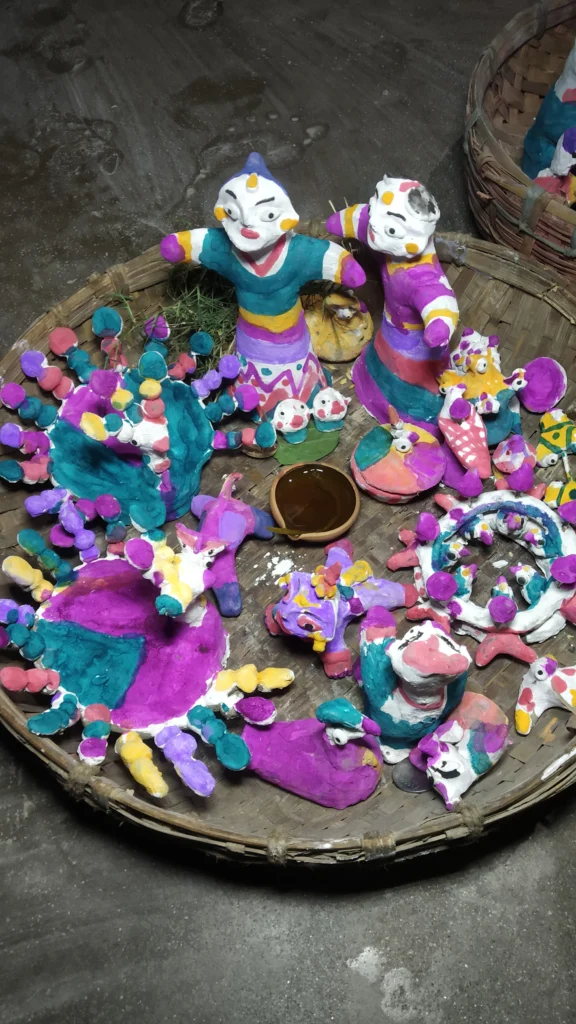
The heart of the festival is the clay figurines. Traditionally the women and girls of a household make them by hand. As a 2024 report in the Kathmandu Post described, they are shaped from mud taken from riverbanks and paddy fields, dried in the sun, coated with rice flour and painted with colours. The Bihar Museum lists the figures typically made: Sama and Chakeva, Chugla the slanderer, Vrindavan (the forest), Batgamni, trees and birds. Other figures that appear in different households include Satbhaiya, the seven brothers, a watchman, musicians with cymbals and drums, a dog and a bumblebee.
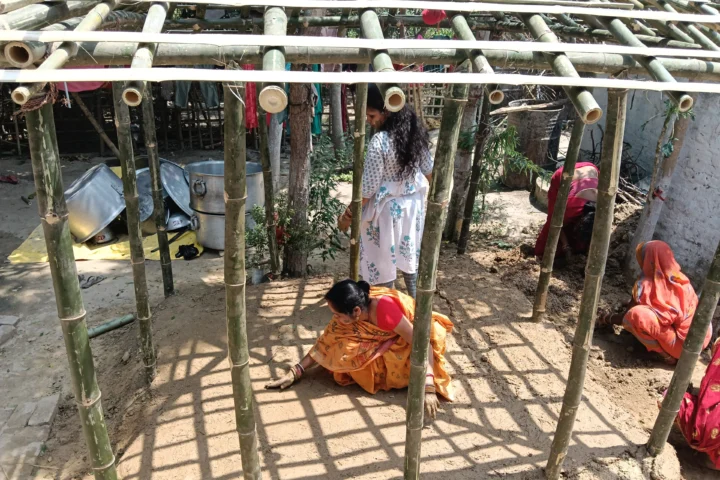
Each evening the figures are arranged in painted bamboo baskets. The women gather in groups and carry the baskets to open fields or courtyards, where they sit together, sing and play out scenes from the story. The songs are in Maithili, and many are addressed to brothers, wishing them long life and good fortune. Some lines are teasing and some are tender, and older women teach them to the younger ones by singing them, not from books.
Chugla, the villain, gets rough treatment. In many places the women singe his moustache, which is made of fibre or straw, as a symbolic punishment for slander. Brothers are also honoured with food. Sisters serve them chura (beaten rice) with curd and jaggery, a simple meal that carries a lot of affection.
The farewell on Kartik Purnima
On the full moon night the festival ends with a farewell. The Bihar Museum notes that this farewell follows the rites of a daughter being sent off to her husband’s home, complete with gifts of food, clothes and ornaments, and with songs of Samdaon, the Maithili songs of a daughter’s departure. The figures are then immersed in a river or pond, or set down in the fields. In some places brothers carry them in a small decorated palanquin to the water.
The immersion is a goodbye to Sama, and also a hope that she, and the birds she stands for, will return the next year.
People, places and communities
Sama-Chakeva is celebrated across the Mithila districts of Bihar, including Madhubani, Darbhanga, Sitamarhi, Samastipur, Supaul and Saharsa, and in the Madhesh region of Nepal, including Janakpur. It is overwhelmingly a women’s festival. Mothers, grandmothers, daughters and neighbours make the figures together and sing together, so the festival also strengthens friendships between women in a village or neighbourhood.
Potters are part of the story too. As more families buy ready-made figures from the market instead of making them at home, local potters have found steady seasonal work in shaping and painting Sama-Chakeva sets.
Cultural significance
Many Indian festivals celebrate the bond between brothers and sisters, and Raksha Bandhan and Bhai Dooj are the best known. Sama-Chakeva is different in two ways. It is told from the sister’s side, with her songs and her games at the centre, and it is a festival of folk performance, with storytelling, song and small theatre all in one.
It is also a living example of Mithila’s visual culture. The painted clay figures share a sense of colour and form with Madhubani painting, and the songs belong to the same oral tradition as Mithila’s wedding songs and seasonal songs.
Regional variations
Practice differs from place to place. The Bihar Museum gives the festival’s span as nine days, from the seventh day of the bright half of Kartik to the full moon. Other accounts describe it as starting on the night of Chhath, and a report from Nepal described it beginning on the fifth day, around Kharna, and running for ten days. The set of figures also varies, and so do the songs, which change from village to village. Among the Tharu of the Nepal Terai the festival has its own customs alongside the Maithil ones.
Facts worth knowing
- The festival is held in the month of Kartik and ends on Kartik Purnima, usually in November.
- The Bihar Museum in Patna holds a set of Sama-Chakeva figures recreated in terracotta in 2017 by the national award-winning artist Rajat Ghosh. His figures have large heads, small limbs and expressive faces.
- A flute-playing Krishna is included in that museum set, because Sama is believed to be Krishna’s daughter.
- The festival is linked in popular understanding with the arrival of migratory birds on the plains.
How the tradition is changing
Sama-Chakeva is under pressure. The Kathmandu Post reported in 2024 that migration for work, smaller nuclear families and city life have shrunk the groups of women who gather to sing. Fewer girls learn the songs, and families that move to cities sometimes stop observing the festival, or replace it with better-known festivals for brothers and sisters. Hand-made figures are giving way to market-bought ones.
At the same time, the festival has found new champions. Women who have moved to towns sometimes start small groups of their own, schools and cultural organisations stage Sama-Chakeva programmes, and museum collections like the one in Patna help keep the figures visible.
Sama-Chakeva in modern Bihar
In much of rural Mithila the festival is still very much alive, and markets in towns like Darbhanga and Madhubani fill with painted figures in November. For families who have moved away, it is often one of the festivals that connects children to the language, songs and stories of home.
Conclusion
Sama-Chakeva is a small festival in scale, celebrated in courtyards and fields rather than in temples. But in its clay birds, its songs and its story of a sister defended against slander, it carries a great deal of Mithila’s character. If you are in north Bihar in November, listen for women singing in the fields after dark. That is Sama-Chakeva.